What It Is
Construction adhesive is a heavy duty glue used by builders and homeowners. It bonds heavy materials together permanently. You can use it on wood, metal, stone, and drywall. The word adhesive comes from the Latin word adhaerere, meaning to stick to. Chemical companies developed these strong synthetic glues in the mid twentieth century to make buildings sturdier. Today, you buy it in thick cardboard or plastic tubes. You apply it by squeezing it out with a standard caulking gun. When the glue dries, it creates a bond that is often stronger than the wood or drywall itself.
You rarely use construction adhesive all by itself. Builders use it alongside mechanical fasteners like nails or screws. The nails hold the pieces of wood together while the wet glue dries. Once the glue cures, it takes over the heavy lifting. This combination creates an incredibly strong joint that won't shift or loosen over time.
Why It Matters to You
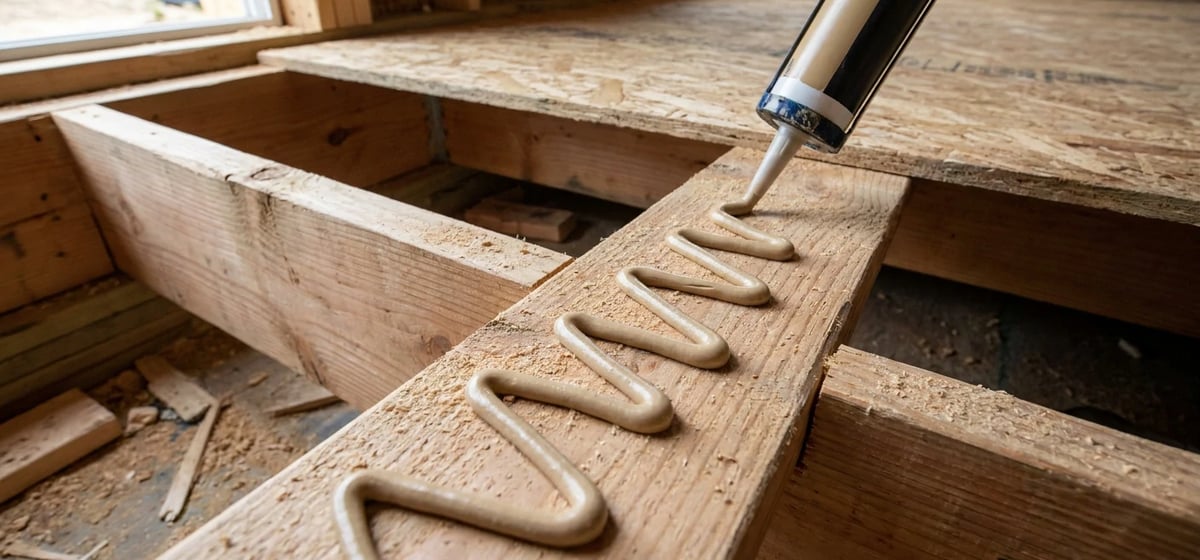
This glue stops annoying house problems before they even start. If you hate squeaky floors, construction adhesive is your best friend. When a house is built, carpenters squeeze a thick bead of glue onto the floor joists. Then they lay down the plywood subfloor and screw it in place. The glue stops the wood from rubbing against the metal screws when you walk on it. This prevents the squeaks that drive you crazy at night.
It also keeps your home looking sharp. It keeps baseboards tightly attached to the wall so you don't see ugly gaps. It holds up drywall on the ceiling so the heavy sheets don't sag. If you're doing your own home updates, you'll want to read up on Interior: Paint, Drywall & Trim to see how a little glue makes a big difference in the final look.
Where You Find It
You'll run into construction adhesive in almost every room of your house. Here are a few common places you'll see it doing its job:
- Underneath your kitchen countertops to hold them to the base cabinets.
- Behind loose bathroom tiles to keep them from falling off the wall.
- Under stair treads to keep the steps firm and quiet.
- Behind decorative wood paneling or wainscoting.
You'll also see it used outside in your yard. Landscapers use a special exterior version to glue concrete retaining wall blocks together. If you're hiring someone to fix a wobbly deck or build a wall, check out Hiring Contractors & What Things Cost. A pro will likely list tubes of construction adhesive on their materials quote. A standard 10 ounce tube usually costs 4 to 10 dollars at your local hardware store. A larger 28 ounce tube runs 8 to 15 dollars. Prices and ranges vary by the brand and the specific chemical formula.
What to Watch Out For
Construction adhesive is tough, but it can cause major headaches if you use it wrong. You have to make sure you buy the exact right type for your project. Some formulas are made just for indoor wood. Others are formulated to work on wet stone, cold metal, or foam insulation boards. If you use the wrong one, the glue might melt your foam board or completely fail to stick to the metal.
You also need to remember that it dries very fast. You normally only have about 10 to 15 minutes to move your pieces around before the glue sets. Once it grabs, it's stuck. If you ever need to remove something that was glued to drywall, be prepared for some wall damage. You'll probably tear the paper face right off the drywall when you pull the wood away. If you're tackling a big renovation, reading DIY vs. Hiring a Pro can help you decide if you want to handle the messy glue yourself or pay someone else to do it.