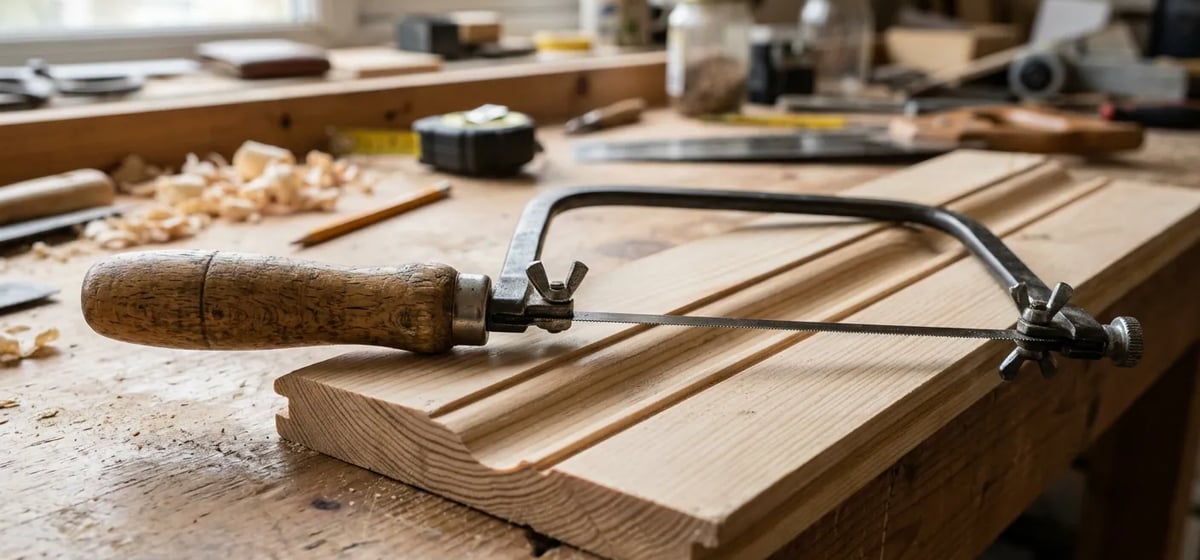
What a Coping Saw Is
A coping saw is a small hand tool used to cut intricate curves and shapes. It features a very thin metal blade stretched across a metal frame shaped like a capital D. A wooden or plastic handle sits at the bottom of the frame. You turn this handle to tighten or loosen the blade.
The tool gets its name from the architectural term cope. To cope means to join two molded pieces of wood perfectly. Woodworkers developed this specific saw in the 16th century for decorative trim work. The blade is so thin that it can turn sharply inside the wood without getting stuck. You can easily remove the blade by untwisting the handle. This lets you thread the blade through a drilled hole to cut shapes in the middle of a board.
Why You Might Need One
You'll most likely use a coping saw when you install new baseboards or crown molding. This type of project falls under Interior: Paint, Drywall & Trim. When two pieces of trim meet at an inside corner, cutting them at a basic flat angle often leaves an ugly gap. House walls are rarely perfectly square.
Instead, carpenters use a coping saw to cut the profile of one baseboard piece into the end of the other. This creates a coped joint. The two pieces overlap and fit tightly together even if the corner is slightly off. You might also use this tool to cut small shapes in plastic plumbing pipes or to craft wooden toys. It's a very handy tool for detailed work.
Costs and Buying Tips
Coping saws are very affordable for any homeowner. A basic model costs 10 to 20 dollars at a local hardware store. Professional grade saws might cost 25 to 40 dollars. Keep in mind that retail ranges vary depending on your location and the brand.
You'll also need to buy replacement blades. Blades cost about 5 to 10 dollars for a pack of five. Because the blades are so thin, they break easily if you twist them too hard. It's always smart to keep extra blades in your toolbox. When deciding between DIY vs. Hiring a Pro for a trim project, the low cost of this tool makes it easy to try the job yourself.
Blades come in different tooth counts. You measure this in teeth per inch. A blade with 15 to 20 teeth per inch is great for fast cuts in thick wood. A blade with 20 to 30 teeth per inch makes a smoother cut but works slower. If you cut plastic, you want a blade with more teeth to avoid chipping the material.
How to Use It Correctly
Using a coping saw takes a little practice. You install the blade so the teeth point back toward the handle. This means the saw cuts when you pull it toward you, not when you push it away. Pulling gives you much more control over the thin blade.
Clamp your wood tightly to a workbench before you start. Hold the saw handle with one hand and guide the blade along your pencil line. Move the saw up and down in smooth strokes. Don't force the blade forward. Let the sharp teeth do the work. If you need to turn a sharp corner, move the saw up and down in place while slowly twisting the frame.
What to Watch For
Keep a few maintenance and usage tips in mind to get the best results:
- Check the throat depth. The distance from the blade to the back of the frame is usually 4 to 6 inches. You need a deeper frame if you want to cut further into a wide board.
- Keep your blades completely dry. The thin metal rusts very quickly if you leave the saw in a damp basement.
- Match the blade to the material. Use a blade with fewer teeth for thick wood and a blade with more teeth for plastic or delicate trim.