What Is A Dethatcher?
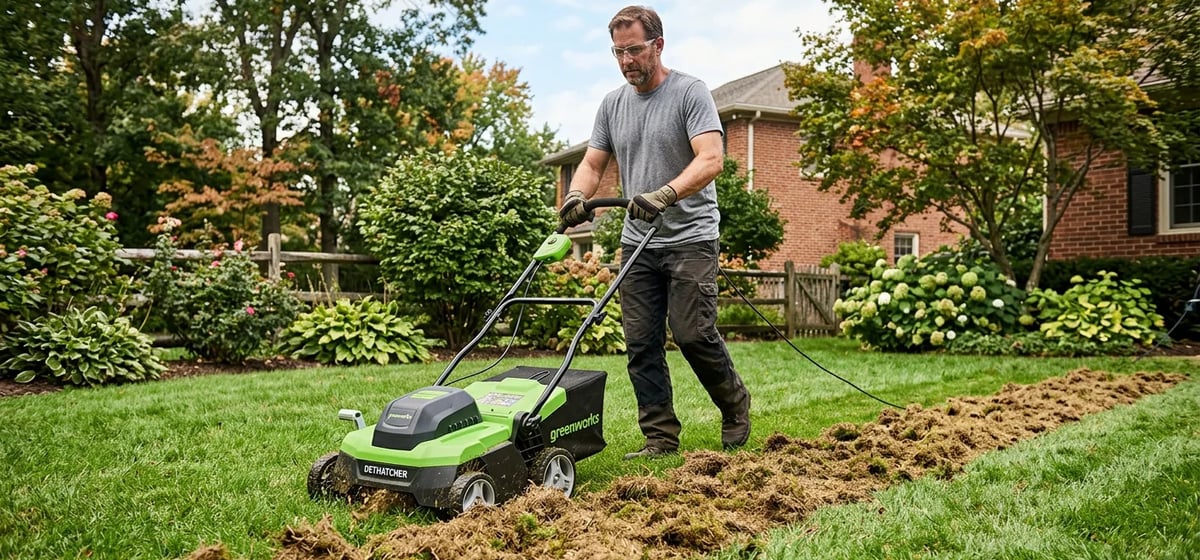
A dethatcher is a gas or electric machine that pulls up the thick layer of dead grass stems and roots choking your lawn. This dead layer sits just above the soil and below the green blades. Landscapers coined the name by combining the prefix "de", meaning to remove, with "thatch", which is an old English word for a roof covering. Just like a roof, this layer blocks things from getting through.
The machine looks a lot like a small push mower. Instead of a sharp blade that cuts grass, it has a spinning drum underneath. This drum is covered in stiff metal tines or thick wires. As you push the machine across your yard, these tines comb fiercely through the turf. They rip out the dead material and toss it to the surface. Some models have solid steel blades that slice into the soil, which people sometimes call a power rake or a verticutter. For most home lawns, the wire tine style is exactly what you need.
Why It Matters To Your Lawn
A little bit of dead grass is fine. It breaks down naturally and feeds the soil. But when this thatch layer gets thicker than half an inch, it causes big problems. A thick thatch layer acts like a greedy sponge. It soaks up rain, weed killer, and expensive fertilizer before they ever reach the soil.
When you use a dethatcher, you open the lawn back up. Rainwater can reach the dirt again. Fertilizer can actually do its job. This is a key part of your Landscaping, Drainage & Outdoor maintenance routine. Grass roots will grow deeper into the soil instead of staying trapped in the dead layer. Deep roots mean your lawn can survive hot summer days and resist bugs much better.
Renting Versus Buying
You usually only need to dethatch your lawn once a year, or sometimes even every other year. This makes the machine a great tool to rent. You can rent a heavy duty gas powered dethatcher from a local hardware store for 50 to 100 dollars a day. These gas machines are very heavy and require some muscle to turn, but they work incredibly fast on large lawns.
If you have a small yard, you might want to buy a corded electric dethatcher instead. These smaller machines usually cost 100 to 200 dollars. They are light, easy to hang on a garage wall, and plug into a standard outdoor outlet. Keep in mind that prices vary depending on where you live and the exact brand you choose. Deciding whether to buy a small electric unit or rent a big gas machine is a common DIY vs. Hiring a Pro choice for new homeowners.
What To Watch For
Using a dethatcher will make your lawn look terrible for a few weeks. The machine aggressively rips up the dead grass, but it also tears at the living grass blades. Do not panic when you see the results. The lawn will bounce back greener and thicker than before once it recovers.
Here are a few tips to make the job easier as you tackle Your First Year as a Homeowner:
- Mow your grass slightly lower than normal right before you start.
- Flag your sprinkler heads and shallow tree roots so you do not hit them with the metal tines.
- Make two passes over the lawn. Walk in straight lines for the first pass, then do the second pass at a diagonal angle.
- Be ready for a massive pile of debris. You will need a heavy duty rake and several large yard bags to clean up the mess when you finish.