What is a draft hood?
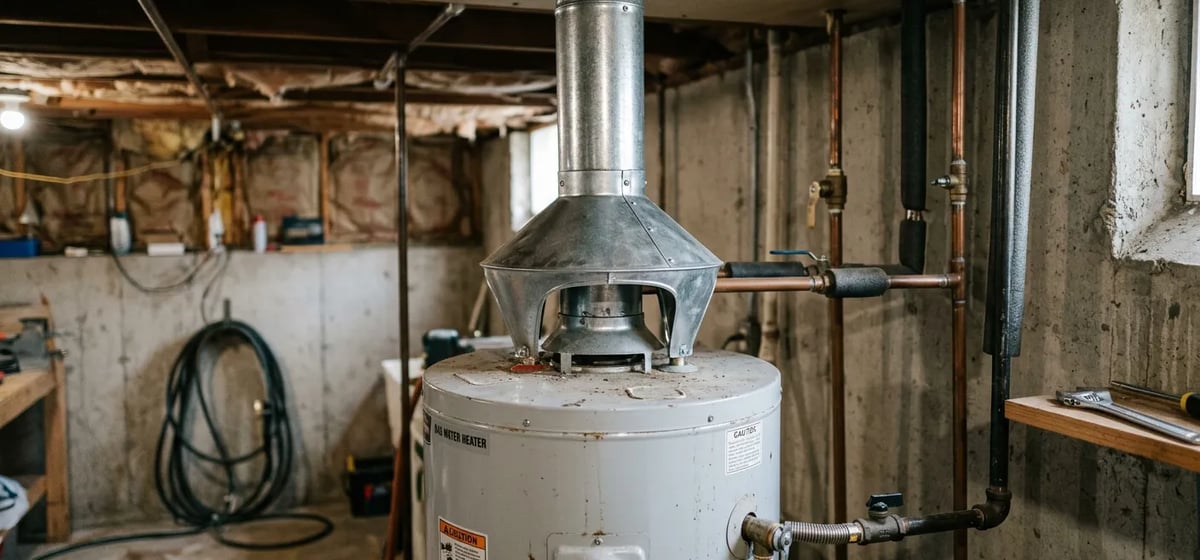
A draft hood is an open metal funnel that sits on top of a gas water heater or an older gas furnace. You will usually see it where the appliance connects to the metal exhaust pipe. It has a very specific job. It pulls in room air and mixes it with the hot exhaust gases coming from the burner. This helps those dangerous gases safely exit your home through the chimney or vent.
The term describes how this simple device controls the draft, or the airflow, of the exhaust. It became a standard safety feature in the early 20th century when indoor gas appliances grew popular. Without it, a strong gust of wind outside could blow down your chimney and push exhaust right back into your house.
Why it keeps you safe
Burning natural gas creates carbon monoxide and moisture. These byproducts need to leave your home quickly. The draft hood ensures a steady upward flow of air. If the wind blows hard against your roof vent, the draft hood acts like a shock absorber. It spills a tiny bit of air into the room instead of blowing out the pilot light on your water heater.
More importantly, it prevents a dangerous condition called backdrafting. Backdrafting happens when exhaust gases fail to go up the vent and instead spill into your living space. This creates a major risk of carbon monoxide poisoning. Because of this risk, keeping your draft hood in good shape is a critical part of managing Environmental Hazards in your home.
Where to find it
You will run into a draft hood anywhere you have an atmospheric gas appliance. Atmospheric means the appliance relies on the natural upward flow of hot air to vent exhaust. You will not find them on modern, high-efficiency appliances that use electric fans to push exhaust outside.
- Gas water heaters: Look at the very top of a standard tank water heater. You will see a cone shaped piece of metal sitting just below the vent pipe.
- Older gas furnaces: Many older heating systems have a draft hood built into the metal cabinet or attached to the flue pipe. You can learn more about these setups in our HVAC & Climate Control guide.
- Gas boilers: Similar to furnaces, older gas boilers use these hoods to manage exhaust flow.
Signs of trouble
Draft hoods do not have moving parts, so they rarely break on their own. However, the venting system attached to them can fail. If your vent gets blocked by a bird nest or a collapsed pipe, the exhaust will spill out of the draft hood into your room.
You can check for problems with a simple visual inspection. Look for dark soot marks around the draft hood. Check the plastic rings around the water pipes on top of your water heater. If those plastic rings look melted, hot exhaust is spilling backward. You should also look for heavy rust on the metal funnel itself. Rust means moisture from the exhaust is not venting properly.
Repair and replacement costs
If your draft hood is rusted out or missing, you need to replace it. The part itself is very cheap, often costing between 10 and 30 dollars. However, you should hire a licensed plumber or HVAC technician to install it and test the draft.
A professional will make sure the vent pipe has the correct slope and is completely clear of blockages. Paying a professional to fix a draft hood or replace a damaged vent pipe typically costs 150 to 400 dollars. Keep in mind that ranges vary based on where you live and the complexity of the repair. This small investment is well worth it to keep your family safe from carbon monoxide.