What is a draft inducer?
A draft inducer is a small motorized fan located inside your gas furnace. When your thermostat calls for heat, the draft inducer is the very first part that turns on. You'll usually hear it humming for about 30 to 60 seconds before the furnace burners actually ignite.
This fan has a very specific job. It pulls air through the heat exchanger and blows leftover combustion gases out of the exhaust pipe or chimney. This process clears out any soot or lingering gases from the last time the furnace ran. It also creates a steady flow of oxygen to help the burners light cleanly and safely.
Why it matters for your safety
The draft inducer plays a massive role in keeping your family safe. Burning natural gas creates dangerous byproducts like carbon monoxide. If your furnace didn't have a way to push these gases outside, they could build up and leak into your living space.
Because this part is so critical, your furnace has an internal safety monitor called a pressure switch. The pressure switch checks to make sure the draft inducer is actually blowing enough air. If the draft inducer fails or gets blocked by a bird nest, the pressure switch shuts the whole system down. The furnace won't ignite at all. You can learn more about how these systems work together in our guide to HVAC & Climate Control.
Where to find it and how to maintain it
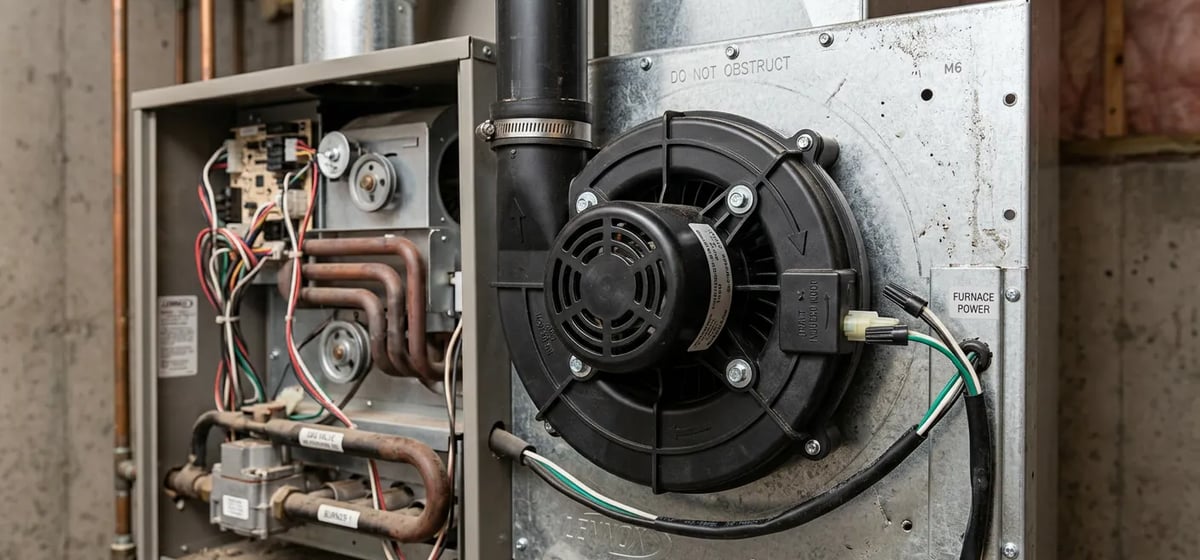
If you take the front panel off your gas furnace, the draft inducer is usually very easy to spot. It sits near the top or middle of the unit. You'll see a round plastic or metal housing with a small motor attached to it. A thick PVC or metal exhaust pipe will connect directly to this housing and run up toward your roof or out the side of your house.
Homeowners don't need to do much to maintain a draft inducer. The motor is sealed and doesn't require oiling. However, you should make sure the exhaust pipe outside your home stays clear. Snowdrifts, ice buildup, or even wasp nests can block the exhaust vent. If the vent is blocked, the draft inducer can't push the air out, and your furnace will shut down to protect you from Environmental Hazards.
Signs your draft inducer is failing
Like any moving part, the draft inducer motor will eventually wear out. It's often one of the first furnace parts to fail because it runs constantly during the winter. You'll usually hear signs of trouble before the motor dies completely.
- Loud noises: A failing motor might make a loud squealing, screeching, or grinding sound. This usually means the internal bearings are wearing out.
- Rattling or clicking: A rattling noise often means the fan wheel is loose or broken. It can also mean a small piece of debris got sucked into the fan housing.
- Furnace won't heat: If you hear the thermostat click but the furnace never fires up, the draft inducer might be dead. The safety switch will stop the gas valve from opening.
- Error codes: Most modern furnaces have a flashing LED light on the control board. A specific pattern of flashes will tell you if the pressure switch or inducer is causing the problem.
What it costs to fix
You can't usually repair a broken draft inducer motor. An HVAC technician will need to replace the entire assembly. This includes the motor, the fan wheel, and the plastic or metal housing.
A new draft inducer assembly typically costs 150 to 400 dollars just for the part. If you hire a professional to install it, expect to pay a total of 400 to 800 dollars for parts and labor. Keep in mind that prices vary based on your location and the brand of your furnace. High-efficiency furnaces often use more expensive variable speed inducers, which can push the total replacement cost closer to 1,000 dollars.