What is a downspout?
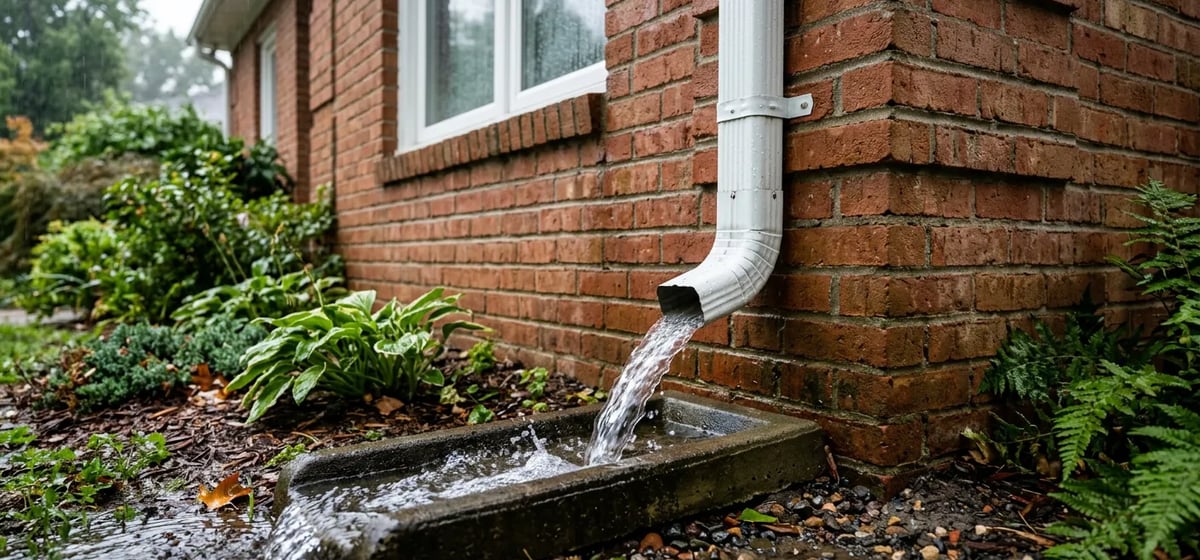
A downspout is the vertical pipe on the side of your house. It connects to your roof gutters. It catches the rainwater that runs off your roof and carries it safely down to the ground. The word simply describes a spout that sends water down. People started using this term a lot in the 1800s when metal gutter systems became popular on homes.
Most downspouts are made of aluminum. You might also see them made of vinyl, copper, or steel. They come in different shapes like rectangular or round. Most residential downspouts are either 2 inches by 3 inches or 3 inches by 4 inches. The larger size is better if you live in an area that gets heavy downpours or if you have a very large roof. The bottom part has a curved piece called an elbow. This piece directs the water out and away from your house.
Why it matters to your home
Your roof collects hundreds of gallons of water during a heavy rainstorm. If that water drops straight down, it creates a moat around your house. This water pools against your walls and seeps into the ground. Over time, this water can seriously hurt your home. It creates cracks in the concrete and causes the soil to shift.
Good downspouts push the water far away. This protects the base of your home. You can learn more about protecting this area in our guide to Foundation & Structure. Without proper downspouts, you might face a flooded basement. You could also deal with rotting wood on your siding or washed out garden beds.
Common problems to watch for
Downspouts need a little attention to do their job right. You should walk around your house during a rainstorm to see how they are working. Watch out for these common issues:
- Clogs: Leaves and twigs wash down from the gutters and get stuck in the elbows. Water will back up and spill over the top.
- Disconnects: High winds or heavy snow can pull the sections apart. Check the straps that hold the pipe to your wall to make sure they're tight.
- Poor drainage: The bottom elbow should dump water at least four to six feet away from your house. If it dumps water right at the wall, you need to add an extension. Proper grading helps too, which you can read about in Landscaping, Drainage & Outdoor.
- Cracks and rust: Older metal pipes can rust through. Vinyl pipes can crack in freezing weather.
How to maintain your downspouts
You should clean your downspouts twice a year. The best times are late fall after the leaves drop and early spring. If you have tall pine trees near your house, you might need to clean them more often. Pine needles are notorious for creating tough clogs.
To clear a clog, start at the bottom. Tap the pipe gently with your hand. If it sounds dull, there's a blockage. You can take off the bottom elbow by removing a few screws. Reach in and pull out the debris. If the clog is higher up, use a garden hose. Put the hose down from the top gutter and turn the water on full blast. The water pressure usually pushes the stubborn leaves out the bottom. If that fails, a plumber's snake can break up the mess.
Costs and repairs
Fixing or replacing a downspout is usually an easy job. If you just need to buy a simple splash block or a flexible plastic extension, you'll spend about 10 to 20 dollars at the hardware store.
If you need to replace an entire vertical run, materials cost about 3 to 10 dollars per linear foot. If you hire a professional to install new seamless aluminum gutters and downspouts, expect to pay 150 to 400 dollars per side of your house. Costs vary based on your location and the height of your home. A two story house will cost more because the installer needs longer pipes and tall ladders. You can check our Roofing guide for more details on roof water management.