What Is a Flue?
A flue is a pipe or channel that carries exhaust gases safely out of your home. Think of it as an exhaust pipe for your house. When a gas or oil appliance burns fuel, it creates smoke and dangerous gases like carbon monoxide. The flue gives these gases a safe path to the outside air. The word likely comes from the Old French word fluere, which means to flow. People have used it since the 1600s to describe a channel for smoke.
Flues are made from different materials. Older homes often have brick or clay tile flues built right into the chimney. Newer homes use galvanized metal or stainless steel pipes. High efficiency appliances use special plastic pipes because their exhaust is much cooler.
Why Your Flue Matters
Your flue is a critical safety feature. Without a working flue, deadly carbon monoxide would build up inside your living space. This invisible gas has no smell and is extremely dangerous. That's why your flue needs to be completely sealed and clear of blockages. If you want to learn more about keeping your indoor air safe, check our guide on HVAC & Climate Control.
A flue relies on a natural process called draft. Hot air naturally rises. As the hot exhaust goes up the flue, it pulls fresh air into the appliance to keep the fire burning. If the flue is blocked, or if the pipe is too cold, the draft stops working. This causes the exhaust to spill backward into your basement or utility room.
Where You Find Flues
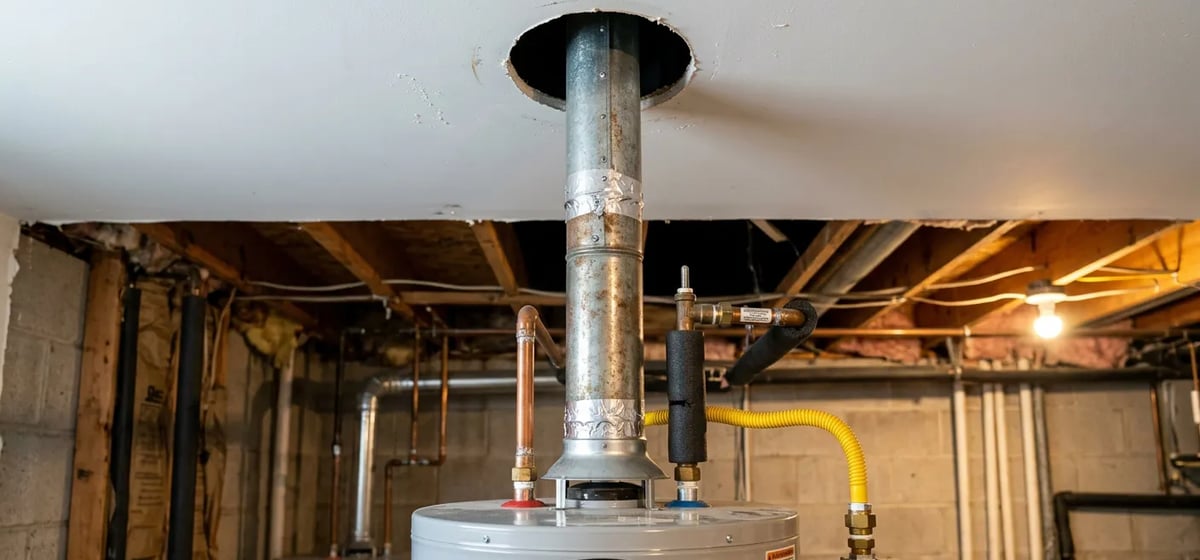
You'll find flues attached to any appliance that burns fuel. The most common ones are on your gas furnace, your gas water heater, and your fireplace. Some homes also have them on gas boilers or wood stoves. You can usually spot a metal pipe coming out of the top of your furnace. This pipe connects to a main chimney or runs straight up through your roof. Sometimes, high efficiency furnaces use white plastic PVC pipes that go right out the side of your house.
Sometimes your water heater and furnace share the same flue pipe. The smaller pipe from the water heater connects to the larger pipe from the furnace. They join together before going up the chimney. This shared setup is very common in older homes.
What to Watch For
Flues can fail over time, so you need to watch out for rust, cracks, and blockages. Birds and squirrels love to build nests inside warm chimney flues. Leaves and twigs can also fall in and block the air flow. Inside the house, look at the metal pipes above your water heater and furnace. If you see white powdery stains, rust spots, or soot, you might have a problem. A damaged flue can leak bad air into your home. If you notice strange smells near your furnace, read our guide to Smells & Odors to figure out the next steps.
Maintenance and Costs
You should have a professional check your flues once a year. Most HVAC technicians include this check when they tune up your furnace in the fall. Chimney sweeps also inspect fireplace flues. When you buy a house, the home inspector will always check the visible parts of the flue. They'll note any rust or loose connections. You can read more about what inspectors look for in our guide to Buying a Home.
If your flue is old or damaged, you might need a new metal liner. Here are some common costs you might see, though local ranges vary:
- Installing a new stainless steel flue liner usually costs between 1,500 to 4,000 dollars.
- Replacing a short piece of rusted metal pipe above a furnace might cost 150 to 400 dollars.
- A standard chimney sweep and inspection runs about 150 to 300 dollars.
- Adding a metal chimney cap to keep birds out costs around 100 to 300 dollars.