What Is A Dry Well?
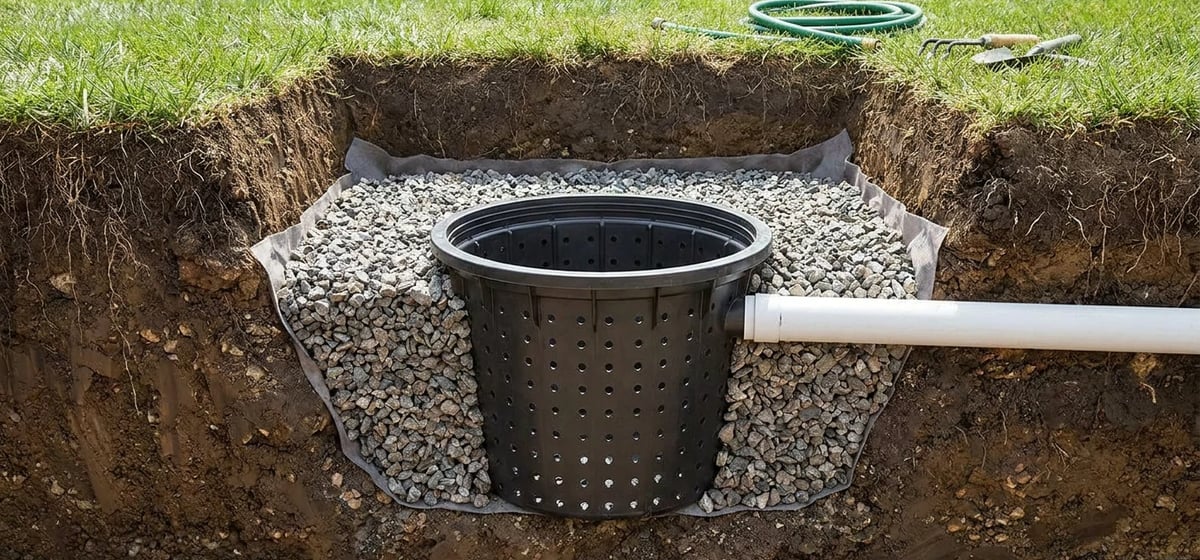
A dry well is an underground pit that collects excess rainwater from your roof and yard. It holds the water in a hollow plastic chamber or a hole filled with crushed rock. This gives the water time to slowly soak into the surrounding soil. The concept has been used for centuries to manage stormwater without connecting to a city sewer system. It's called a dry well because it remains empty most of the time. It only fills up temporarily during heavy rain.
You usually connect a dry well to your gutter downspouts or a drain in a low spot of your yard. Rainwater flows through a buried pipe and dumps into the well. As the storm passes, the water seeps out through holes in the sides and bottom of the chamber. This process returns the water to the natural groundwater table.
Why It Matters To Your Home
Standing water causes big problems for homeowners. Puddles in your yard turn your grass to mud and create a perfect breeding ground for mosquitoes. If water pools near your house, it can cause severe damage. Water seeping into a basement or crawlspace leads to mold, wood rot, and expensive structural repairs. You can read more about protecting your home in our guide to Foundation & Structure.
A dry well moves that dangerous water away from your house. It safely stores the water underground where it cannot cause harm. This is a very green way to handle runoff because it keeps dirty stormwater out of local creeks and rivers.
Where You Run Into Them
You'll rarely see a dry well because it's buried underground. You might spot a small plastic or metal grate flush with your lawn. This grate acts as an overflow or an inspection port. Sometimes, a yard will have a catch basin that looks similar, but a catch basin just moves water to a pipe. A dry well actually stores the water to let it drain away.
If you have a newer home, the builder might have installed one to meet local building codes. Many cities now require homeowners to manage their own rainwater. If you are improving your yard, you might decide to add one yourself. You can learn more about yard water management in our Landscaping, Drainage & Outdoor section.
What To Watch For
Dry wells need a little maintenance to keep working well. If they get clogged, the water doesn't have anywhere to go. Here are a few things to keep an eye on.
- Clogged pipes: Leaves and roof shingle grit can wash down your gutters and plug the pipe leading to the well. You should clean your gutters often to prevent this.
- Filter issues: Many modern dry wells have a filter or a catch basin upstream. You need to clean this out once or twice a year.
- Poor soil drainage: Dry wells work best in sandy or loamy soil. If your yard has heavy clay, the water drains very slowly. A dry well might not work at all in solid clay.
- Tree roots: Roots seek out water. They can grow into the well and completely fill the chamber over time.
How Much They Cost
Installing a dry well involves a lot of digging. You have to dig a large hole for the well and a long trench for the pipe. If you hire a professional landscaping or drainage company, expect to pay between 1,000 and 3,000 dollars. Prices vary based on your location, soil type, and how deep they need to dig.
You can buy a plastic dry well kit at a home improvement store for 150 to 400 dollars. If you do the labor yourself, you will save a lot of money. However, moving dirt and gravel is very heavy work. You should weigh the effort before deciding on DIY vs. Hiring a Pro.