What It Is and How It Works
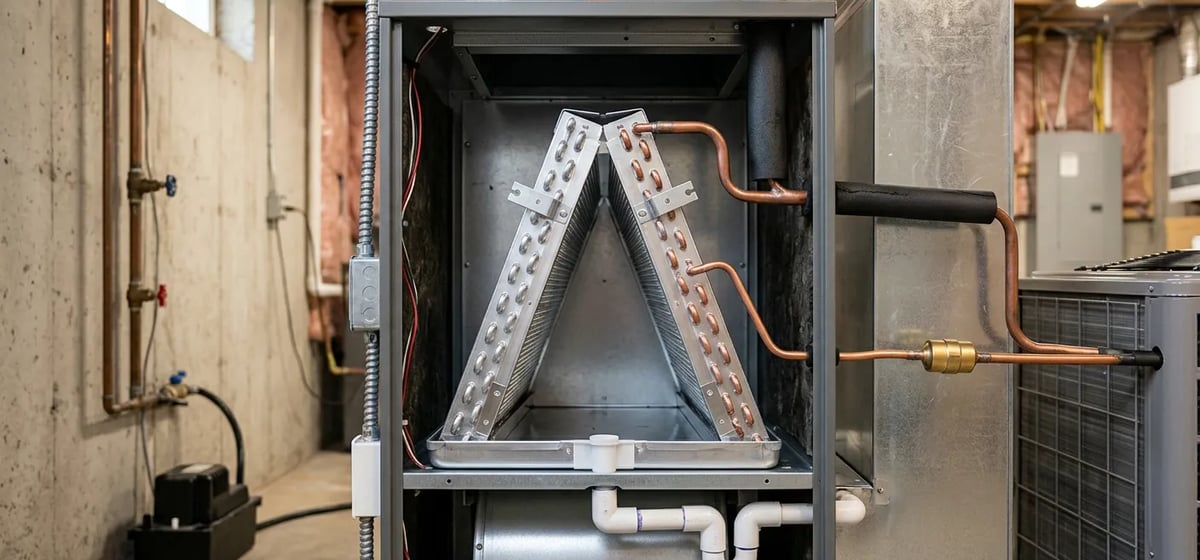
Your air conditioner relies on two main pieces of equipment to cool your home. The outdoor unit dumps the heat outside. The indoor unit absorbs the heat from inside your house. The evaporator coil handles this important indoor job. It sits inside your indoor air handler or furnace. It looks like a thick maze of copper or aluminum tubes covered in hundreds of thin metal fins.
When your thermostat calls for cooling, a special chemical called refrigerant travels inside these tubes. The refrigerant drops to a very low temperature. Your indoor blower fan pulls warm air from your rooms and blows it right over this freezing cold coil. The cold tubes absorb the heat from your air. The refrigerant inside boils and turns into a gas. It then travels outside to release that heat.
This process also removes humidity from your house. As warm air hits the freezing cold tubes, water drips out of the air. It works just like a cold glass of lemonade sweating on a hot summer day. This water drips into a drain pan below the coil and flows outside through a plastic pipe.
Why It Matters for Your Comfort
A clean and healthy coil keeps your house cool and dry. If this part fails, your system will just blow warm air around your rooms. You might also notice your house feels sticky and humid because the system can no longer pull moisture out of the air. Learning about your HVAC & Climate Control system helps you spot these comfort problems early.
Your coil needs excellent airflow to work right. If you let your air filter get too dirty, not enough warm air blows over the tubes. This causes the coil to get far too cold. The condensation dripping off the tubes will actually freeze. Soon, a giant block of solid ice surrounds the metal. Once it freezes, your system cannot cool your house at all.
What Can Go Wrong
Evaporator coils live in a dark and wet spot inside your ductwork. This makes them a prime target for a few common problems.
- Dirt buildup: Dust and pet hair can slip past cheap air filters. This dirt coats the wet coil like a blanket. It blocks the metal from absorbing heat and forces your system to run longer.
- Refrigerant leaks: The metal tubes expand and contract as they heat up and cool down. Over time, this constant movement causes tiny cracks. The chemical refrigerant slowly leaks out into your home air.
- Mold and bacteria: The dark and wet environment is perfect for mold growth. This can cause a stale smell to blow through your vents every time the fan kicks on. Read more about Smells & Odors to know when a bad smell means trouble.
Maintenance and Replacement Costs
You should have a professional inspect your coil once a year. They will check the metal for leaks and clean off any dirt. This simple step keeps your cooling bills low and prevents surprise breakdowns during the hottest months.
If your coil springs a leak, you usually have to replace the whole part. You cannot easily patch these tiny cracks. A new evaporator coil costs between 800 and 2500 dollars to install. Prices range heavily based on the size of your system, the brand you buy, and your local labor rates. A quality coil should last 10 to 15 years before you need a replacement. If your system uses an older banned refrigerant, the repair might cost even more. In that case, you might need to replace the entire indoor and outdoor system at once.