What is a retaining wall?
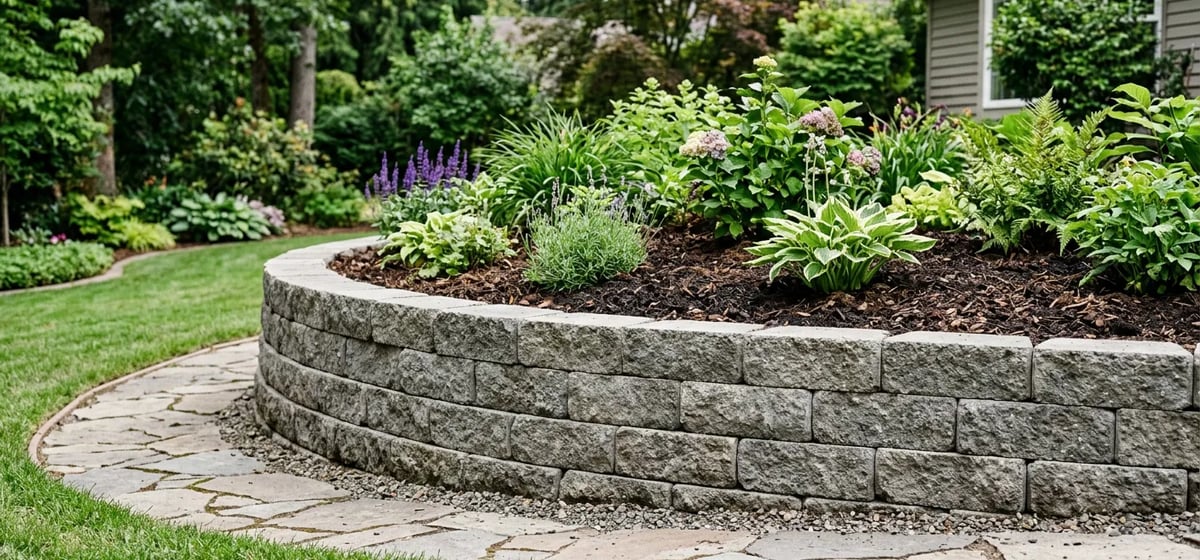
A retaining wall is a sturdy outdoor structure built to hold back soil. If your yard has a steep hill, dirt and water naturally want to slide down. A retaining wall acts like a dam for that dirt. Landscapers build these walls out of heavy materials to keep the earth exactly where you want it. They turn useless slopes into flat garden beds, patios, or driveways. You'll see them made from interlocking concrete blocks, thick wooden timbers, poured concrete, or natural stone.
These walls do a lot of heavy lifting. Wet soil weighs a massive amount. A wall that is only four feet tall and twenty feet long might hold back tons of dirt and water. Because of this extreme pressure, builders must design them carefully. A good wall needs a solid base buried underground to keep it from tipping over. It also needs a way for water to escape so the pressure doesn't build up behind it. You can learn more about managing yard water in our guide to Landscaping, Drainage & Outdoor.
Why it matters to your property
Retaining walls do more than just make your yard look nice. They protect your home from serious damage. If your house sits at the bottom of a hill, a retaining wall stops mud and water from rushing toward your house during heavy rain. This keeps your basement dry and protects your home. You can read more about keeping your structure safe in our guide to Foundation & Structure.
If your house sits at the top of a hill, a retaining wall stops the ground from slowly washing away. Over time, erosion can eat away the dirt supporting your home. A strong wall locks that soil in place. Beyond safety, these walls also add usable space to your property. A steep backyard is hard to mow and tough to use. By cutting into the hill and building a wall, you create a flat area for kids to play or a spot to put a patio.
Common materials and what they cost
Contractors build retaining walls from a few main materials. Your choice depends on your budget and how you want the wall to look. Keep in mind that costs vary widely based on your location, the soil type, and how hard it is to reach your yard.
- Wooden timbers: This is usually the cheapest option. Wood blends into a natural landscape nicely. However, even treated wood will rot over time. You might pay 15 to 30 dollars per square foot of wall face.
- Interlocking concrete blocks: These are the most common choice for modern yards. The blocks lock together without wet mortar. They last a very long time and come in many colors. Expect to pay 25 to 50 dollars per square foot.
- Natural stone: Boulders or stacked stones look beautiful and last forever. Building with real stone takes a lot of skill and heavy machinery. This pushes the price to 40 to 100 dollars per square foot.
- Poured concrete: Contractors pour wet concrete into wooden forms to create one solid wall. This is very strong but can crack if the ground shifts. It usually costs 30 to 60 dollars per square foot.
If you plan to hire a pro to build a new wall, check our guide on Hiring Contractors & What Things Cost to prepare for the quotes.
What to watch out for
Water is the biggest enemy of any retaining wall. When soil gets wet, it swells and gets much heavier. If water gets trapped behind your wall, the pressure will eventually push the wall over. A properly built wall always has a drainage system. You should see gravel behind the wall and small pipes or gaps near the bottom. These gaps are called weep holes. They let water leak out safely.
As a homeowner, you should inspect your walls once a year. Look for a few warning signs of failure. If the wall starts leaning forward, the pressure behind it is too high. If you see deep cracks in the blocks or concrete, the ground below might be sinking. You might also notice the dirt behind the wall sinking down. This usually means water is washing the soil out through the cracks. If you spot these issues early, a landscaper can often fix the drainage before the whole wall falls down.