What is an Evaporative Cooler?
An evaporative cooler is a simple system that cools your home using water and moving air. You might hear people call it a swamp cooler. That slang term started in the 1930s because the machines add a lot of humidity to the indoor air. The real name comes from the science of evaporation. When hot, dry air passes over water, the water evaporates. This process drops the air temperature quickly and naturally.
How It Works
These coolers are much simpler than standard air conditioners. They do not use chemical refrigerants or complex compressors. Instead, a swamp cooler relies on three main parts to cool your house.
- A water pump that moves water from a bottom pan to the top of the unit.
- Thick cooling pads that soak up the dripping water.
- A large motorized fan that pulls hot outside air through the wet pads.
As the hot air pushes through the wet pads, the water evaporates. The air cools down by 15 to 40 degrees. The fan then blows this chilled, moist air through your home ductwork and into your living spaces. Because the system constantly pulls outside air in, you must leave a few windows cracked open. This lets the warm, stale indoor air escape as the fresh cool air pushes in.
Where You Find Them
You will usually only see these units in very dry climates. They are incredibly popular in the American Southwest. Homes in states like Arizona, New Mexico, Colorado, and Nevada use them often. If you live in a humid place like Florida or Georgia, an evaporative cooler will not work at all. The outside air is already full of moisture, so the water on the pads cannot evaporate to create the cooling effect.
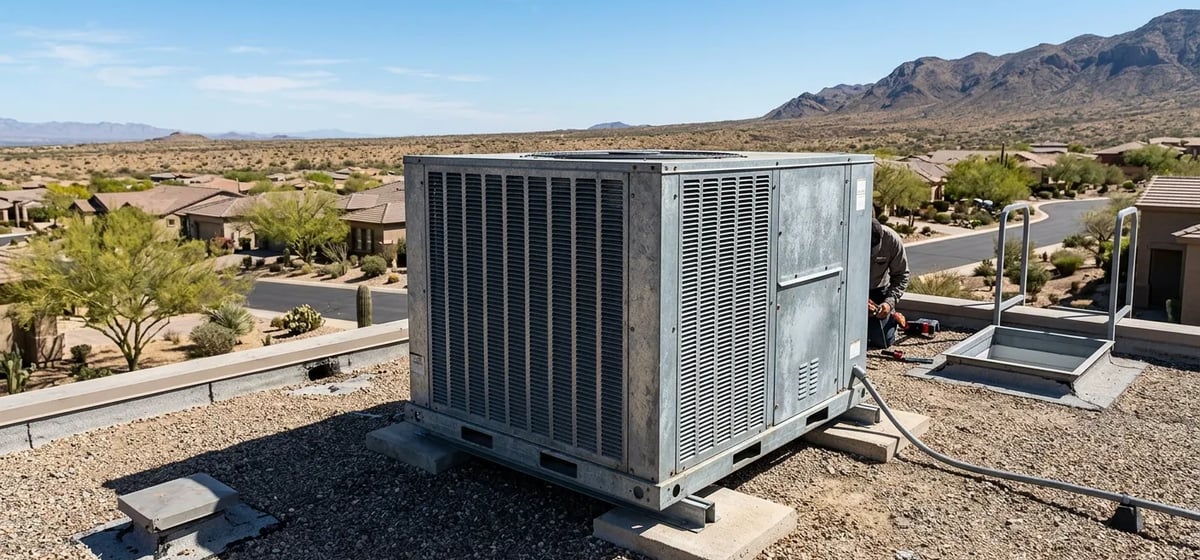
Most homeowners have their units mounted on the roof. This saves space in the yard and lets gravity help push the cool air down into the house. However, roof mounts mean you must be careful about leaks around the duct opening. You can read more about protecting your roof in our guide to Roofing.
Costs and Upkeep
Swamp coolers cost much less to buy and run than traditional air conditioners. They use about 75 percent less electricity because the only moving parts are the fan and a small water pump. A brand new evaporative cooler usually costs between 1,500 and 3,500 to install. Keep in mind that prices vary based on your location and the size of your home. You will also spend about 20 to 60 each year on new cooling pads.
Maintenance is a mandatory yearly chore. You have to clean the bottom water pan to stop rust and hard water scale. You also need to replace the wet pads every spring. If you ignore this upkeep, the system will smell bad and blow dirty air into your rooms. For more tips on keeping your home comfortable year round, check out our section on HVAC & Climate Control.
What to Watch Out For
These coolers are great for dry heat, but they have strict limits. During the late summer monsoon season, the outside humidity rises. When the air gets too humid, the cooler stops dropping the temperature. It just blows warm, wet air into your house. You also need to watch out for hard water buildup. Minerals in your tap water will clog the cooling pads and ruin the pump over time. Adding a small bleed off valve helps flush the salty mineral water out of the pan. Because these units use a constant supply of fresh water, you might also notice a slight bump in your water bill during the hottest months. If you ever spot a constant drip coming from your roof, you should check out our Plumbing guide to learn how to fix the float valve.