What Ductwork Is
Ductwork is the hidden highway system inside your home. It's a network of tubes that connects your heater and air conditioner to every room. When your system turns on, it pushes heated or cooled air through these tubes. The air then blows out of the vents in your floors, walls, or ceilings.
Your home actually has two separate sets of ducts. Supply ducts carry the conditioned air from your equipment to your living spaces. Return ducts pull the old air out of your rooms and carry it back to the equipment to be heated or cooled again. Both sets must work together to keep the air pressure balanced inside your house.
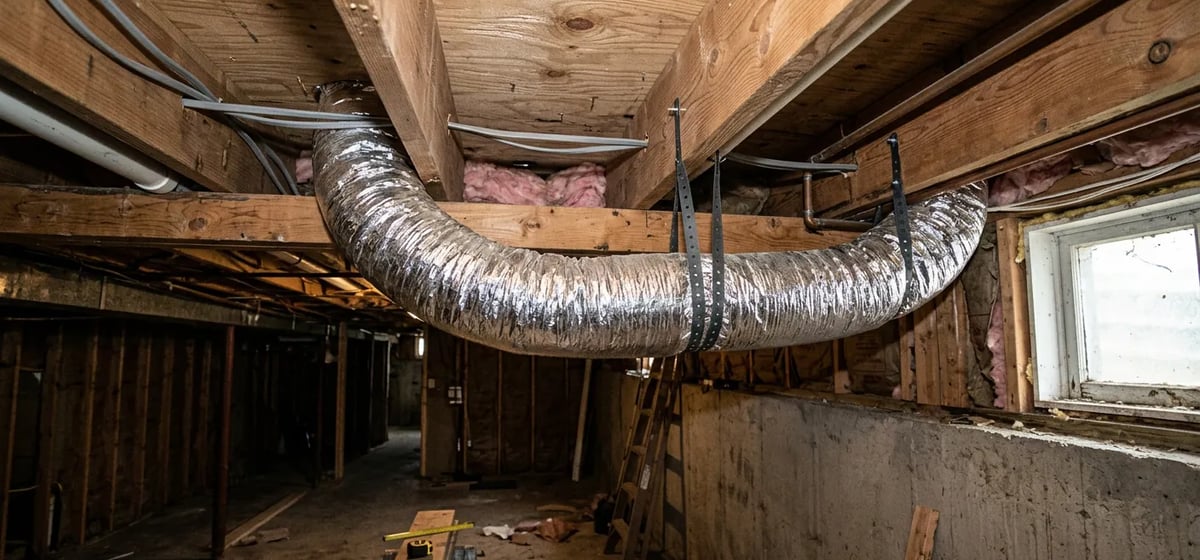
Most homes use a mix of rigid and flexible ducts. Rigid ducts are made of sheet metal or fiberglass. They look like large silver boxes or wide pipes. Flexible ducts look like giant slinkies wrapped in shiny plastic. Builders put these tubes in spaces you rarely see, like your attic, basement, or crawlspace. You can learn more about how this connects to your main equipment in our HVAC & Climate Control guide.
Why It Matters to You
Your ducts play a huge role in your daily comfort and your monthly budget. If your air conditioner makes cold air but your ducts have holes, that cold air leaks into your hot attic. You end up paying to cool an empty space while your living room stays hot. According to energy experts, a typical house loses 20 to 30 percent of its conditioned air due to leaks and poor connections.
Leaky ducts also pull dirty air in. If a tube in your crawlspace has a gap, it can suck up dust, mold, and bugs. It then blows that dirty air right into your bedroom. Keeping your ducts tightly sealed keeps your home clean and protects your lungs.
Finally, bad ductwork forces your equipment to work harder. If air can't flow easily through the tubes, your heater and air conditioner will run longer to reach the right temperature. This extra strain wears out the motors faster, which leads to expensive repair bills.
What to Watch For
Since ductwork is hidden away, it's easy to forget about it. However, your home will give you clues when something is wrong. Pay attention to these common warning signs.
- Hot and cold spots. If one room is freezing and another is boiling, your ducts might be blocked or leaking.
- High energy bills. If your utility costs jump up for no clear reason, you might be losing air through disconnected tubes.
- Excess dust. If you clean your house and see a thick layer of dust the very next day, your system might be pulling dirt from the attic.
- Strange noises. Rattling or whistling sounds when the air turns on often point to loose metal joints.
If you notice a musty scent every time the heater kicks on, you might have moisture in the lines. Check out our guide on Smells & Odors to help track down the source.
Common Costs and Upkeep
Maintaining your ductwork saves you money in the long run. The most common tasks are cleaning, sealing, and replacing sections of the tubes. Prices vary based on where you live and the size of your home, but knowing the ballpark costs helps you budget.
Having a professional clean your ducts usually costs 300 to 500 dollars. You only need to do this every few years, or if you find mold or a pest infestation. Sealing leaky ducts is a great investment. Hiring a pro to seal accessible joints by hand usually runs 400 to 1,000 dollars. Some companies use an aerosol spray to seal the whole system from the inside. That process costs 1,500 to 2,500 dollars.
If your ductwork is very old, crushed, or full of holes, you might need to replace it. Installing new ductwork throughout a whole house is a major job. Expect to pay 2,000 to 6,000 dollars or more. If you plan to hire someone for this work, review our advice on Hiring Contractors & What Things Cost so you know what to expect during the bidding process.