What It Is
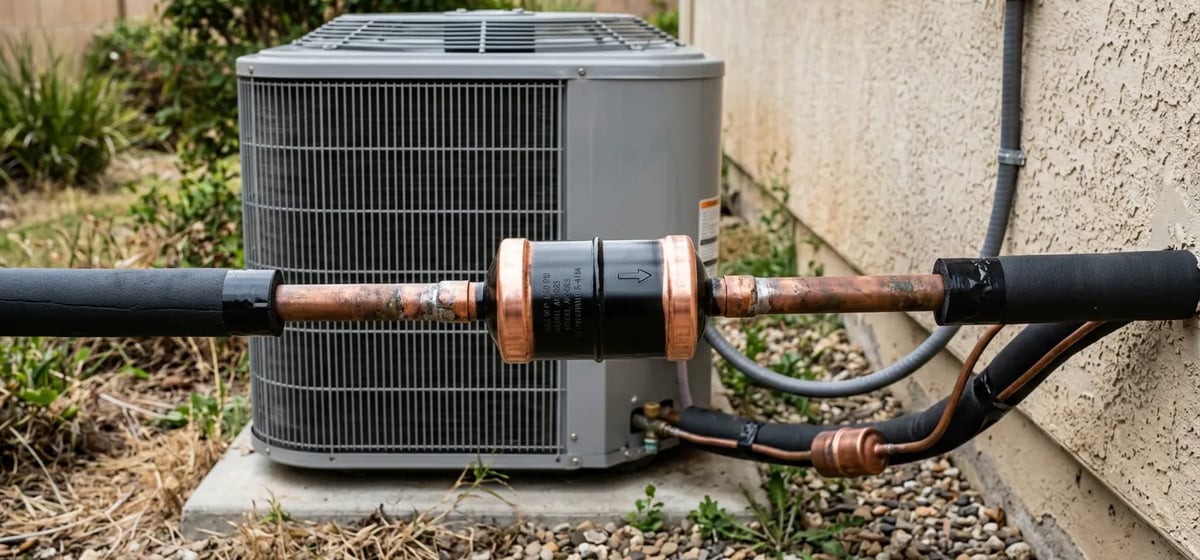
A filter drier is a small metal cylinder installed on the copper lines of your air conditioning system. It usually looks like a spray paint can or a soup can painted black, blue, or gray. As the name suggests, it does two jobs at once. First, it filters out solid bits of metal, dirt, and sludge from the refrigerant. Second, it dries out the system by absorbing harmful moisture. The name comes from these two jobs and became standard jargon for refrigeration mechanics back in the 1940s.
Inside the metal shell, there is a fine mesh screen to catch the dirt. There is also a core made of a special material called a desiccant. This desiccant works just like the little silica gel packets you find in new shoe boxes. It grabs onto water molecules and traps them so they cannot float around in the refrigerant.
You will typically find this cylinder sitting outside right next to your large air conditioning condenser unit. Sometimes the manufacturer tucks it inside the metal cabinet to protect it from the weather. The liquid refrigerant flows right through this cylinder before it heads inside your house to cool the air.
Why It Matters to Your Wallet
Water and dirt are the absolute worst enemies of your air conditioner. If outside air or moisture gets inside the sealed copper lines, it mixes with the specialized refrigerant oil. This mixture creates a nasty acid that eats away at the system from the inside out. Dirt, rust, and metal shavings can also clog up tiny metering valves or scratch the inside of the compressor.
The compressor is the heart of your HVAC & Climate Control setup. Replacing a ruined compressor can easily cost you 1500 to 3000 dollars. The filter drier acts like a cheap insurance policy for that expensive part. It permanently traps the acid causing moisture and catches the dirt before they can do any permanent damage.
When Does It Need Replacing?
You don't need to replace this part every year. It is completely different from the standard air filters you change inside your house. A filter drier sits completely sealed inside the copper piping. You only need a new one when a technician cuts into those lines to perform a major repair.
Here are the most common times a professional will install a new one:
- When they fix a refrigerant leak and have to recharge the entire system.
- When they replace a broken compressor that burned out.
- When they install a brand new indoor cooling coil in your attic or basement.
- When you buy a completely new outdoor air conditioning unit.
Once a system is opened to the outside air, the old filter drier absorbs the humidity from the atmosphere. It fills up with water almost instantly and becomes completely useless. A lazy technician might try to skip replacing it to save a few minutes. If they do, your system will suffer an early death.
What It Costs
The part itself is very cheap. A brand new filter drier usually costs 30 to 75 dollars at a local supply house. However, you can't install it yourself. A licensed technician has to use a torch to weld it into the copper lines. Then, they must run a special pump to pull a vacuum and remove all the air before adding new refrigerant.
Because of the heavy labor and expensive equipment involved, you rarely pay for just a filter drier. It usually shows up as a small line item on a much larger repair bill. If a technician charges you to replace just the filter drier because it got clogged up with debris, expect to pay 250 to 500 dollars for the total job. Costs vary based on your local labor rates and the size of your specific system. If you are ever unsure about a repair quote, you can learn more about Hiring Contractors & What Things Cost to make sure you're getting a fair deal.