What is a sill pan?
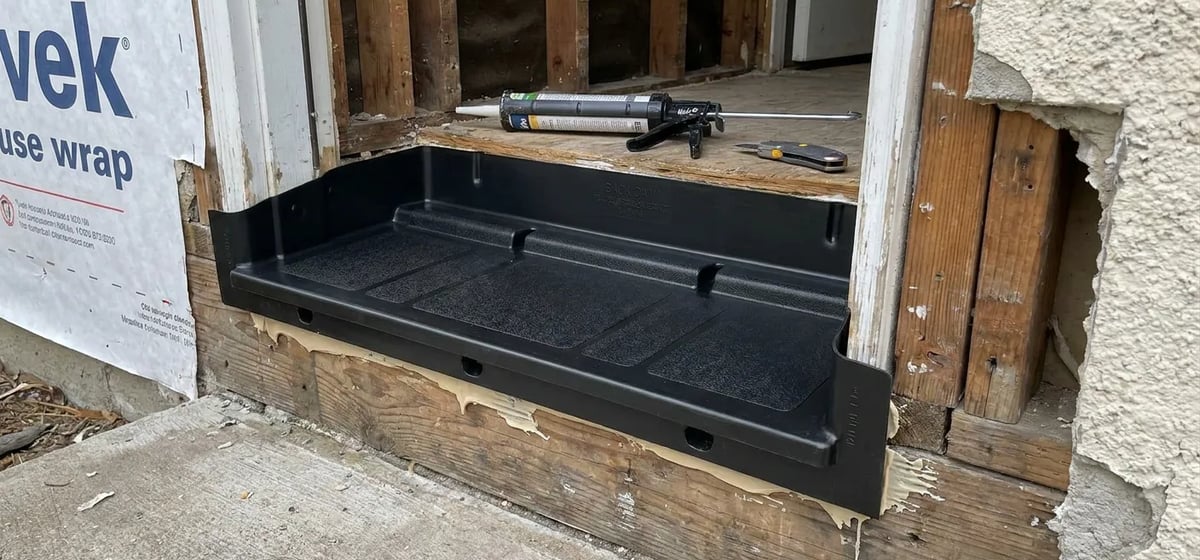
A sill pan is a protective piece of molded plastic, metal, or flexible flashing tape. Builders place it directly under your exterior doors and windows. It sits right on top of the rough wood framing. Think of it like a shallow baking pan with the front lip folded down. If water sneaks behind your siding or leaks around a window frame, the sill pan catches it. The downward slope then guides that water safely back outside. Builders started using these widely in the late twentieth century. Modern homes became much tighter to keep the weather out, but that also meant trapped water couldn't dry easily. The word sill traces back to the Old English word syll, which means a heavy beam or foundation block. You'll find them under sliding glass doors, front entry doors, and every window in a newly built house.
Why it matters to you
Water is the biggest enemy of your home. A tiny leak around a door can cause massive damage over time. Without a sill pan, rainwater slowly soaks into the wood framing beneath your doors and windows. This wet wood eventually rots and loses its structural strength. It also invites termites, carpenter ants, and mold into your walls. A sill pan acts as your final line of defense. Even if your caulk cracks or your weatherstripping fails, the pan catches the stray drops. This simple piece of plastic or metal saves you from tearing open your walls to replace rotten wood. If you want to learn more about protecting your home from water damage, check out our guide on Windows & Doors.
Where you run into it
You usually only hear about sill pans when you buy a house or hire a contractor to replace a door. A home inspector might note a missing sill pan on an older home during the buying process. If you hire a window company, their quote should list new sill pans as part of the installation. You might also spot them if you're looking closely at your exterior.
- Look at the bottom of your front door from the outside.
- Check the gap between the door threshold and the concrete step or deck.
- You can sometimes see the very edge of the metal or plastic peeking out.
If you're doing a major remodel, you'll definitely see them before the new exterior doors go in. They're a standard building code requirement in almost every town today.
Costs and what to watch for
A sill pan itself is incredibly cheap, but the labor to install it isn't. The part usually costs 15 to 40 dollars at a local hardware store. However, you can only install a sill pan when the door or window is completely removed from the wall. If you hire a professional to remove an existing door, install a sill pan, and put the door back, expect to pay 300 to 800 dollars. Prices vary widely based on where you live, the size of the door, and if any rotten wood needs replacing.
Keep an eye out for soft spots on the floor right inside your exterior doors. If the wood floor feels spongy or the baseboards look swollen, water is getting inside. This often means your sill pan is missing, cracked, or installed backward. You should also check the caulk around your windows and doors every year. Keeping the outside sealed means your sill pan never has to do any emergency work. For more tips on maintaining your home exterior, read our Exterior: Siding, Garage & Decks page.