What is a Purlin?
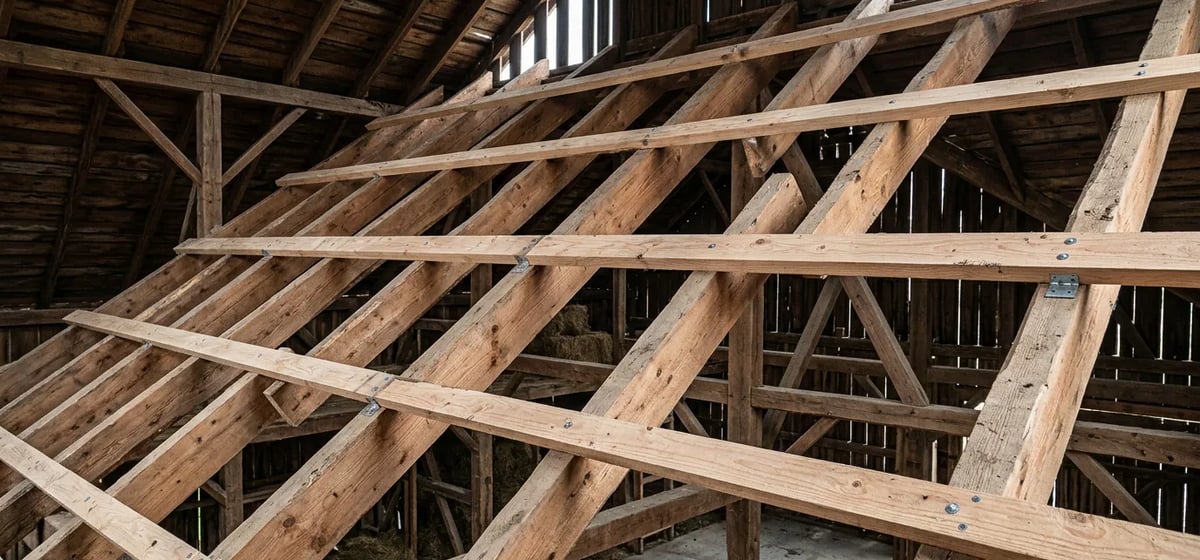
When you look up at a bare roof from the inside of an attic, you will see a lot of wood framing. The long boards that slope downward from the peak to the edges are the rafters. The boards that run sideways across those rafters are the purlins. A purlin is a horizontal beam that runs along the length of your roof. It sits right under the roof deck to give it extra support. You can think of rafters as the vertical ribs of your roof and purlins as the horizontal spine that holds everything together. They carry the weight of the shingles or metal sheets and transfer that weight safely to the main rafters.
How Purlins Connect to the Roof Frame
Purlins don't just float in the air. Builders attach them securely to the main rafters or trusses so they don't shift. In wood framing, carpenters use special metal brackets or long screws to hold the purlins tightly in place. They space the purlins evenly from the bottom edge of the roof all the way up to the peak.
The spacing between these beams depends on the type of roof covering you have. Metal roof panels usually need purlins spaced 24 to 36 inches apart. Heavy concrete tiles might need them spaced much closer together. The purlins create a solid grid across the entire roof. Roofers then attach the metal sheets or wood decking directly to this grid.
Why Purlins Matter to Your Home
Purlins do a lot of heavy lifting to keep your house safe. They stop the roof from sagging over time. They also add rigidity to the entire structure. If you get heavy snow in the winter, the extra weight pushes down hard on the roof. Purlins spread that weight out evenly so the roof doesn't cave in. They also fight wind uplift during severe storms. When high winds try to rip the roof off your house, the purlins hold the roof deck tight to the frame.
Where You Will Find Them
Not every house has purlins. Standard homes built with modern roof trusses often skip them entirely. However, you will usually find them in specific types of buildings.
- Metal roofs: Almost all metal roofs use a grid of purlins to support the large metal panels.
- Older homes: Houses with very wide or steep roofs often have wood purlins to keep the long rafters from bowing.
- Outbuildings: You will see them in pole barns, large sheds, and detached garages.
While home attics usually have wood purlins, modern metal buildings use steel purlins. Steel purlins are often shaped like the letters C or Z to make them stronger and easier to stack.
Signs of Trouble and Repair Costs
Purlins can fail over time due to age, water damage, or heavy loads. You might notice your roof looks wavy from the outside. That usually means the purlins are sagging. Inside the attic, you might see cracked wood or dark stains from water leaks. If you see white powder or rot on wood purlins, you have a serious moisture problem. For steel purlins, you should look for patches of rust. If you spot any of these issues, you need to check your roofing right away.
Fixing a broken purlin isn't a simple weekend project. You will need to hire a contractor to brace the roof safely and replace the bad beams. A small repair might cost 500 to 1200. A larger job with multiple damaged beams can run 2000 to 5000. Wood purlins usually cost 15 to 30 per linear foot for labor and materials. Steel purlins cost 20 to 50 per linear foot installed. Keep in mind that repair costs vary widely based on your location, the pitch of your roof, and the materials used. You can learn more about budgeting for these projects in our guide to hiring contractors and what things cost.