What is a Floor Truss?
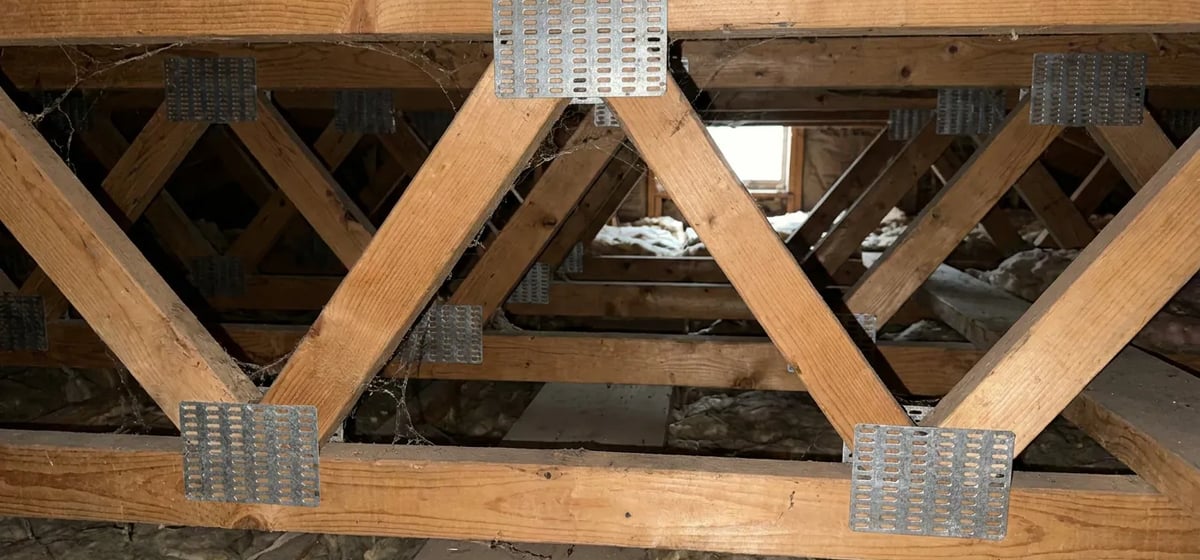
A floor truss is a thick wooden frame used to support your floors. It is made of smaller pieces of wood connected by metal plates. These pieces form a zigzag pattern. The word truss comes from the Old French word trousser. That means to pack or bind together. Builders adapted roof truss designs for floors in the 1970s. This allowed them to span longer distances than solid wood beams. You will usually find them holding up the main floors of a modern house. If you look up from an unfinished basement, you can see them spanning the ceiling. They are part of your home's Foundation & Structure.
Why Builders Use Them
Floor trusses are very strong. They can cross large, open rooms without needing a support wall underneath. This makes large living rooms and open basements possible. They also have a special open web design. The zigzag pattern leaves empty triangles inside the wooden frame. This open space is perfect for hiding your home systems. Plumbers and electricians love them. They can easily run pipes for your Plumbing right through the gaps. They do not have to drill holes like they do with solid wood joists. You can also run thick wires for your Electrical system or even ductwork through the larger gaps. This keeps your basement ceiling looking neat and gives you more headroom.
Trusses Versus Solid Joists
Before floor trusses became popular, builders used solid lumber. These are called floor joists. A solid joist is just a large, heavy piece of wood like a two-by-ten or a two-by-twelve. Solid wood is cheaper to buy upfront. However, solid wood cannot span as far as a truss. If you use solid joists for a large room, you have to build extra support walls underneath. Solid wood also warps and shrinks more easily than a truss. When solid wood shrinks, your floors start to squeak. Floor trusses use smaller pieces of wood that are thoroughly dried in a factory. This means a truss floor is much less likely to squeak when you walk on it. Finally, if you want to run pipes or wires through a solid joist, you have to drill holes. Drilling takes extra time and weakens the wood. The open gaps in a truss save time and keep the wood strong.
What They Cost
If you are building an addition or fixing major damage, you might need to buy new floor trusses. They are usually custom built for your specific house in a factory. A standard wooden floor truss costs about 5 to 10 dollars per linear foot. If you need a truss that is 20 feet long, expect to pay 100 to 200 dollars for just that one piece. Installation labor will add another 2 to 4 dollars per foot. A full room addition might cost 1,500 to 3,000 dollars for the truss package alone. Keep in mind that these prices are just ballpark figures and ranges vary based on your location and the current price of lumber.
What to Watch For
Floor trusses are engineered to carry specific weights. Every piece of wood and every metal plate has a job. Because of this, you must treat them carefully.
Warning: Never cut, drill, or notch a floor truss. Cutting even one small piece of the zigzag web ruins the strength of the whole frame. If a plumber cuts a truss to fit a pipe, the floor above could sag or collapse.
Here are a few other things to keep an eye on:
- Bouncy floors: If your floor feels like a trampoline when you walk on it, a truss might be broken.
- Loose metal plates: The metal plates holding the wood together can pop loose over time. This happens if the wood shrinks or if the floor carries too much weight.
- Water damage: A slow leak from a bathroom can rot the wood. Look for dark stains or soft spots on the trusses in your basement.
- Bad repairs: Sometimes a previous owner tries to fix a broken truss by nailing a scrap piece of wood next to it. This does not work. You need a structural engineer to design a proper repair.
If you see any damage to your floor trusses, call a professional right away. Fixing them early prevents much bigger structural problems later.