What is a footing?
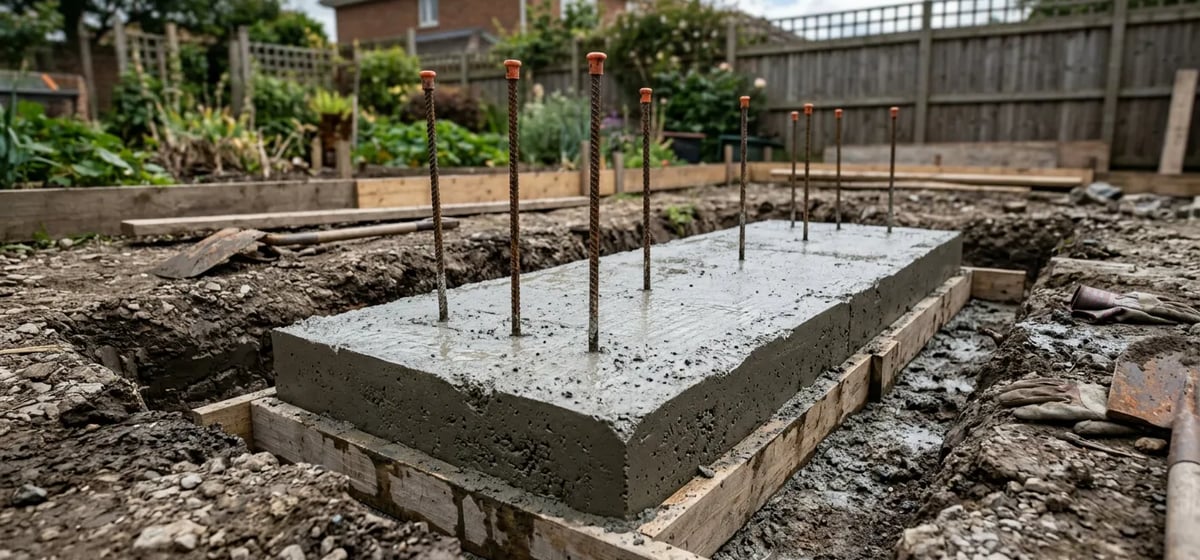
A footing is the very bottom part of your home. Think of it like the feet of your house. It's a wide pad of concrete poured deep underground. Your foundation walls sit directly on top of this pad. The footing spreads the massive weight of your house over a larger area of soil. This stops your home from sinking into the dirt. The word comes from the literal idea of giving a building a foot to stand on. Builders have used the term since the 1500s. Most footings are made of poured concrete reinforced with steel rebar. They sit below the frost line. The frost line is the depth where the ground stops freezing in the winter. If a footing sits above the frost line, the freezing and thawing dirt will push the concrete up and crack your walls.
Why footings matter to you
If your footing fails, your whole house moves. A strong footing keeps your floors level and your doors closing right. It anchors the Foundation & Structure of your home. When a footing cracks or shifts, the walls above it crack too. This leads to serious water leaks and expensive structural damage inside your living space. A good footing also keeps your home stable during heavy rains or long droughts. Soil expands when it gets wet and shrinks when it dries out. The footing needs to be deep enough to ignore these changes at the surface. Without a proper footing, a heavy house would just sink into soft mud like a person standing in wet sand.
Where you run into footings
You'll usually never see the footings of your main house because they're buried deep in the dirt. But you'll deal with them if you decide to build something new. If you add a deck, a sunroom, or a detached garage, you need new footings. You can learn more about these projects in our Exterior: Siding, Garage & Decks guide. Building codes require footings for almost any permanent structure. You will see the word "footing" on contractor quotes and city permits. The city inspector will come out to check the footing holes before the contractor pours the concrete. They want to make sure the hole is deep enough and wide enough for your local soil type. If you live in an area with soft clay, your footings will need to be much wider than if you live on solid rock.
Signs of footing failure
Footing issues look exactly like foundation issues. Since the footing supports the foundation, a bad footing causes the foundation to break. Watch out for a few major warning signs around your house.
- Large cracks in your basement walls or exterior brick.
- Doors and windows that suddenly stick or won't latch.
- Uneven or sloping floors on your main level.
- Gaps between your walls and the ceiling.
- Chimneys that lean away from the house.
You can read more about keeping water away in our guide to Landscaping, Drainage & Outdoor.
What footings cost to fix or pour
Repairing an old footing or pouring a new one is hard work. It requires digging deep into the ground and moving heavy concrete. If you're building a new deck, pouring concrete footings usually costs 150 to 400 dollars per hole. The price depends on how deep the frost line is in your area. If your main house footing is sinking, you'll need a process called underpinning. A contractor drives steel piers deep into the earth to lift the footing back up. This is a massive job. Foundation repair costs for underpinning usually run from 1000 to 3000 dollars per pier. A full house fix can easily cost 10000 to 30000 dollars. Keep in mind that all these ranges vary based on your local labor rates and soil conditions.