What Is Frost Heave
Frost heave is a powerful upward swelling of soil that happens during freezing weather. When the temperature drops below freezing, the water trapped inside the dirt turns to ice. This freezing water expands as it gets colder. As it expands, it creates thick blocks of solid ice called ice lenses deep underground. These ice lenses continue to grow as they pull in more water from the surrounding dirt. Eventually, they push the dirt upward with incredible force. The word frost traces back to the Old English word forst, while heave comes from hebban, meaning to lift or raise. Builders combined these two words to describe the literal lifting of the earth by freezing temperatures. It is a natural process, but it causes massive headaches for homeowners every single winter.
Where You Will See It
You will mostly notice frost heave in areas with long, cold winters and very wet soil. If you live in the northern half of the United States, you are likely familiar with this seasonal problem. The damage usually shows up in several common places around your yard and property.
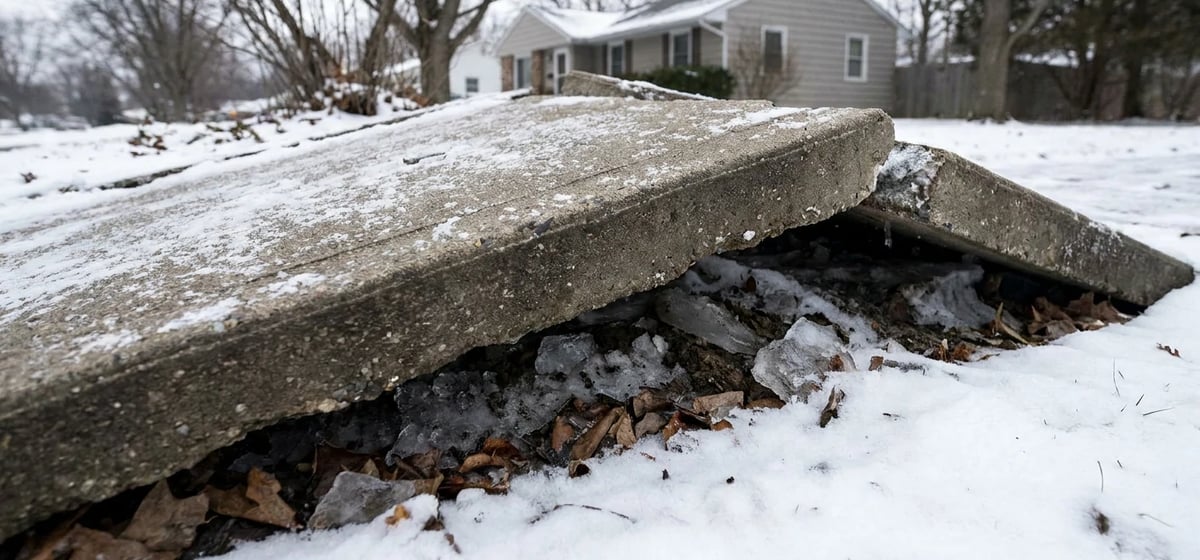
- Driveways and sidewalks: The ice pushes up from below and easily cracks heavy concrete or asphalt surfaces.
- Fence posts and mailboxes: The shifting ground tilts the wooden posts or pushes them completely out of the dirt over time.
- Decks and patios: The upward pressure warps wooden deck frames, pops nails out of boards, and cracks expensive stone pavers.
- Retaining walls: The freezing soil expands behind the wall and pushes the heavy blocks forward until they topple over.
You might also notice doors that suddenly stick or refuse to close during the coldest months of the year. For more details on protecting your outdoor structures from winter weather, check out our guide on Exterior: Siding, Garage & Decks.
Why It Matters To Your Home
Frost heave is much more than just an ugly, jagged crack in your driveway. The extreme pressure from the expanding ice can cause serious structural damage to your home. If the wet soil under your house freezes and expands, it can actually lift portions of the entire building. This uneven movement cracks solid basement walls, shifts wooden support beams, and breaks underground plumbing pipes. Fixing these severe issues is rarely cheap. Minor concrete driveway repairs might cost 200 to 800 dollars. However, major structural repairs can cost 3,000 to 15,000 dollars or more depending on the damage. Keep in mind that these price ranges vary based on where you live and the size of your home. You can learn more about protecting your home's base in our Foundation & Structure guide.
How To Prevent The Damage
You cannot stop the winter weather, but you can stop frost heave from ruining your property. The secret is keeping water away from your foundation and digging deep enough when you build new structures. Without water, the soil cannot freeze and expand.
- Dig below the frost line: When you install fence posts or deck footings, you must dig deeper than the soil freezes. In cold states, this usually means digging 36 to 48 inches deep.
- Improve your yard drainage: Frost heave only happens when the ground is soaking wet. Make sure your roof gutters push rainwater far away from your house.
- Use crushed gravel base layers: When you pour a new patio or concrete driveway, put a thick layer of crushed gravel underneath it. Water drains quickly through loose gravel instead of getting trapped and freezing solid.
- Grade your soil properly: Make sure the dirt around your house slopes downward so melting snow runs away from your walls.
If you need help redirecting water away from your house before winter arrives, read our tips on Landscaping, Drainage & Outdoor.