What is a French drain?
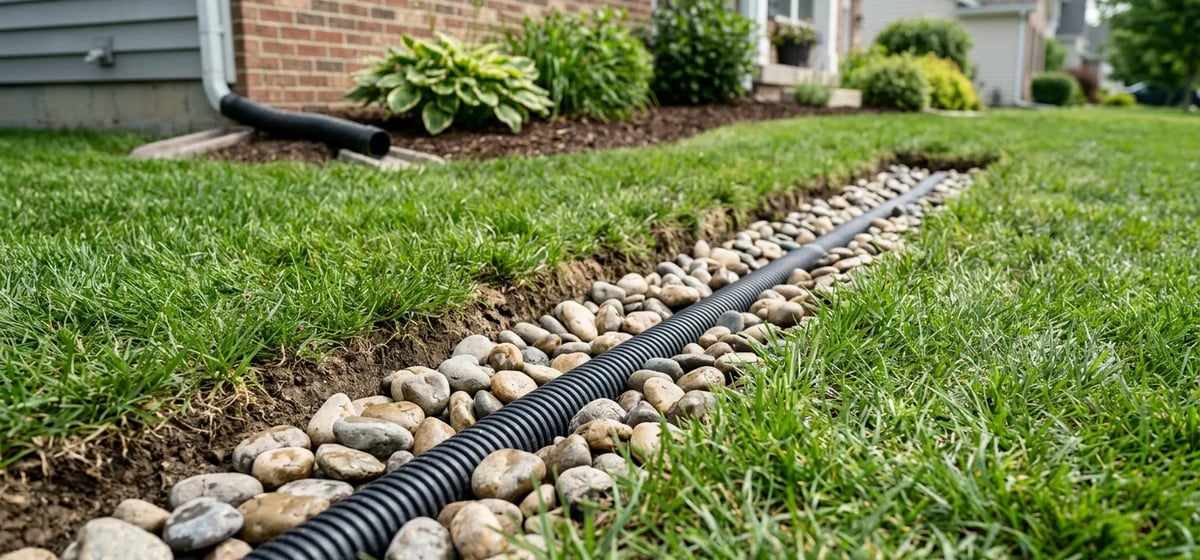
A French drain is a simple trench filled with gravel and a long pipe. The pipe has small holes drilled along its bottom side. When water pools in your yard, it sinks through the gravel and enters the pipe. Gravity then carries the water away from your house to a safer spot. It acts like a giant gutter built right into the ground.
The gravel does two jobs. It holds the trench open and gives the water empty space to flow through quickly. The pipe is usually made of hard PVC plastic or a flexible black plastic. The holes in the pipe always point down, not up. This surprises many people. Water fills the trench from the bottom up, so pointing the holes down lets the water enter the pipe sooner.
The name sounds fancy, but it has nothing to do with the country of France. An American farmer and judge named Henry French made the design popular. He wrote a book about farm drainage back in 1859. Today, builders use his exact same idea to keep modern yards dry.
Why it matters to your home
Water is the biggest enemy of your house. If rain pools near your walls, it eventually seeps down into the dirt around your basement or crawlspace. This constant wetness puts massive pressure on your walls. Over time, that pressure causes cracks, leaks, and mold.
A French drain stops this water before it ever reaches your house. It gives the water a fast and easy path to escape. This protects your Foundation & Structure from costly damage. Fixing a flooded basement can cost tens of thousands of dollars. Installing a drain outside is much cheaper and prevents the headache entirely. If you notice a musty smell in your basement after a heavy storm, you might have poor yard drainage. Fixing the dirt outside is always the first step. You can't permanently fix a wet basement from the inside.
Where you usually need them
You don't need a French drain everywhere. They only go in spots where water naturally gathers and sits. You'll often see them installed in a few common areas.
- At the bottom of a sloped lawn where rainwater runs down and stops.
- Right in front of a retaining wall to stop water pressure from knocking the wall over.
- Along the edge of a patio or driveway that constantly floods during heavy rain.
- Around the outside edge of your house if the yard slopes toward the building instead of away from it.
If you have a permanently soggy spot in your grass, that's a prime candidate. You can learn more about managing yard water in our Landscaping, Drainage & Outdoor guide.
What to watch out for
French drains work great, but they can fail if installed poorly. The biggest problem is dirt and mud washing into the pipe. When mud fills the pipe, the water stops flowing. Tree roots also love the steady supply of water and will grow right through the holes.
You also need to make sure the water goes somewhere safe. You can't dump your yard water straight into your neighbor's yard. Most cities require you to run the end of the pipe to a street storm drain, a dry well, or a natural creek.
What it usually costs
Installing a French drain involves heavy digging. You usually pay by the linear foot. In the US, you can expect to pay 25 to 50 dollars per foot for a professional installation. Prices vary based on your soil type and local labor rates.
A typical yard project usually costs between 1,000 and 4,000 dollars total. If the crew has to tear up concrete or work around buried gas lines, the price will climb higher. You can read more about typical job pricing in our Hiring Contractors & What Things Cost guide. You can dig the trench yourself to save money, but moving tons of wet dirt and heavy gravel is very hard physical work.