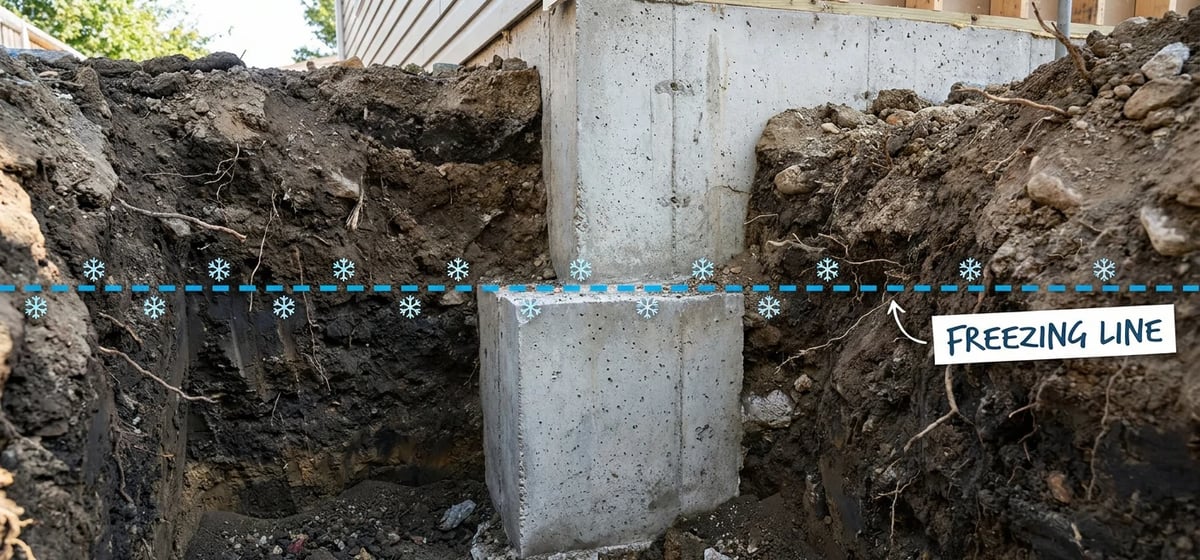
What the Frost Line Is
The frost line is the deepest point in the ground where soil freezes during the coldest part of winter. Soil acts like a sponge and holds a lot of water. When temperatures drop below freezing, the water inside the soil turns to ice. Because ice takes up more space than liquid water, the freezing ground actually expands and pushes upward. This depth changes depending on where you live. In warm southern states, the ground might only freeze a few inches down. In very cold northern climates, the freeze can reach over six feet deep.
This term combines the Old English word frost with the Latin word linea. Construction workers and civil engineers started using the phrase in the early 1900s. Before these codes existed, many homes suffered severe structural damage every winter. They needed a standard way to write building codes across different climate zones so homes would stay safe and level.
Why It Matters to Your Home
The frost line is a big deal because of a powerful force called frost heave. If builders place a concrete footing or a water pipe above the frost line, the expanding winter soil will push it up. When the ground thaws in the spring, the soil drops back down. This constant up and down movement will easily crack concrete and snap metal or plastic pipes.
To stop this damage, local building codes force contractors to dig below the frost line. When the base of your Foundation & Structure sits below the freezing zone, the expanding soil above it cannot lift the house. The same rule applies to your underground water lines. Your Plumbing pipes must stay buried safely in the warmer dirt below the frost line so they won't freeze and burst.
Where You Will Run Into It
You will deal with the frost line anytime you build something that touches the ground. It dictates how much digging you have to do for many common yard projects. In the deep South, the line might be just 5 to 10 inches below the surface. In the middle of the country, expect to dig 30 to 40 inches down. In the upper Midwest and New England, the line often sits 48 to 60 inches underground. You must dig past this depth for:
- Deck footings and patio supports.
- Fence posts and mailbox posts.
- Detached garage or shed foundations.
- Underground sprinkler lines and main water pipes.
What It Costs to Dig Deep
The deeper your local frost line is, the more money you'll spend on construction. Digging deep requires more labor, bigger equipment, and extra concrete to fill the holes. Contractors also have to rent larger augers or mini excavators to reach those depths. If you live in a cold state like Minnesota, building a deck will cost more than building the exact same deck in Florida.
For a typical backyard deck, contractors charge 150 to 300 dollars per concrete footing if they only need to dig 12 inches down. If they must dig 48 inches down to beat the frost line, that price jumps to 300 to 600 dollars per footing. Digging a trench for a new water line costs 4 to 12 dollars per linear foot in warm areas. In freezing northern zones, deep trenching costs 15 to 30 dollars per foot. Keep in mind that these ranges vary based on your local soil type and how hard it is to dig through rocks or clay.
If you plan to hire someone for outdoor projects, check out our guide on Hiring Contractors & What Things Cost to learn more about setting a realistic budget.