What is a gable?
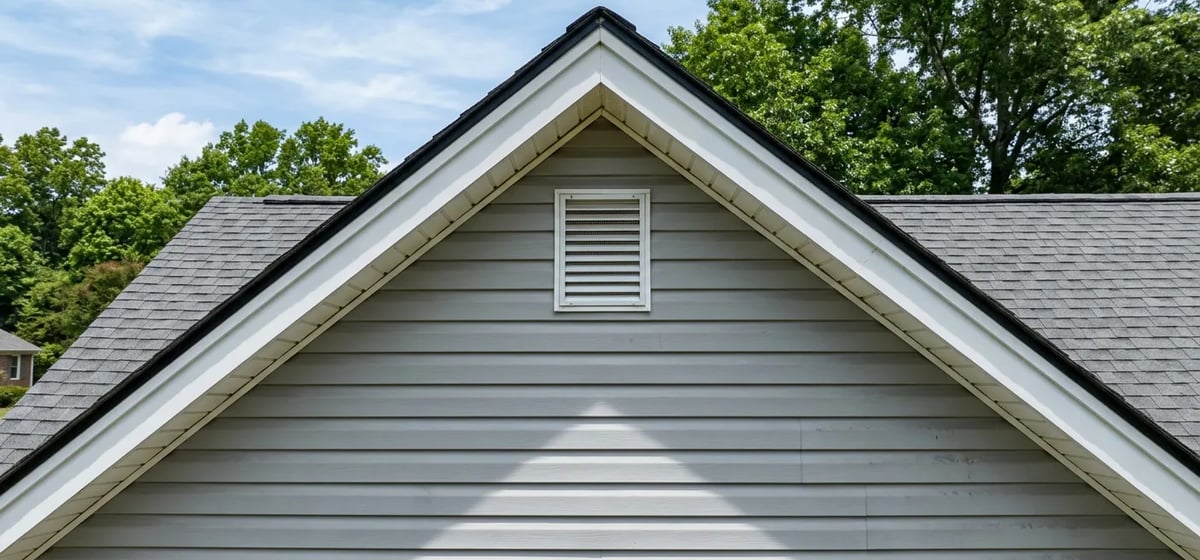
Look at the outside of your house where the roof peaks. If your roof has two sloping sides that meet at the top, they form a triangle at the ends of the house. That flat, triangular wall space right under the roof peak is the gable. The word comes from an old Norse word meaning a high board or roof end. Builders have used this design since the Middle Ages. It is simple, strong, and sheds rain and snow easily. Most homes with a gable also have a vent right in the middle of that triangle. This gable vent lets hot air escape from your attic.
Why the gable matters
The gable plays a big role in keeping your house dry and comfortable. Because it sits up high, it takes a beating from wind, rain, and sun. The siding on your gable protects the attic space behind it. The design also gives you more headroom in your attic compared to a roof that slopes down on all four sides.
This area is also a major part of your home ventilation system. The vent in your gable works with other vents to keep air moving. Good airflow stops moisture from building up and rotting your wood framing. It also keeps your home cooler in the summer. If you want to learn more about how air moves through your house, check out our guide to HVAC & Climate Control.
Common repairs and costs
Gables generally need the same upkeep as the rest of your exterior walls. However, because they are high up, you might pay a little more for labor when things go wrong. Here are a few common projects and ballpark costs. Keep in mind that prices vary based on where you live and the size of your home.
- Replacing a gable vent: Vents can crack or rust over time. A pro will usually charge 150 to 400 dollars to replace one.
- Fixing gable siding: High winds often tear siding off the gable end. Expect to pay 300 to 800 dollars for a contractor to patch the siding. Read more about siding in our Exterior: Siding, Garage & Decks guide.
- Painting the gable: The sun hits gable peaks hard. Painters often charge 200 to 600 dollars to scrape and paint a single gable end.
- Roof edge repairs: The roof overhang above the gable is called the rake. If water gets behind the shingles there, the wood can rot. Fixing this costs 400 to 1,000 dollars. You can read more about roof edges in our Roofing section.
What to watch for
You should check your gables twice a year from the ground. Grab a pair of binoculars and look up at the peaks of your house.
First, look at the paint and siding. Peeling paint or loose siding means water might be getting into your attic. Woodpeckers and squirrels also love to chew holes in gable siding to build nests. If you see small round holes, you need to patch them quickly.
Next, check the gable vent. Make sure the louvers are not broken. You should also look for a tight wire mesh screen behind the vent slats. This screen stops bats, birds, and bugs from moving into your attic. If the screen is loose or missing, you will need to climb a ladder and staple a new piece of hardware cloth over the opening.