What Is a Gable Vent?
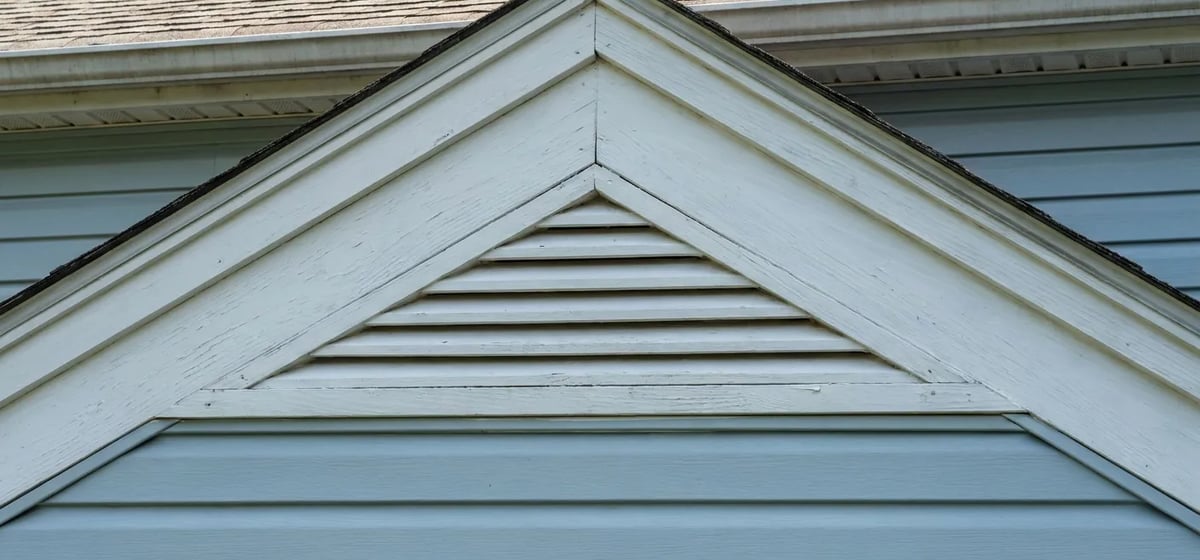
A gable vent is a slatted opening located at the very peak of your exterior wall just under the roofline. It allows hot air and moisture to escape from your attic. You'll usually see one on each side of the house to create a cross breeze. Builders adapted these vents from traditional architectural louvers used on older European buildings. The term gable comes from the Old Norse word gafl. That word refers to the triangular upper part of a wall where the roof slopes come together. Today, you can find these vents made from wood, vinyl, or aluminum. They come in many shapes. Most are triangular to match the roofline, but some are round, square, or rectangular. The slats angle downward to keep rain out while letting air pass through freely.
Why It Matters to You
These vents do a lot of heavy lifting for your house. During the summer, your attic can get incredibly hot. If that heat can't escape, it bakes your shingles from the inside out. It also makes your air conditioner work much harder to cool your living space. In the winter, warm air from your house rises into the attic. If it hits a cold roof and can't vent out, it turns into condensation. That trapped moisture leads to wood rot and mold. Proper ventilation protects the structure of your home and lowers your energy bills. Gable vents rely on wind to push air in one side of the attic and pull it out the other. This passive system uses no electricity. You can read more about how your attic works in our guide to Roofing.
Where You Will Find Them
Walk outside and look up at the highest point of your exterior walls. If your house has a peaked roof, you'll likely see a slatted vent right in the center of that peak. They usually sit flush with your siding. You can learn more about siding types in our Exterior: Siding, Garage & Decks guide. If you go up into your attic, you'll see the back side of the vent. You should see daylight coming through the slats. You should also see a wire mesh screen covering the opening from the inside. Sometimes a house will only have gable vents. Other times, builders pair them with vents under the eaves or along the very top ridge of the roof.
What to Watch Out For
Gable vents need a little attention over the years to keep your home safe. Check them annually for these common issues:
- Torn screens: The wire mesh on the inside can rust or tear over time. When that happens, birds, bats, and squirrels will use the vent as an easy front door to your attic.
- Painted slats: Painters sometimes spray right over the vent and seal the slats shut with thick paint. Make sure the slats stay open so air can flow.
- Wood rot: If you have older wooden vents, watch for peeling paint and soft wood. Water can pool on the bottom edge and cause the wood to decay.
If you need help keeping critters out of a torn screen, check our Pest Control page.
Costs to Repair or Replace
Replacing a damaged gable vent usually costs 150 to 400 dollars per vent for both materials and labor. Prices vary based on your location and how high up the vent is. A simple wood or vinyl replacement vent by itself costs 50 to 150 dollars at a hardware store. If a contractor needs to set up tall scaffolding to reach the peak of a two-story home, the labor cost will go up. If you just need to replace the wire bug screen on the inside, you can buy a roll of hardware cloth for about 15 to 30 dollars and staple it up yourself.