What is gallons per flush?
Gallons per flush is a measurement that tells you exactly how much water your toilet uses every time you pull the handle. You'll often see it shortened to GPF on packaging and plumbing fixtures. This exact metric became a standard term in the plumbing industry during the 1980s as water conservation became a priority. The US government made 1.6 gallons the legal maximum for new residential toilets in 1992.
Before that law passed, older toilets used anywhere from 3.5 to 7 gallons every time someone flushed. Today, most modern toilets use 1.28 to 1.6 gallons per flush to save water. Some high-efficiency models use even less. This change has saved millions of gallons of fresh water across the country.
Why this number matters to your wallet
Toilets account for nearly a third of all indoor water use in a typical home. If you live in an older house with original plumbing, those old toilets might be driving up your monthly utility bill. Replacing a 3.5 GPF toilet with a modern 1.28 GPF model can save a family of four thousands of gallons of water every year.
If you want to upgrade, a standard new toilet usually costs 150 to 400 dollars at a home improvement store. If you hire a plumber to install it, expect to pay another 150 to 300 dollars for labor, though these ranges vary based on where you live. Many local water companies also offer rebates if you buy a toilet with a low gallons per flush rating. This can help cover the cost of the upgrade.
Where to find your toilet rating
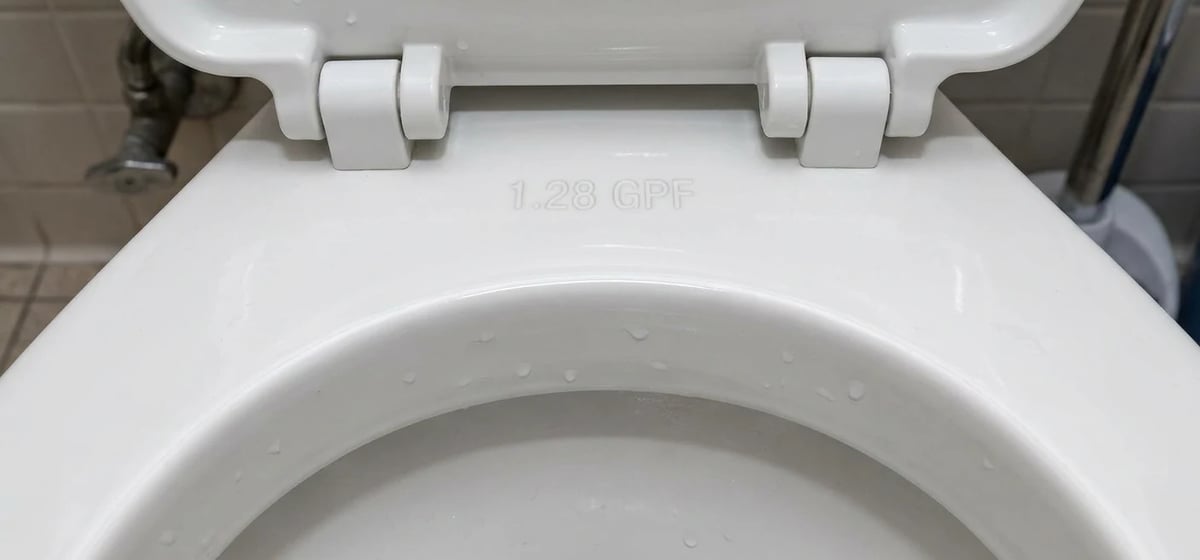
You don't have to guess how much water your toilet uses. You can usually find the gallons per flush rating stamped right on the toilet itself. Here are the most common places to look:
- Look at the porcelain area right behind the toilet seat, near the hinges.
- Check the inside back wall of the toilet tank.
- Look on the underside of the heavy tank lid.
If you see a number like 1.6 or 1.28, you have a modern, water-saving toilet. If you see 3.5 or higher, you have an older model that uses a lot of water. If you're buying a home, it's a good idea to check these stamps during your final walk-through so you know what to expect on your first water bill.
What to watch out for
When the government first lowered the legal limit to 1.6 gallons per flush in the 1990s, manufacturers struggled to make toilets that worked well. Many early low-flow toilets required two or three flushes to clear the bowl. This completely defeated the purpose of saving water.
Modern toilets don't have this problem. Engineers completely redesigned the internal traps and flush valves to create a strong pull with less water. If your home has a weak toilet from the late 1990s, replacing it with a brand new 1.28 GPF model will actually give you a stronger flush.
If you ever notice your toilet running constantly, it's wasting far more water than its official rating suggests. A leaky flapper can waste hundreds of gallons a day. You can learn more about fixing these common leaks in our plumbing guide.