What is a heat exchanger?
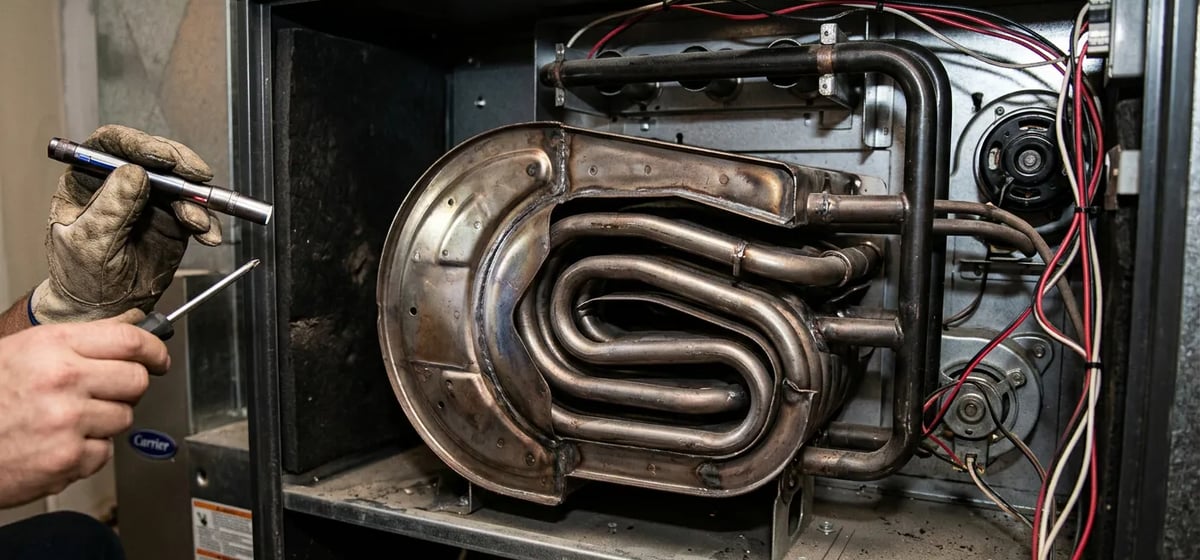
The heat exchanger is the most important part of your gas furnace. It is a set of metal tubes or coils located inside the furnace cabinet. When your thermostat calls for heat, the furnace ignites gas inside this metal chamber. The metal gets very hot. Then, your blower fan pushes cold air from your house over the outside of the hot metal.
The heat transfers from the metal to the air. That warmed air then travels through your ducts to heat your home. The most critical job of the heat exchanger is keeping the two sides separate. The toxic exhaust fumes from the burning gas stay inside the metal chamber and vent out of your roof. Your clean breathing air stays on the outside of the chamber. You can learn more about how your furnace fits into your home in our HVAC & Climate Control guide.
Why it matters to you
A healthy heat exchanger keeps you warm and safe. A damaged one is a serious danger. Because the metal heats up and cools down thousands of times a year, it expands and contracts. Over time, this constant physical stress can cause the metal to crack.
If the heat exchanger cracks, the toxic exhaust gases can leak into the air that blows into your house. This exhaust contains carbon monoxide. Carbon monoxide is an invisible and odorless gas that can be deadly. This is why a cracked heat exchanger is an immediate emergency.
Signs of a failing heat exchanger
You cannot easily see the heat exchanger yourself. It is hidden deep inside the furnace. However, you might notice a few warning signs before it fails completely. If you spot any of these, call a professional right away.
- Strange smells: You might notice a strong chemical smell like formaldehyde. Read more about strange household scents in our Smells & Odors guide.
- Soot buildup: Black soot around the furnace cabinet means the gas is not burning cleanly.
- Water on the floor: A cracked chamber can disrupt how condensation drains from high efficiency models.
- Change in the flame: If you can see the burner flame, it should be steady and blue. A yellow or dancing flame can indicate a draft from a crack.
What it costs to fix
A cracked heat exchanger cannot be patched or taped. You must replace the entire part. This is a massive job that requires taking the furnace apart. Labor alone can take several hours because the technician must remove the gas manifold, burners, and blower assembly to reach the chamber.
The cost to replace a heat exchanger usually runs from 1,500 to 3,000 dollars. Keep in mind that prices vary depending on where you live and your furnace brand. Because this repair is so expensive, many homeowners choose to replace the entire furnace instead. A brand new furnace typically costs between 3,000 to 6,000 dollars installed.
If your furnace is more than ten years old, buying a new unit is usually the smarter financial choice. If your furnace is newer, check your warranty. Many manufacturers offer a 20 year or lifetime warranty on the heat exchanger part itself, leaving you to pay only for the labor.
How to protect your heat exchanger
You can extend the life of your furnace with simple maintenance. The best thing you can do is change your air filter regularly. A dirty filter blocks airflow. When air cannot flow over the heat exchanger, the metal gets too hot. Overheating is the number one cause of premature cracks.
You should also make sure your home has enough return air vents. If your system starves for air, the furnace runs too hot and puts extra stress on the metal. Finally, hire a licensed technician to inspect your furnace once a year before winter starts. The technician will use a special camera to look deep inside the metal tubes for tiny hairline cracks. Catching a small crack early keeps your family safe and gives you time to plan for a replacement.