What Housewrap Is
Housewrap is a thin sheet of synthetic material. Builders wrap it around the outside walls of your home before the siding goes on. Manufacturers coined this term in the 1970s. They invented spun polyethylene sheets to replace the traditional black tar paper used on older homes. It literally means a wrapping for a house. This material acts as a weather barrier. It blocks wind and rain from getting into the wood frame of your house. But it also breathes just enough to let trapped moisture escape. If moisture gets stuck inside your walls, it can cause mold and wood rot. Housewrap stops that from happening.
Why It Matters to You
Think of housewrap like a windbreaker jacket for your home. A windbreaker keeps the cold wind and rain off your skin. At the same time, it lets your sweat evaporate so you do not get clammy. Housewrap does the exact same thing for your walls. It stops drafts from blowing through tiny cracks in your exterior. This makes your home much easier to heat and cool. You will notice lower energy bills and a more comfortable living space.
Because it stops air leaks, housewrap works closely with your HVAC & Climate Control system to keep your indoor temperature steady. It also protects your wood framing from water damage. When rainwater slips behind your siding, the housewrap forces it to drain down to the ground instead of soaking into your wood.
When You Will See It
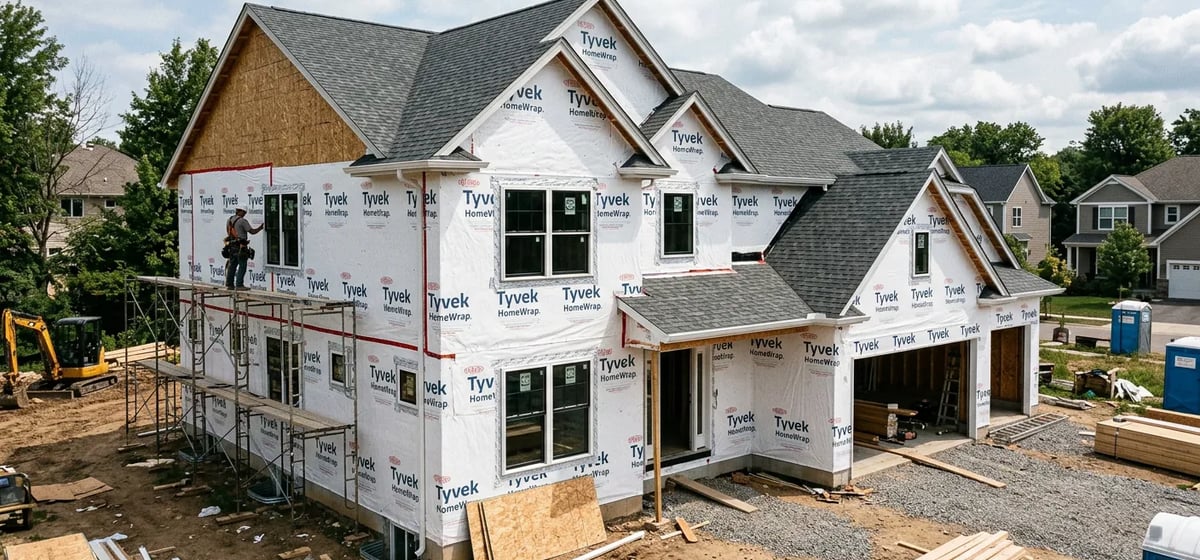
You usually will not see housewrap once your home is finished. It hides completely behind your exterior finish. You will only spot it during major construction or repair projects. If you drive past a new home being built, you will often see it. It looks like a giant white plastic sheet covered in a brand name logo.
You might also run into it if you decide to replace your old siding. When the contractor tears off the old boards, the housewrap is the layer right underneath. If you are doing major work on your Exterior: Siding, Garage & Decks, your contractor will check the condition of this barrier. You will also deal with housewrap when you install new windows. The installers must carefully tape the housewrap to the new window frames. If they skip this step, rain will leak right into your walls. You can learn more about this in our Windows & Doors guide.
What It Costs to Replace
You rarely replace housewrap on its own. You almost always do it as part of a larger siding replacement project. The material itself is fairly cheap. A standard roll of housewrap costs 75 to 150 dollars. That roll covers about 900 square feet. However, the labor to install it adds up. If you are wrapping an entire house during a siding job, expect to pay 500 to 1,500 dollars for the housewrap and labor. Prices vary based on the size of your home and local labor rates.
Signs of Trouble
Housewrap can fail if it gets torn or installed poorly. A bad installation leaves your walls open to water damage. Watch out for these warning signs:
- Drafts you can feel near your walls or electrical outlets.
- Water stains on your drywall inside the house.
- Peeling paint or warped siding on the outside of your home.
- Musty smells coming from inside the walls.