What Is An Ice And Water Shield?
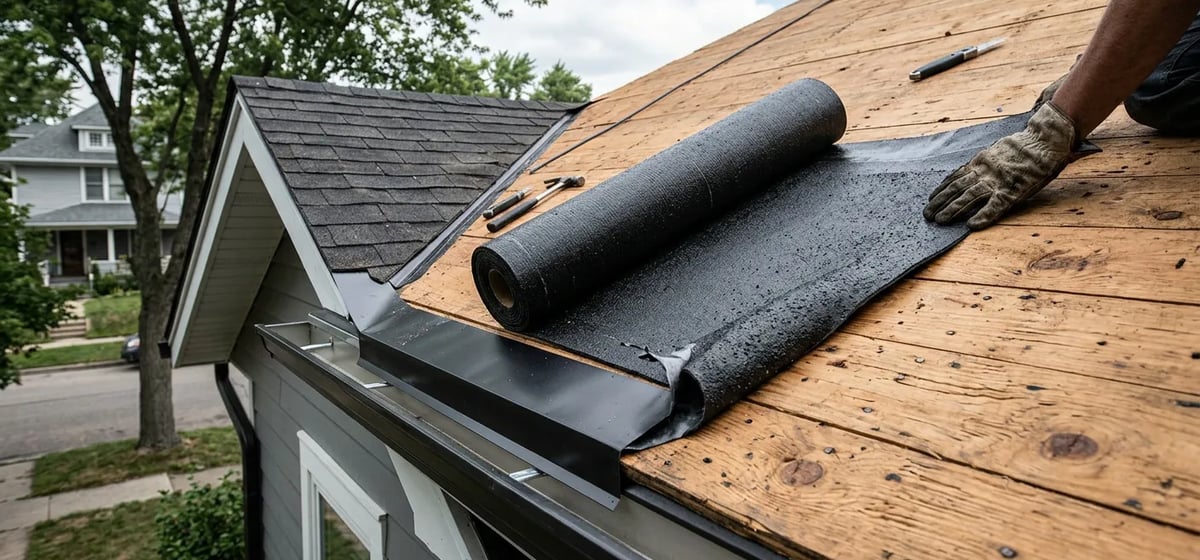
An ice and water shield is a thick, sticky rubber membrane. It goes directly onto your bare roof deck before the shingles go on. Manufacturers created this product in the 1970s to replace standard felt paper in cold climates. The name describes its exact purpose against winter weather. It blocks ice and water from rotting your wood roof deck. The bottom side is incredibly sticky. Roofers peel off a plastic backing and stick it right to the plywood. The top side has a rough texture so workers do not slip while walking on it.
The most amazing part of this material is how it seals itself. When a roofer drives a nail through a shingle and into the wood, the rubber membrane squeezes tight around that nail. This prevents water from sneaking down the nail hole. Standard tar paper cannot do this.
Why It Matters For Your Roof
Winter weather is tough on houses. When snow piles up on your roof, the heat from inside your attic warms the shingles. This melts the snow. The water runs down the roof until it hits the cold bottom edge. Then it freezes again. This creates a solid block of ice called an ice dam. More melting snow backs up behind this ice dam. Water eventually pushes up under the shingles.
Without a shield, that water leaks into your attic and ruins your ceilings. If you read our guide on Roofing, you know water damage is a fast way to ruin a home. The shield stops this backed up water from getting past the roof deck. The rubber layer keeps the water out until the ice dam finally melts away.
Where Roofers Install It
You do not need this thick rubber layer over your entire roof. That would cost too much and prevent your attic from breathing properly. Roofers place it in the most vulnerable spots. Building codes in most cold states require it.
- Bottom edges: Roofers run one or two rows along the very bottom edge of your roof above the gutters.
- Valleys: This is where two sloping roof sections meet. Water rushes down these valleys during a storm.
- Around chimneys and skylights: These cutouts in your roof are prime spots for leaks.
- Low slope areas: Roofs that are almost flat hold onto water longer, so they need extra protection.
How Much It Costs
Roofing materials are expensive. Ice and water shield costs more than basic tar paper. You usually buy it in rolls that cover about 200 square feet. A single roll costs 50 to 150 dollars just for the material. When you hire a pro to replace your roof, the labor and materials for this shield add up.
Expect to pay 300 to 800 dollars extra on a typical roof replacement job just for this protection. Prices vary based on your location, the size of your roof, and the brand of the shield. You can learn more about paying pros in our guide to Hiring Contractors & What Things Cost. It is a small price to pay to avoid a massive ceiling leak.
What To Watch For
If you are getting a new roof, always check your contractor quote. Make sure it specifically lists an ice and water shield. Some cheap roofers might try to skip it to lower their bid.
Also, look at your attic ventilation. Good airflow keeps the roof cold and stops ice dams from forming in the first place. The shield is your backup plan when ice dams happen anyway. Do not rely on it to fix a badly ventilated attic. You must fix the airflow problem too.