What is an ice dam?
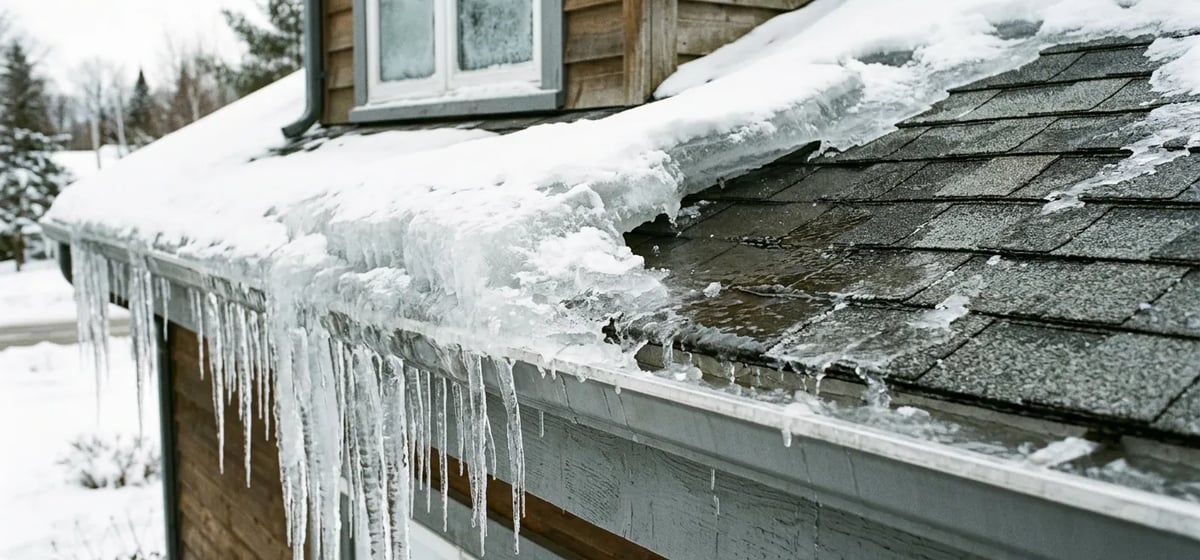
An ice dam is exactly what it sounds like. It is a solid wall of ice that builds up along the lower edge of your roof. This happens during cold winter months when snow covers your house. Warm air from your living space leaks into your attic. This heat warms the upper part of your roof and melts the snow.
The melted snow trickles down the slope of your roof. When it reaches the eaves, it hits a cold zone. The eaves stick out past your exterior walls, so they don't get any heat from inside the house. The water freezes there. Over a few days or weeks, this freezing water piles up into a thick ridge of solid ice. This ridge forms a dam.
Why it matters to you
Ice dams are a serious threat to your home. Once the ice dam forms, new melted snow has nowhere to go. The water gets trapped behind the block of ice. It pools up and eventually finds a way under your shingles.
When water sneaks under the roof covering, it leaks directly into your house. It'll soak your attic insulation, making it useless. Then it ruins your ceiling drywall and peels your interior paint. If left alone, this trapped moisture can cause dangerous mold to grow. You can learn more about how your roof protects your home in our Roofing guide.
How to spot the warning signs
You can usually see an ice dam forming before it causes major damage. Take a walk around your house after a heavy snowstorm and look up at your gutters.
- Look for thick bands of solid ice resting on the edge of the roof.
- Watch out for giant icicles hanging from the eaves or gutters. A few small icicles are normal, but heavy clusters mean trouble.
- Check for water stains on your indoor ceilings, especially near the outside walls.
- Look for ice forming behind the gutters or creeping down the exterior siding.
What it costs to fix
Dealing with an ice dam involves both short-term fixes and long-term prevention. Prices will vary based on where you live and the size of your house.
If you have an active leak, you need emergency removal. Professionals use special steamers to melt the ice without hurting the roof. This emergency service usually costs between $500 to $1,500. Some homeowners try to file a claim, so checking your Home Insurance policy is a smart move if water ruins your ceiling.
To stop ice dams from coming back, you have to keep your roof cold. You do this by sealing air leaks in your attic floor and adding more insulation. When you block warm air from escaping your house, your roof stays cold and the snow melts naturally in the sun. Upgrading your attic insulation usually costs $1,000 to $3,000. You might also need to add better roof vents. Good ventilation lets cold outside air flow under the roof deck to keep the temperature even. Fixing your attic air flow is the only permanent way to stop ice dams for good. You can read more about managing your home's air flow in our HVAC & Climate Control guide.