What a roof deck is
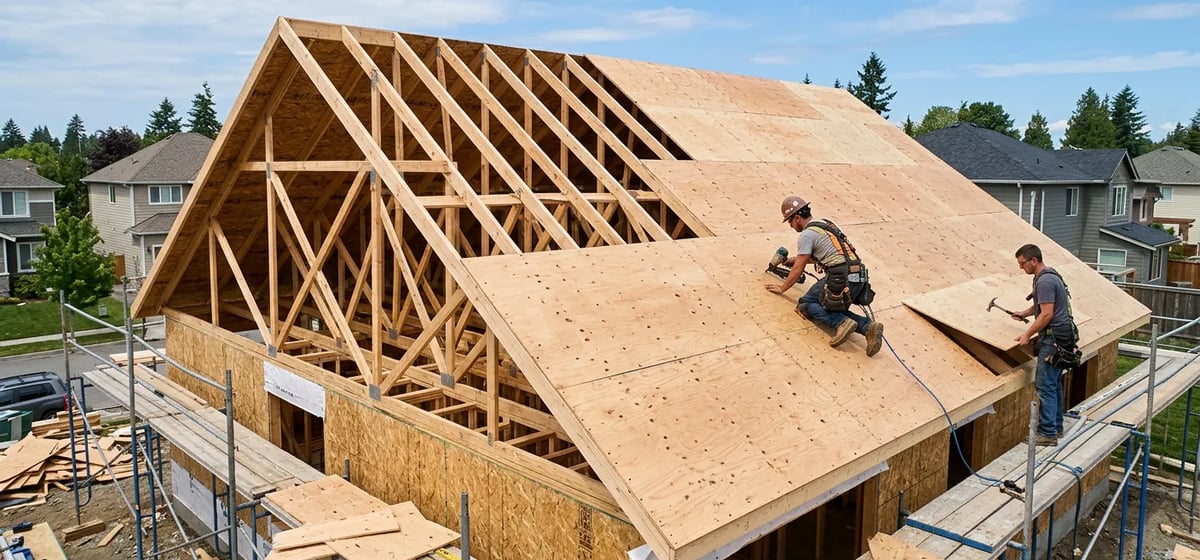
Your roof isn't just a single layer of shingles protecting you from the rain. Underneath those shingles sits a solid wooden base called the roof deck. You might also hear contractors call it roof sheathing. This vital layer rests directly on the structural wooden frame of your house. Builders usually make it out of large sheets of plywood or oriented strand board. Older homes built before the 1970s might have long wooden planks instead of large sheets.
The word deck comes from an old Middle Dutch word that means to cover. Builders adopted the term to describe the flat covering layer of a roof before the final weatherproofing goes on. The roof deck gives your roof its flat shape. It also provides roofers with a solid surface to nail down your underlayment, ice shields, and shingles. Without this flat wooden base, there would be nothing to hold the outer layers of your roof in place.
Why your roof deck matters
The roof deck does a lot of heavy lifting for your home. It ties the entire roof frame together, making your house strong enough to handle heavy winds and piles of winter snow. If your roof deck fails, the materials on top of it will fail right along with it.
When you read up on Roofing, you quickly learn that shingles can't keep water out all by themselves. They need a perfectly flat, sturdy base to do their job. If the wood underneath gets soft or starts to bend, your shingles will lift up. Water will easily find its way inside your home. A strong deck also holds the roofing nails tight. If the wood rots over time, the nails pull out easily during a bad storm, taking your shingles with them.
Connection to attic health
Your roof deck sits right at the boundary between the outside weather and your inside air. This means it relies heavily on proper attic ventilation. If your attic gets too hot and humid, the moisture in the air will soak into the underside of the wooden roof deck. Over time, this constant moisture causes the wood to swell, warp, and eventually rot away.
Proper airflow keeps the wood dry and extends its life. You might want to check your HVAC & Climate Control setup to ensure your home vents humid air outside, not into the attic. Bathroom exhaust fans that blow directly into the attic are a major cause of roof deck rot.
What to watch out for
Since the roof deck is hidden under shingles, you can't easily check it from the outside. But you can spot early warning signs from inside your attic. Grab a bright flashlight and look up at the underside of the roof. You always want to see dry, solid wood.
- Water stains: Look for dark spots or streaks on the wood. This means water is already getting past your shingles.
- Sagging wood: The wood between the rafters should be perfectly flat. If it dips down, the wood might be rotting or broken.
- Mold or mildew: Black or white fuzzy spots mean your attic holds too much moisture.
- Light shining through: If you see daylight coming through the wood, water and bugs can get through too.
What it costs to fix
You usually only replace your roof deck when you get a completely new roof. When roofers tear off the old shingles, they inspect the wood underneath. If they find rotten or broken sheets, they must replace them before putting on new shingles. It's a terrible idea to put a heavy new roof on rotten wood.
Contractors usually charge by the sheet of plywood or oriented strand board. You can expect to pay 70 to 100 dollars per sheet installed. If your entire house needs a brand new roof deck, the cost jumps up quickly. A full replacement for an average home runs from 2000 to 4000 dollars. Keep in mind that prices vary based on where you live and the current cost of lumber. If you are preparing for Selling Your Home, a home inspector will definitely check the roof from the attic. Finding rotten decking can delay your sale or force you to lower your asking price.