What is a jet pump?
A jet pump is a specific type of water pump. It uses a suction pipe to pull water from a shallow well and push it into your home plumbing system. The name comes from the high pressure jet of water it creates inside its housing to pull fluid upward. This fast moving water shoots through a narrow nozzle. That action creates a vacuum, which draws more water up the pipe from the ground.
This technology evolved in the early 1900s. It helped rural homeowners access well water without pumping it by hand. Today, these pumps are very common in homes that don't connect to a city water supply. They usually pair with a pressure tank. The tank stores water and keeps your pressure steady. When the tank gets low, the pump kicks on to refill it.
Why it matters to you
If your house relies on a well, your pump is the heart of your water system. Without it, you won't have water for drinking, showering, or flushing toilets. Understanding how your pump works helps you maintain it and spot problems early before you lose water completely.
A jet pump is generally used for shallow wells. These are usually less than 25 feet deep. If your well is deeper, you might have a deep well jet pump. These have two pipes instead of one. They can pull water from depths of 25 to 110 feet. Knowing which type you have makes a big difference when you need repairs or parts. You can read more about your home pipes and fixtures in our guide to Plumbing.
Where you run into it
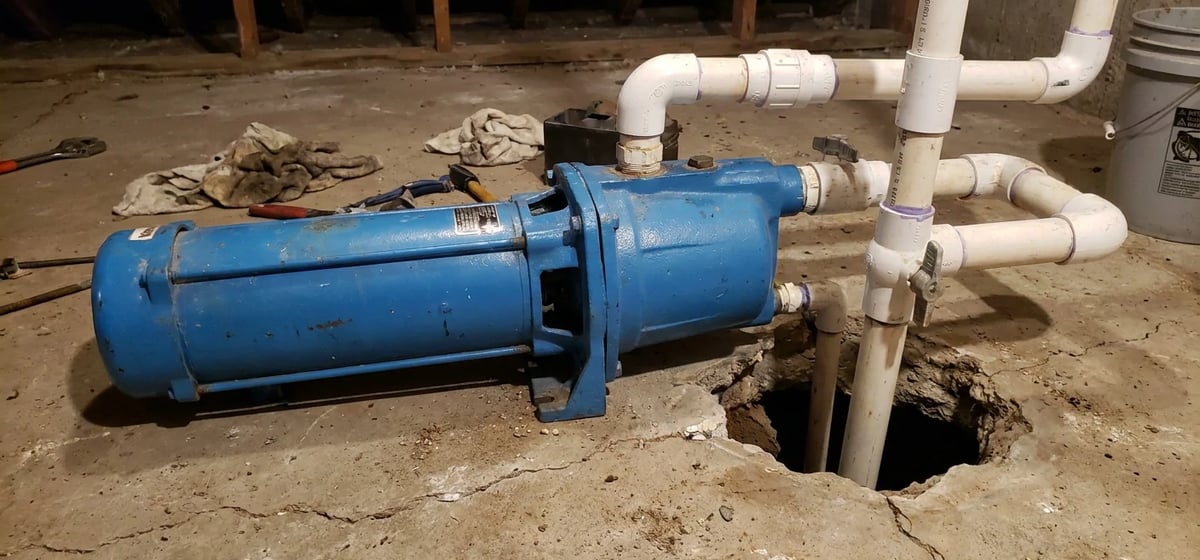
Unlike submersible pumps that sit deep underwater, a jet pump sits above ground. You'll often find it inside your basement or tucked away in a crawlspace. Sometimes it sits outside in a small, insulated shed called a well house.
Because it sits above ground, it's very easy to access. You can look at it yourself without pulling heavy equipment out of a deep hole. However, this above ground location also means the pump can get loud. You'll hear a distinct humming or buzzing sound when the motor kicks on to fill your water tank.
Routine maintenance
These pumps are built to last a long time, but they aren't maintenance free. You should check the pump and the surrounding area every few months. You also need to keep the area around the pump warm during the winter. Because the pump sits above ground, the water inside it can freeze. A frozen pump casing will crack and ruin the machine. If your pump is in an unheated well house, you must use a small space heater or heavy insulation to protect it.
What to watch for and what it costs
The most common issue with this equipment is losing prime. A pump needs water inside its casing to create the vacuum. If air gets into the line, the pump will run endlessly without moving any water. This friction creates extreme heat and can burn out the motor.
You should also listen for odd noises as the pump ages. Watch out for these warning signs:
- A screeching sound usually means the motor bearings are failing.
- A rapid clicking sound might mean the pressure switch is wearing out.
- Small puddles around the base point to a failing seal.
A good unit will usually last 10 to 15 years. When it's time for a replacement, prices vary. A new unit typically costs 300 to 800 dollars for the hardware itself. If you hire a professional well contractor or plumber to install it, the total cost usually runs 500 to 1200 dollars. You can learn more about budgeting for these jobs in our guide on What Home Repairs Cost.