What is a jack stud?
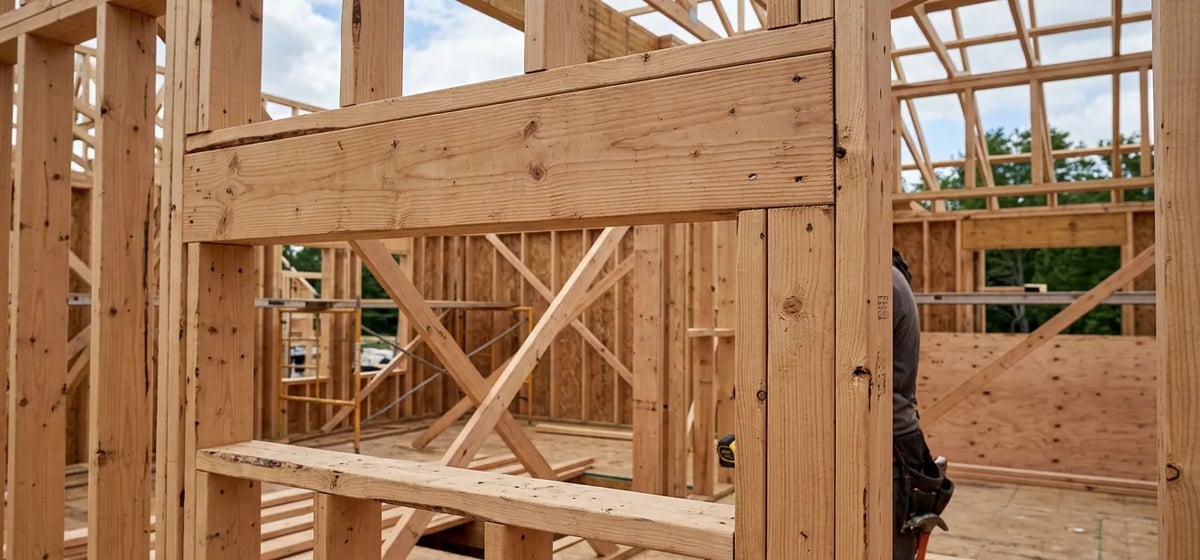
A jack stud is a vertical wooden board hidden inside your walls. It sits right next to a full length wall stud, which builders call a king stud. The jack stud is cut shorter than the king stud. This creates a small, sturdy ledge. A heavy horizontal beam rests directly on top of this ledge. Builders call that horizontal beam a header. You will find jack studs on both sides of every window or door in your home.
In construction slang, the word jack often refers to a shorter or supporting piece of wood. Carpenters named it this to tell it apart from the full length king studs that run all the way from the floor to the ceiling. The two studs are nailed tightly together to act as one strong unit.
Why it matters to your home
Your roof and upper floors are extremely heavy. The walls carry that weight safely down to the ground. When a builder cuts a big hole in a wall for a door or window, the weight above that hole needs somewhere to go. The heavy header beam catches that downward weight. The jack studs then hold up the header and transfer the weight down to the floor.
Without jack studs, the heavy weight of your house would press down directly onto your window glass and door frames. The glass would easily shatter. Your doors would warp, stick in their frames, or fail to open completely. Jack studs are a vital part of your Foundation & Structure system because they keep your home standing strong and keep your openings perfectly square.
When you will see them
You will not see jack studs during your normal daily routine. They are completely covered by drywall, plaster, and paint. You only run into them when you rip out your Interior: Paint, Drywall & Trim for a major home project. You might also hear a contractor mention them if you are fixing structural damage. Here are a few common times you might deal with them.
- You want to widen an existing doorway to make a large open concept living room.
- You are replacing old units and need to look at new Windows & Doors that require a larger rough opening.
- You find severe water damage near a window sill and have to open the wall to replace the rotting wood inside.
- A termite inspector finds pest damage inside the walls and tells you the framing needs to be replaced.
What to watch for and costs
Jack studs are usually made from standard two by four or two by six lumber. The wood itself is very cheap. A single piece of framing lumber costs around 5 to 10 dollars at a local hardware store. However, paying a professional to open a finished wall, build a new frame, and close it back up is much more expensive.
If you want to frame a new interior doorway, expect to pay a contractor 300 to 800 dollars. This price includes the new jack studs, the header beam, and the drywall patching. If the wall carries the weight of the roof, builders call it a load bearing wall. Reframing a load bearing wall costs much more. You might pay 1500 to 3000 dollars because the contractor needs to build temporary support walls first before they can remove the old framing. Keep in mind that all these price ranges vary based on where you live, the age of your home, and the finish work required.
You should also pay close attention to any strange cracks in your drywall. If you see diagonal cracks spreading out from the top corners of a door or window, your jack studs or header might be shifting. This is a sign that the framing is struggling to hold the weight above it.