What Is A Ledger Board?
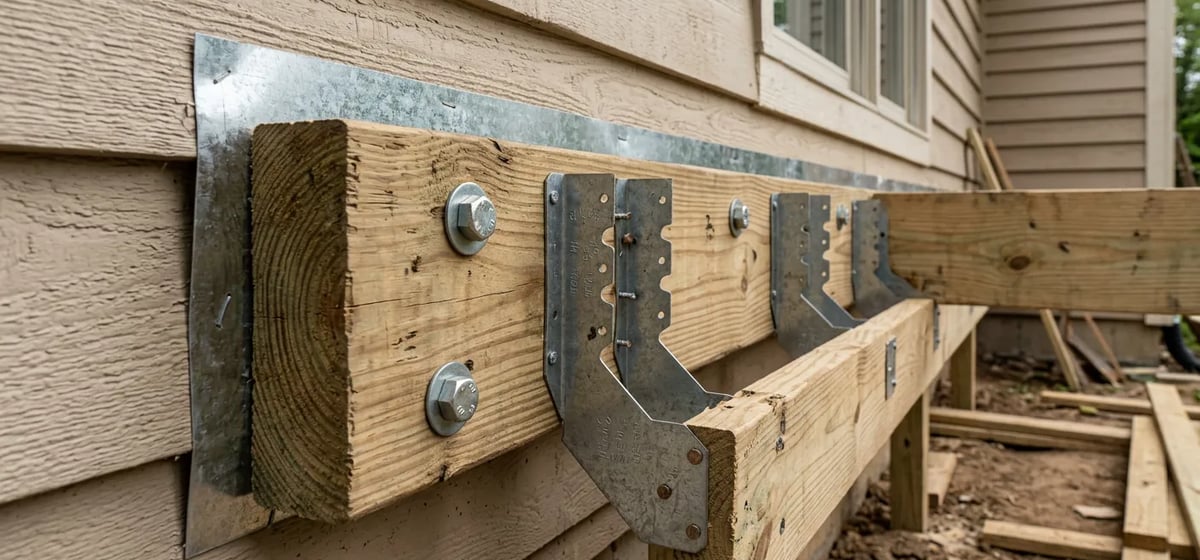
A ledger board is a thick horizontal piece of lumber that attaches your deck or porch directly to your house. You will usually find it bolted right into the structural framing of your home. It sits just below the door that leads out to your deck. This board acts as a resting place for the deck joists. Carpenters get the name from an old Middle English word meaning to lie or rest.
This single piece of wood supports half the weight of your entire deck. The posts in your yard support the other half. The ledger board must attach securely to the solid wood frame of your house. It cannot just attach to the brick or the siding. If it only grabs the siding, the weight of the deck will eventually pull it right off the wall.
How It Connects To Your House
A ledger board does not just hang on the outside of your home. It needs heavy duty hardware to stay put. Builders typically use half inch thick lag screws or thick carriage bolts. They drill these metal fasteners completely through the ledger board and directly into the rim joist of your house. The rim joist is the thick band of wood that sits just above your concrete foundation.
The spacing of these bolts is very important. You should see bolts placed every 12 to 16 inches along the entire length of the board. They should also stagger up and down in a zigzag pattern. If all the bolts sit in one straight line, they can actually split the wood right down the middle.
Why It Matters For Your Safety
The ledger board is the most critical safety feature of your deck. If this board fails, your deck can collapse. Most deck collapses happen because the ledger board pulls away from the house. This usually happens when water sneaks behind the board and rots the wood.
To stop rot, builders use metal or plastic sheets called flashing. Flashing tucks under your siding and drapes over the ledger board. It directs rain water away from the wood. Without good flashing, water sits behind the board. The wood turns soft and mushy over time. Then, the heavy metal bolts holding the deck up simply slip out of the rotten wood.
How To Spot Trouble
You can do a quick check of your ledger board yourself. Grab a flashlight and look underneath your deck where it meets your home. You want to look for a few specific warning signs.
- Missing flashing: You should see a metal or plastic lip covering the top of the board. If you only see bare wood, water is likely getting behind it.
- Rusted bolts: Look at the large bolts holding the board to the house. If they look heavily rusted, they might be weak.
- Soft wood: Poke the wood with a screwdriver. It should feel hard and solid. If the screwdriver sinks in easily, the wood is rotting.
- Growing gaps: Look at the space between the board and your house. If you see a gap that is wider than a quarter of an inch, the bolts might be pulling out.
If you spot any of these issues, you will want to read up on Exterior: Siding, Garage & Decks to understand your repair options.
Repair Costs And Hiring Help
Fixing a bad ledger board is a big job. A contractor has to support the weight of the deck while they remove the old board. Then they have to install a new board, add proper flashing, and bolt everything back into the house framing.
Replacing a rotted ledger board generally costs between $500 and $1,500. Adding proper flashing to an existing board might cost $300 to $600. Keep in mind that ranges vary based on where you live, the size of your deck, and how high off the ground it sits. If the rot spread into the actual frame of your house, the repair bill will go up significantly.
Because a mistake can lead to a dangerous collapse, this is rarely a good weekend project for a beginner. You should strongly consider hiring a licensed professional. You can learn more about finding the right person for the job in our guide to Hiring Contractors & What Things Cost.