What is flashing?
Flashing is a thin layer of waterproof material. It keeps water from getting into the vulnerable joints of your house. Builders usually make it from rust-resistant metals like aluminum, copper, or galvanized steel. Sometimes they use heavy plastic or rubber for specific areas. The term likely comes from the Middle English word flaschen which means to splash. Early builders used the word to describe materials that splash water away from gaps. Today, it acts like a bridge. It guides rainwater safely over cracks, down your siding, and into your gutters. Think of it as a raincoat for the most sensitive parts of your house.
Why it matters to your home
Your home has many seams and angles. Water will always find the easiest path downward. It loves to sneak into the tiny cracks where different materials meet. Without flashing, rain would seep right into the gaps between your roof shingles and your brick chimney. This hidden water ruins drywall, rots wood framing, and invites dangerous mold into your attic. A good flashing system is your main defense against expensive water damage. It seals the transitions so water has no choice but to flow off the house. You can learn more about protecting the top of your house in our Roofing guide.
Where you will find it
You'll see flashing anywhere an object pokes through a flat surface on your home. Roofers and siding contractors install it in several key spots to keep your home dry.
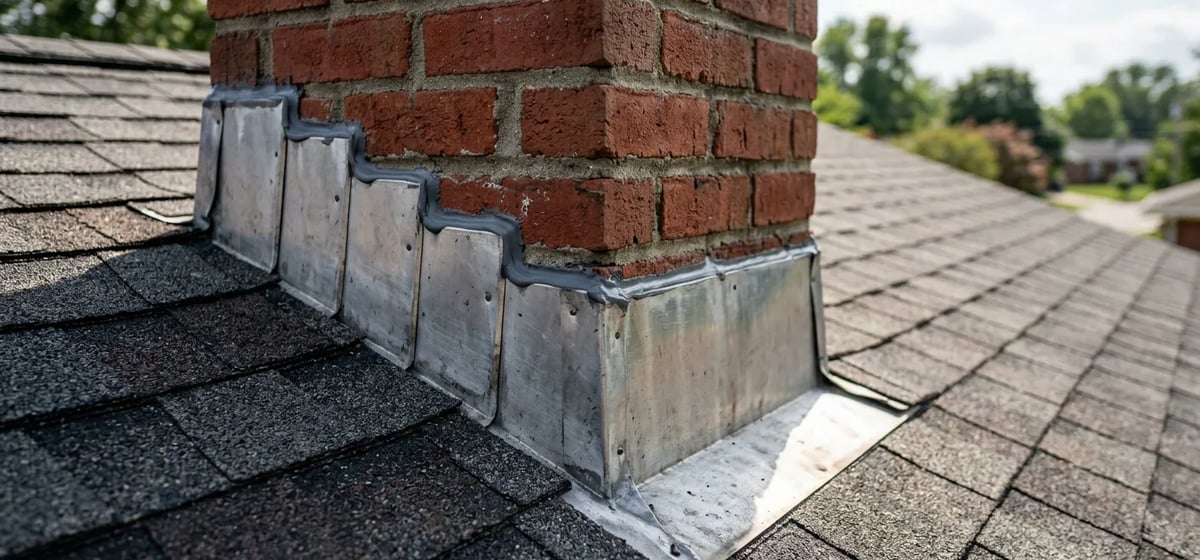
- Chimneys: Step flashing weaves metal sheets into the brick joints step by step.
- Skylights and vents: Continuous pieces seal the edges where these items cut into the shingles.
- Roof valleys: Long metal strips sit in the grooves where two sloping roof sections meet.
- Windows and doors: Small metal drip edges sit above the frames to shed water away from the glass and wood trim.
- Decks: A special metal piece stops water from rotting the wood right where your deck attaches to the house. You can read more about keeping this area safe in our Exterior: Siding, Garage & Decks guide.
What to watch for
Flashing takes a beating from the sun, wind, and rain. Over time, it can bend, rust, or pull away from the house. You should inspect these metal strips from the ground once a year. Look for rust spots, missing nails, or cracked sealant. If you see brown water stains on your ceiling, bad flashing is almost always the culprit. High winds can also lift the metal edges. If you notice a loose piece of metal flapping on your roof after a storm, you need to fix it fast.
Repair and replacement costs
Fixing bad flashing is much cheaper than replacing a rotted roof deck. If you catch a problem early, repairs are usually affordable. A simple repair to reseal a chimney or a plumbing vent will cost you 150 to 400 dollars. If a roofer needs to replace the metal around a leaking skylight, expect to pay 300 to 600 dollars. Replacing a long roof valley costs a bit more. That job usually runs 500 to 1000 dollars depending on how steep your roof is. Keep in mind that prices vary wildly based on where you live and the materials your contractor uses. High-end copper flashing costs much more than standard aluminum. If you aren't sure about climbing a ladder to do the work yourself, check our guide on DIY vs. Hiring a Pro.