What Is a Rim Joist?
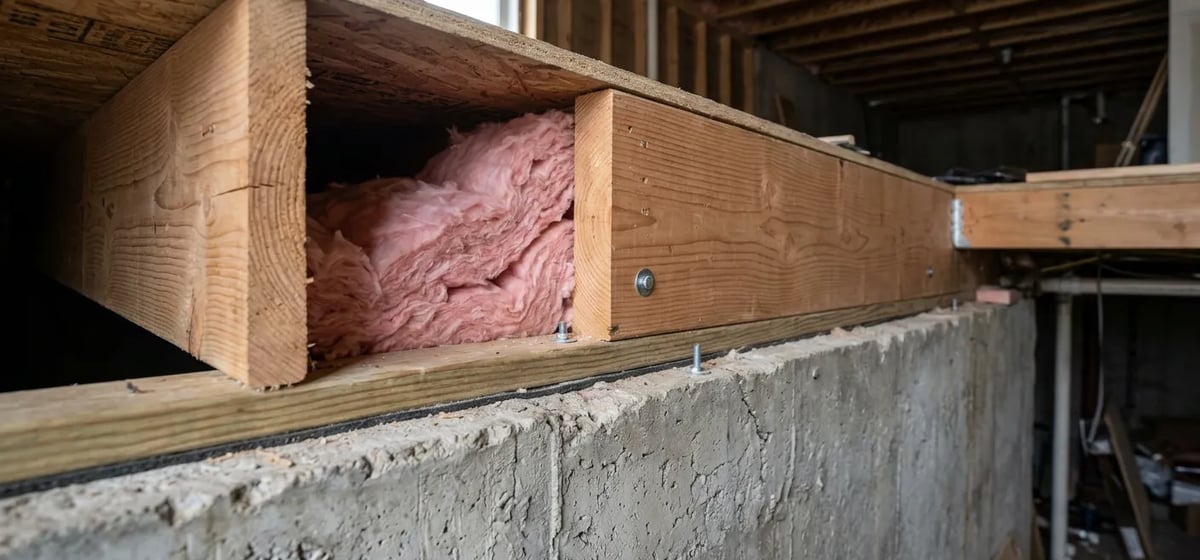
Think of your house as a giant wooden box sitting on top of a concrete base. The floor of that box needs a sturdy frame. The rim joist is the outer edge of that frame. It's a long wooden board that runs along the very edge of your foundation. All the other floor boards connect directly into it. It caps the ends of the floor joists to hold them straight and steady. Together, they create a strong, flat base for your walls.
Without a solid rim joist, your house would lack the structural support it needs to stand tall. It acts like the frame of a picture, holding all the inside pieces tightly together. You'll find a rim joist on every level of a multistory home, sitting right where the floor meets the outer walls.
Why It Matters to You
The rim joist does heavy lifting for your home structure. It supports the weight of the outer walls and the roof above them. It also acts as a critical barrier against the outside world. Because it sits right at the top of your concrete foundation, it's a prime spot for outside air and pests to sneak inside. A well-sealed and insulated rim joist keeps your home comfortable.
If you skip insulating this area, your heating and cooling bills will climb higher. Cold air will rush right into your basement or crawlspace. You can learn more about keeping your home comfortable in our guide to HVAC & Climate Control. Proper insulation here is one of the easiest ways to make your home more energy efficient.
Where You Will See It
You usually can't see the rim joist from the outside of your house. It's hidden behind your exterior siding or brick. You'll easily spot it from the inside if you have an unfinished basement or crawlspace. Go downstairs and look up at the ceiling near the outer walls.
- You'll see a thick wooden board resting flat on top of the concrete wall.
- This board runs the entire perimeter of your home.
- You might notice wires, pipes, or dryer vents running straight through it.
Builders often drill holes in the rim joist to run utilities to the outside of the house. You can read more about your home structure in our Foundation & Structure guide.
Common Problems to Watch For
Because the rim joist sits near the ground, it faces a lot of threats over the years. Water is the biggest enemy. If your gutters leak or your yard slopes toward the house, water can easily rot this wood. Rotting wood invites termites, carpenter ants, and other unwanted bugs. If you see signs of bugs or chewed wood, you should check our guide to Pest Control.
Another common issue is air leaks. Builders often leave small gaps where the wood meets the concrete foundation. You might feel a cold draft in your basement during the winter months. You can fix this easily by sealing the gaps with spray foam or caulk. Many homeowners tackle this as a simple weekend project.
If the wood actually starts to rot, you have a much bigger problem. Replacing a rotting rim joist isn't a simple project you can do yourself. It requires jacking up the house slightly to remove the heavy weight from the damaged wood. The contractor must carefully cut out the bad sections and slide new lumber into place. You'll almost always need to hire a professional contractor for this job. A professional repair usually costs 1,000 to 3,000 dollars for a small section. Prices vary based on your location and how much rot exists behind the walls. If the damage spreads to the floor joists, the repair bill will climb much higher.