What Leveling Legs Are
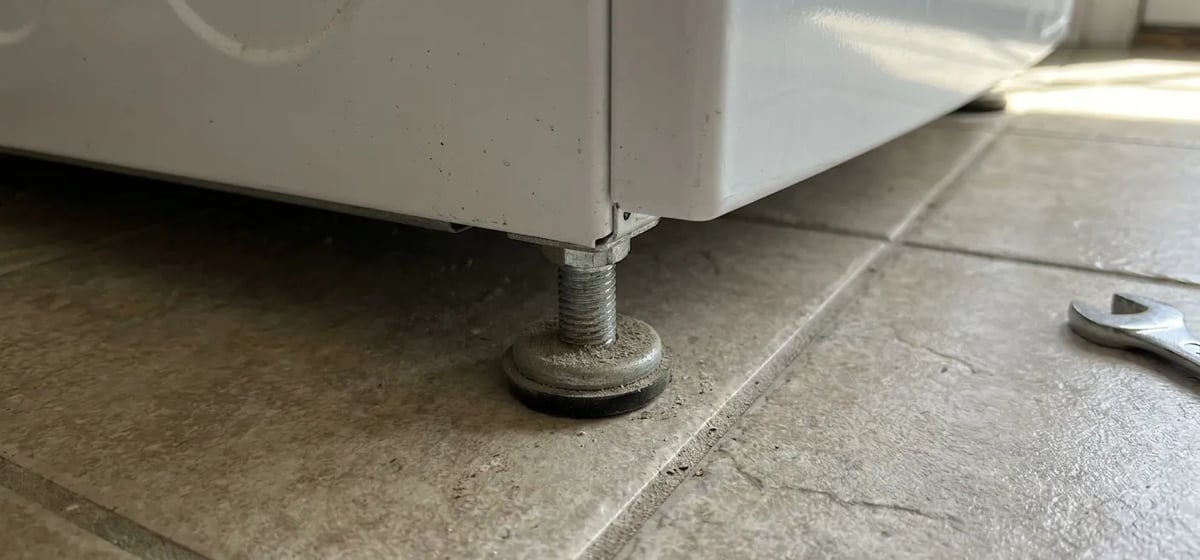
A leveling leg is a thick metal bolt with a flat plastic or rubber pad on the bottom. It screws directly into the bottom corners of heavy household items like washers, dryers, stoves, and refrigerators. You can twist the leg clockwise to make it shorter or counterclockwise to make it longer. This simple action raises or lowers that specific corner of the machine.
Appliance makers started adding these adjustable feet in the early twentieth century. Heavy electric machines were becoming common, but residential kitchen floors were rarely perfectly flat. Without a way to adjust each corner, these heavy boxes would rock back and forth on uneven wood or tile. Today, almost every large machine in your house uses a set of four threaded legs to stay stable.
Why They Matter to You
Your large appliances must sit completely flat to work right. If your washing machine is tilted, the heavy drum inside spins off balance. The machine will wobble, vibrate violently, and make loud banging noises. Over time, this shaking can crack the internal parts and ruin your flooring. You'll learn very quickly during Your First Week as a Homeowner that a noisy washer is a huge headache.
Other machines rely on these legs just as much. A refrigerator actually needs to lean slightly backward so the heavy doors swing shut on their own. If a fridge leans forward, the doors stay open and waste energy. The internal coolant also needs a proper tilt to flow correctly through the tubes. A tilted kitchen stove is equally frustrating. Your cooking oil will pool on one side of the frying pan, and liquid cake batter will bake lopsided in the oven.
How to Adjust Them
Fixing a wobbly machine is a fast job. You just need a standard bubble level and an adjustable wrench. Place the level on top of the machine. Check the level from left to right, and then check it from front to back. See which side is sitting lower than the rest. Have a helper tip the machine back slightly so you can reach underneath.
Use your wrench to grip the metal nut on the leveling leg. Turn the leg to the left to unscrew it and raise that corner. Turn it to the right to screw it in tighter and lower the corner. Set the machine back down and check the bubble level again. Keep tweaking the legs until the bubble sits perfectly in the middle of the glass tube.
Replacement and Costs
Leveling legs usually last a long time, but they can fail for a few common reasons:
- They get bent or lost when you move the appliance into a new house.
- The metal threads rust in place if your laundry room floor gets wet.
- The rubber grip pads on the bottom wear out, causing the machine to slide across slick tile floors.
Luckily, replacing them is one of the easiest tasks you can do. You can order exact replacement legs online or buy universal kits at a local hardware store.
The parts are very cheap. A single leveling leg usually costs 5 to 15 dollars. A complete set of four will run you 20 to 40 dollars. Prices vary based on the specific brand and weight of your machine. If you hire a professional to fix a shaking washer, you'll likely pay 100 to 150 dollars just for the service call. This is a perfect time to check out our guide on DIY vs. Hiring a Pro. You can easily save that money by spending five minutes with a wrench and a level.
When you buy new Appliances, the delivery team should adjust these legs for you before they leave. Make sure you ask them to put a level on the machine so you know it's set up right from day one. Taking a few extra seconds to check their work prevents major headaches down the road.