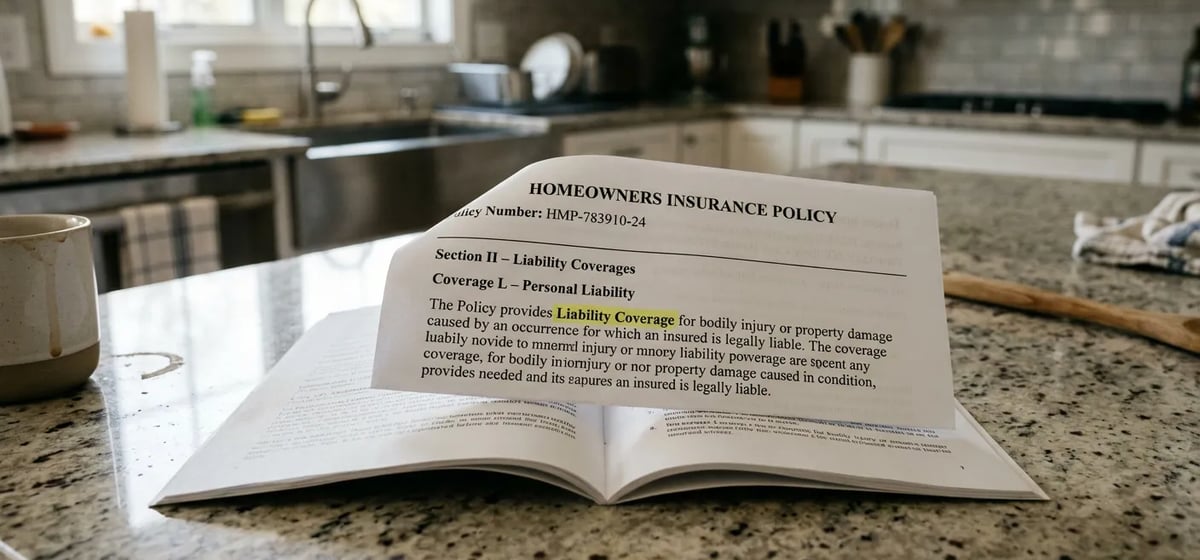
What Liability Coverage Is
Liability coverage is a core part of your standard homeowners insurance policy. The word liability comes from an Old French word meaning to bind or tie. In legal and insurance terms, it means you are bound by law to take responsibility for an accident. If someone gets hurt on your property, this coverage steps in. It pays for their medical bills. It also covers your legal fees if that person decides to sue you.
Many new homeowners think their insurance only protects the physical house. That part is called dwelling coverage. Liability coverage protects your bank account. It creates a financial shield between you and a costly lawsuit. You can learn more about how these parts work together in our guide to Home Insurance.
Why It Matters To You
Accidents happen to careful people every day. A delivery driver might slip on your icy walkway. A neighbor could trip over a garden hose in your yard. If they break a leg, you might be on the hook for their hospital bills. If they miss work, they might sue you for lost wages. Without liability coverage, you would have to pay these costs out of your own pocket.
Medical bills and legal fees add up fast. A simple trip and fall can easily cost 20,000 to 50,000 dollars in medical care alone. Hiring a lawyer to defend yourself in court can cost hundreds of dollars per hour. Liability coverage pays for both the lawyer and the final settlement up to your policy limit.
Most standard policies include 100,000 dollars in liability coverage by default. However, insurance experts usually recommend increasing that limit to 300,000 or even 500,000 dollars. Increasing your limit is surprisingly cheap. It usually only adds 10 to 30 dollars to your annual premium. Actual premium ranges vary based on your location and claims history, but the extra peace of mind is almost always worth the small cost.
Where You Run Into It
You will rely on your liability coverage in several common situations. The most frequent claims involve slips, trips, and falls. However, this coverage goes beyond someone simply falling on your porch.
- Dog bites: If your dog bites a neighbor or a mail carrier, your policy usually covers the medical bills. Some insurance companies restrict certain dog breeds, so always check your specific policy.
- Fallen trees: If a dead tree in your yard falls and crushes your neighbor's car or roof, they might hold you responsible.
- Pool accidents: Having a swimming pool increases your risk of an accident. If a guest gets injured in your pool, liability coverage is crucial. You can read more about managing these risks in our guide to Pools & Hot Tubs.
- Incidents away from home: Liability coverage often follows you away from your house. If you accidentally hit someone with a golf ball at the local course, your home insurance might cover their injury.
What To Watch For
You need to know what your policy does not cover. Liability coverage never pays for your own injuries or injuries to people who live in your house with you. It is strictly for guests and third parties. If you fall off a ladder while cleaning your gutters, you must rely on your health insurance.
It also does not cover intentional damage or illegal acts. If you get angry and break your neighbor's window on purpose, your insurance will not help you. Business activities are another major exclusion. If you run a small business or a daycare out of your home and a client gets hurt, your standard home liability coverage will deny the claim. You would need a separate commercial policy for those activities.
Consider an umbrella policy. If your total assets are worth more than your 500,000 dollar liability limit, you might need more protection. An umbrella policy sits on top of your home and auto insurance. It provides an extra 1,000,000 to 2,000,000 dollars in coverage for about 150 to 300 dollars a year.
Finally, always read your policy documents carefully when you buy or renew. Make sure your coverage limits match your current net worth. If you add a trampoline or a pool, tell your insurance agent right away. Failing to report these items can void your coverage just when you need it most.