What is a low-E coating?
The name is a shortened version of low emissivity. Scientists developed this transparent metallic oxide technology in the 1970s to improve energy conservation in buildings. Today, it is a standard feature on most new windows.
A low-E coating is a microscopically thin layer of metal applied directly to modern window glass. You can't easily see it with the naked eye. It works exactly like a thermos. The coating reflects heat back to its source so your home stays cooler in the summer and warmer in the winter. It also blocks harmful ultraviolet rays that can fade your carpets and furniture.
Why it matters to your home
Glass is naturally terrible at keeping heat where it belongs. Without a special coating, your home loses a massive amount of energy through the windows. This makes your heating and cooling system work much harder than it needs to.
When you upgrade to low-E glass, you give your HVAC & Climate Control system a break. During a hot July afternoon, the coating bounces the sun's heat away from your house. On a freezing January night, it bounces your indoor furnace heat back into your living room. This keeps your family comfortable and lowers your monthly utility bills.
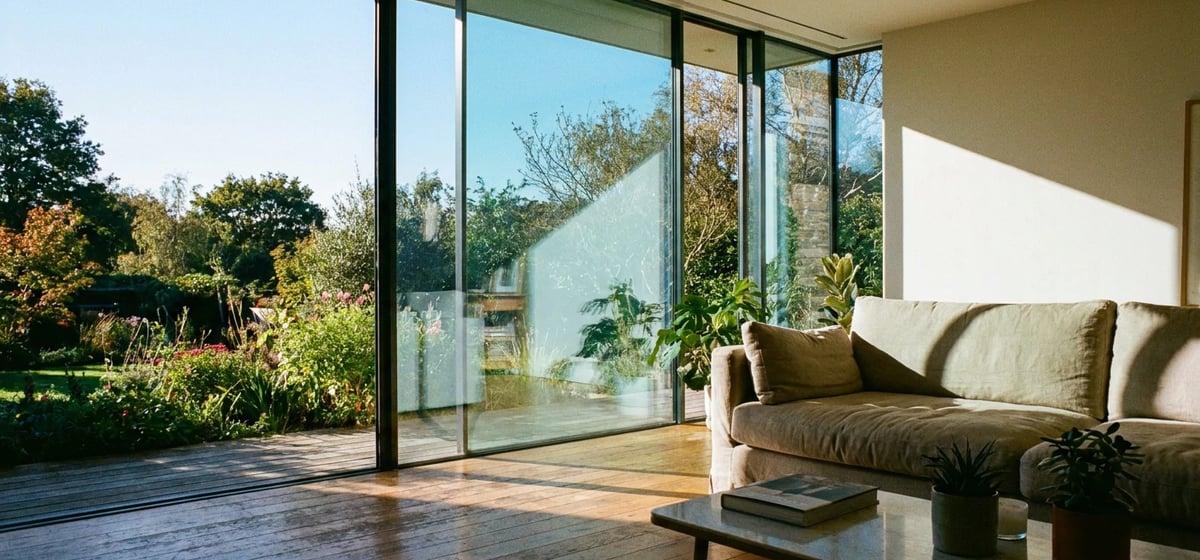
Beyond temperature control, the coating acts like sunscreen for your house. Standard glass lets ultraviolet light pour right in. Over time, that light ruins your expensive hardwood floors, fades your rugs, and damages your upholstery. A low-E layer blocks up to 90 percent of these harmful rays.
If you plan to sell your home soon, energy efficient windows are a huge selling point. Buyers love seeing that a house has modern glass because they know their heating bills will be lower. It is an upgrade that pays you back in comfort while you live there and in home value when you leave.
Types of low-E coatings
When you shop for Windows & Doors, you will hear terms like hard coat and soft coat. Here is how they differ.
- Hard coat: Manufacturers melt this coating into the glass while it is still liquid. It's very durable and usually goes on the outside layer of the glass. Hard coats are great for cold climates because they allow some of the sun's heat to enter your home.
- Soft coat: Manufacturers spray a delicate silver lining onto the glass after it cools. They seal this layer inside a double pane window so it doesn't scratch. Soft coats offer better overall heat reflection and ultraviolet protection. They are perfect for hot climates where keeping the sun out is your top priority.
Costs and what to watch for
Adding a low-E coating to a new window typically adds 10 to 15 percent to the total price of the glass. In real numbers, expect to pay 40 to 60 dollars more per window for this feature. Keep in mind that exact prices and Window Replacement Cost ranges vary based on your location and the window brand.
If you have older windows, you can buy aftermarket low-E film to stick on your existing glass. A roll of this film costs 30 to 50 dollars at the hardware store. It takes patience to install smoothly, but it's a cheap way to get some of the benefits without replacing the entire window.
You might notice a very slight green or gray tint when you look at a low-E window from the outside. This is completely normal. It's just the metallic layer catching the light. Inside your house, the glass will look perfectly clear.