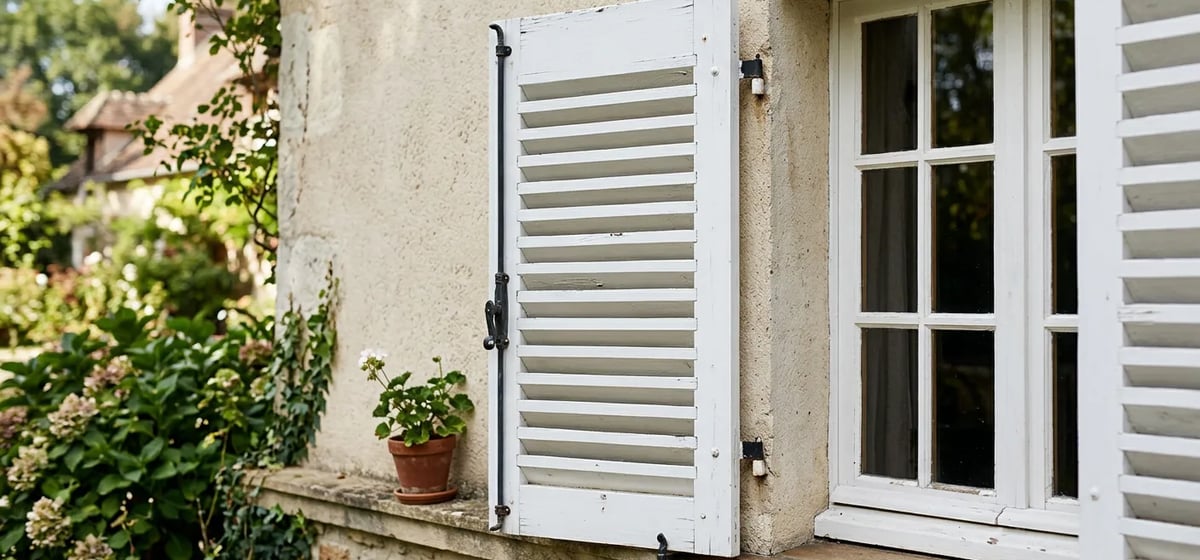
What is a louver?
A louver is a set of angled slats or fins. You will usually see them arranged in a frame. These slanted pieces allow air and light to pass through. At the same time, the downward angle blocks rain, direct sunshine, and curious eyes. The term actually comes from the Old French word lover. Hundreds of years ago, a lover was a small dome or turret on a roof used to let smoke out of a building. Over time, the word evolved to describe the slanted slats we use today for airflow.
In modern homes, louvers are incredibly common. They do a big job without using any electricity or moving parts. They simply rely on their shape to protect your home while letting it breathe.
Where you will find them in your home
You probably have dozens of louvers around your property. They show up in several key places.
- Attic vents: Look at the sides of your house near the roof peak. You will likely see gable vents filled with wooden or metal louvers. These keep rain out while letting hot air escape. This is a big part of proper Roofing health.
- HVAC registers: The metal vent covers on your floors or ceilings have adjustable louvers. You can tilt them to direct the airflow from your HVAC & Climate Control system.
- Closet doors: Many laundry rooms and closets use bifold doors with wooden louvers. These let damp air out so clothes do not get musty.
- Window shutters: Exterior shutters often feature louvers. Interior plantation shutters use large, adjustable louvers to control sunlight. You can read more about these in our Windows & Doors guide.
Why they matter
Louvers are all about balance. Your home needs to breathe. If a house is sealed too tight, moisture builds up. This leads to mold, wood rot, and peeling paint. Louvers solve this problem. They create a physical barrier against bad weather but leave gaps for air to circulate.
For example, your attic gets incredibly hot in the summer. A louvered gable vent lets the breeze blow through to cool the space. If rain hits the side of the house, the water simply runs down the slanted slats and drips outside. Inside the home, louvered doors help your heating and cooling system work better. They allow return air to flow out of closed rooms without you having to leave the doors wide open.
What to watch for and maintenance
Because they have lots of edges and gaps, louvers catch a lot of dust. Indoor louvered doors and window shutters need regular dusting. Outdoor vents can get clogged with spider webs, leaves, or bird nests. If an outdoor louver gets blocked, your attic or crawlspace will not ventilate properly.
You should check your exterior attic louvers twice a year. Make sure the bug screen behind the slats is still intact. If the screen tears, wasps and bats can easily slip through the louvers and nest in your home.
What they cost to replace
If a louver breaks, you usually have to replace the whole unit. Costs depend on the material and size, but here are some common US ballpark estimates. Keep in mind that prices vary based on where you live and who does the work.
- Louvered closet doors: A standard wooden bifold door ranges from 100 to 250 dollars at a hardware store.
- Gable vents: A basic aluminum or vinyl attic vent costs 30 to 80 dollars. Custom wood vents can cost 150 to 400 dollars.
- HVAC vent covers: Standard metal floor or ceiling registers cost 15 to 30 dollars each.
- Interior plantation shutters: These are expensive. Expect to pay 200 to 400 dollars per window if you hire a pro to install them.
Most louver replacements are easy weekend projects. Swapping a vent cover or a closet door only takes a few basic tools.