What is a lug?
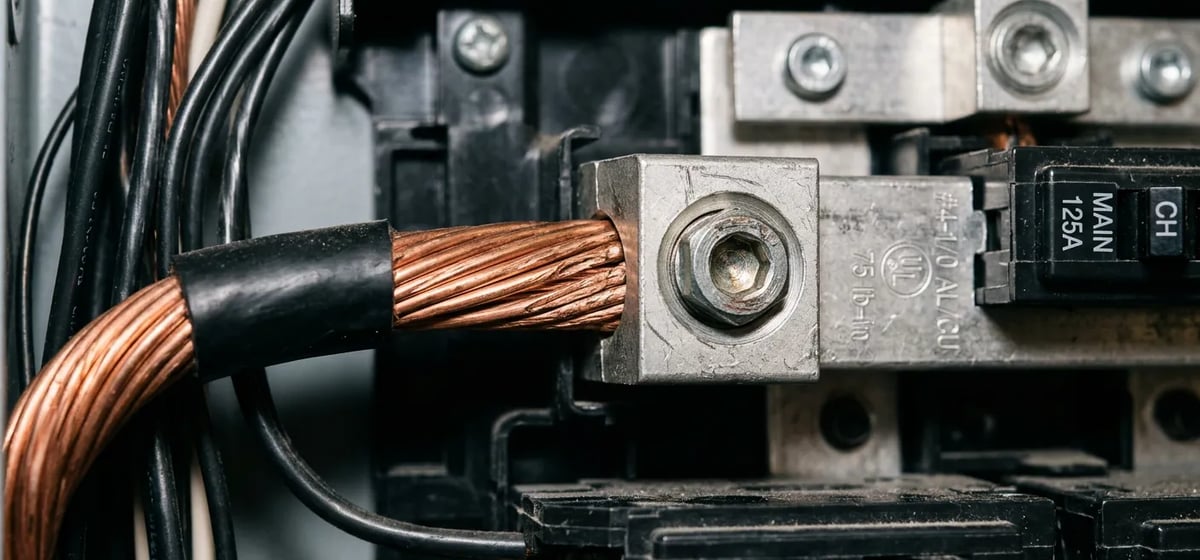
A lug is a heavy metal connector that attaches thick electrical wires to your main breaker panel. You strip the insulation off the wire, push the bare copper or aluminum into the lug, and tighten a large screw to hold it in place. This creates a safe and tight connection for high amounts of electricity. The word lug comes from a Middle English word meaning to pull by the hair, but today it just means a metal ear used to fasten wires. Think of a lug as a heavy duty clamp. When the power company runs a thick cable to your house, that cable needs a secure way to connect to your home system. A standard wire nut works for a light switch, but the main power feed requires a heavy metal lug. These connectors are built to handle massive electrical loads without melting.
Why lugs matter for your safety
Electricity generates heat as it moves. If a connection is loose, the electricity has to work harder to jump the gap, creating even more heat. A loose lug is a very common cause of electrical fires. Over time, metal expands and contracts as it heats up and cools down. This constant movement can cause the screw inside the lug to loosen. Electricians use a torque wrench to tighten lugs to a specific tightness. They don't guess. The manufacturer prints the exact requirement right on the panel label. If the lug is too loose, it can spark. If it's too tight, the screw can crush the wire strands. Check out our guide on Electrical basics to learn more.
Where you find lugs in your house
You won't see lugs in your normal living spaces. They live inside heavy duty equipment. The most common place is your main breaker box. Inside that gray metal box, large wires come in from the street and connect to the main breaker lugs. You will also find lugs inside the meter box on the outside of your house. Sometimes, you'll see smaller lugs on large appliances. Electric water heaters, central air conditioners, and whole house generators often use them. The power demands for these machines are huge, so a simple screw terminal isn't strong enough.
What to watch for and when to call a pro
You should never open your electrical panel to touch the lugs. The main lugs stay live even if you turn off the main breaker. However, you can watch for warning signs that a lug is failing. Call an electrician right away if you notice any of these issues:
- Lights flickering across your entire house at the same time.
- A loud buzzing or crackling sound coming from your breaker box.
- A burnt plastic or fishy smell near the electrical panel.
If an electrician needs to replace a damaged lug, expect to pay 200 to 600 dollars. If the loose lug melted the panel bus bar, you might need a full panel replacement. A new breaker panel typically costs 1500 to 3000 dollars, though prices vary depending on where you live. Read more in our guide to Hiring Contractors & What Things Cost.
Aluminum wires and special lugs
Many older homes have aluminum wiring coming from the street to the main panel. Aluminum expands more than copper when it gets warm. It also forms a layer of oxidation on the outside when exposed to air, which blocks electricity and creates dangerous heat. To fix this, electricians coat aluminum wires with a special greasy paste before pushing them into the lug. They also use lugs stamped with AL CU to show they are safe for both metals. If you're buying an older home, an inspector will check the panel to make sure the right lugs are in place. Read our guide to Buying a Home for more tips on the inspection process.