What It Is and How It Works
A low-water cutoff is a safety switch attached to your steam or hot water boiler. It automatically shuts off the burner if the water level drops too low. This ensures the boiler won't fire up while empty. Engineers developed this safety device in the early 1900s after a series of deadly steam boiler explosions. The name literally describes its function of cutting off the fuel supply when it detects low water levels.
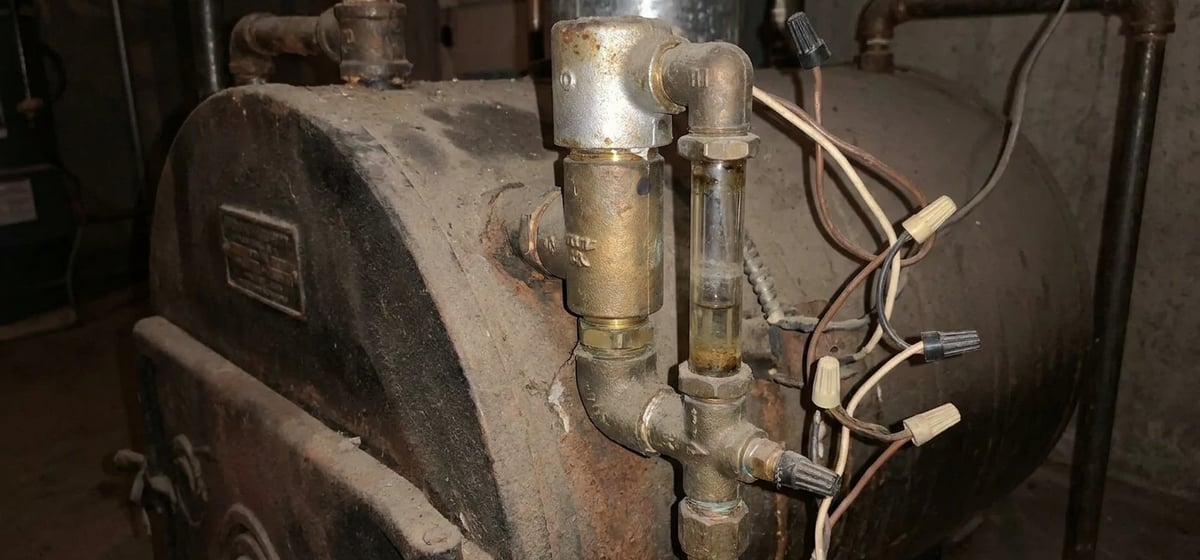
There are two main types of low-water cutoffs. The older style uses a mechanical float inside a chamber. As the water level drops, the float drops with it. When it falls far enough, it trips a switch to turn off the burner. The newer style uses electronic probes. These metal probes sit directly in the water. Water conducts electricity, so a small current flows between the probes. If the water drops below the probes, the circuit breaks, and the boiler shuts down. Both types sit on the outside of the boiler tank.
Why It Matters to You
Boilers heat your home by boiling water and sending steam or hot water through your pipes. You can learn more about these systems in our HVAC & Climate Control guide. If a boiler runs without enough water, the metal tank gets extremely hot. This heat can melt the metal, crack the boiler, or even cause a massive explosion. A house fire is a real risk if this happens.
The low-water cutoff is your last line of defense. It prevents these disasters by stopping the fuel supply before the boiler gets too hot. Building codes across the country now require this device on all residential boilers. If you live in an older home, you might have an older boiler. It's very important to make sure your system has a working low-water cutoff installed.
Maintenance and Testing
Like any mechanical part, a low-water cutoff needs regular attention. Dirt, rust, and mineral scale can build up inside the device over time. This buildup can make a float stick or block an electronic probe. If the device fails, it won't shut off the boiler when it needs to.
You should test your low-water cutoff regularly. For steam boilers, experts recommend testing it once a week during the heating season. You do this by opening the blow-off valve on the device to drain some water. As the water drains, the burner should shut off. For hot water boilers, a heating pro should test it once a year during your annual tune-up.
Watch out for these signs that your low-water cutoff might be failing:
- The boiler runs even when the water glass shows a very low level.
- The blow-off valve leaks water constantly onto the floor.
- The burner turns on and off rapidly for no obvious reason.
Replacement Costs
If your low-water cutoff fails, you need to replace it right away. It's not safe to run your heating system without it. If you're unsure about the cost of household fixes, you can read our guide on What Home Repairs Cost to get a baseline.
Replacing a low-water cutoff is a job for a licensed plumber or heating technician. The part itself usually costs between 150 to 300 dollars. Labor adds another 150 to 400 dollars to the bill. Your total cost will usually land between 300 to 700 dollars. Keep in mind that prices vary based on your location and the specific type of boiler you own. Electronic probe models tend to cost a little less to install than the heavy cast-iron float models.