What Is Melamine?
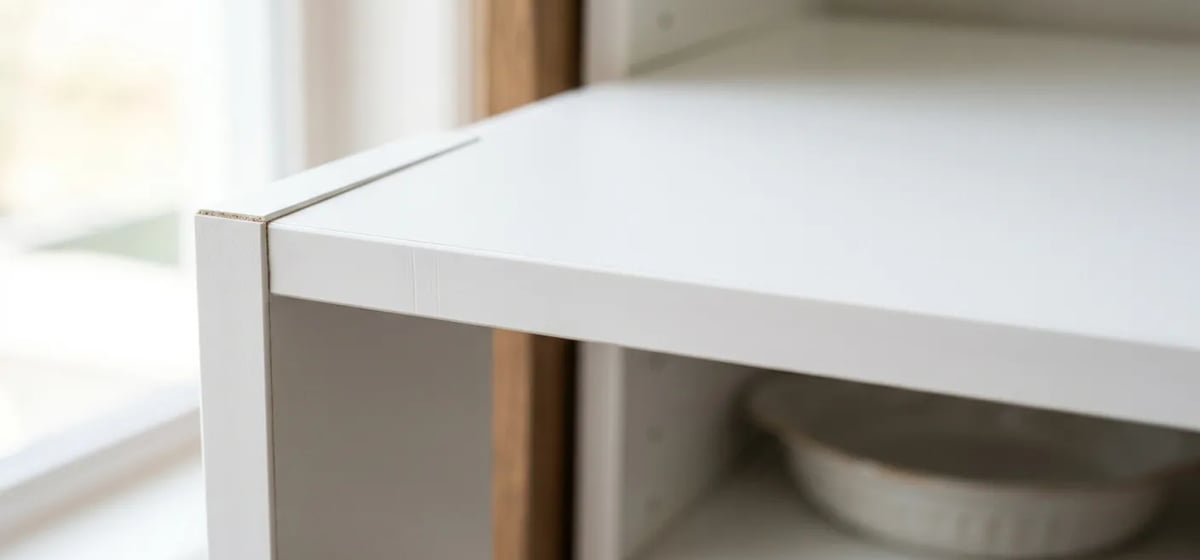
Melamine is a tough plastic coating applied to the outside of particleboard or wood. The word comes from the chemical name for the resin used to make the plastic. Manufacturers started using it heavily in the 1960s to make affordable, durable furniture. Today, it is a staple in most homes across the country. You might think of it as a hard shell that protects the softer wood underneath. The factory bonds this plastic layer to the core using high heat and pressure. This process creates a smooth, flat surface that resists moisture and stains. When you open your kitchen cabinets and see a clean white surface on the inside walls, you are looking at melamine. It gives the wood a finished look without the cost of real wood veneer.
Where You Will Find It
You probably have melamine in your house right now. Builders and cabinet makers love this material because it is cheap and reliable. You will spot it in several common places around your home:
- Kitchen cabinets: Most modern cabinet boxes and shelves use a white or wood grain melamine finish inside.
- Closet organizers: Those affordable white shelving units from the hardware store are almost always melamine over particleboard.
- Laundry room storage: The smooth surface handles damp environments well as long as the edges are sealed.
- Home office furniture: Many affordable desks, filing cabinets, and bookcases rely on it.
- Garage storage: Heavy garage cabinets often use thicker melamine boards to hold heavy tools.
If you are planning a room upgrade and reading up on Interior: Paint, Drywall & Trim, you might wonder if you can paint over these surfaces. You can, but it requires a special bonding primer. The plastic is so slick that standard wall paint will peel right off.
Pros and Cons of Melamine
Melamine is very easy to wipe clean. A simple damp cloth handles most spills, dirt, and food stains. The coating keeps water from soaking into the wood core right away. It also resists scratches from everyday use like sliding plates or cups across a shelf. It holds its color well and will not fade quickly in the sun.
However, it does have a few weak spots. The edges are the most vulnerable part of any melamine board. If water sits on an unsealed edge, the particleboard core will soak it up. The wood will swell and ruin the shelf. The hard surface can also chip if you hit it with a heavy pot or drop a hammer on it. Once the plastic chips, you cannot sand it out or fill it like you can with solid wood.
Costs and Repairs
Melamine is one of the most affordable building materials on the market. A standard 4 foot by 8 foot sheet of white melamine costs 35 to 50 dollars at a local home center. If you hire a professional to install custom closet systems made of melamine, the project usually costs 500 to 1,500 dollars for an average bedroom. Keep in mind that prices vary based on your location and design. If you are comparing cabinet options and reading about Hiring Contractors & What Things Cost, melamine cabinets will save you thousands of dollars compared to solid wood or high grade plywood boxes.
Fixing a chipped edge is possible but it rarely looks perfect. You can buy melamine edge banding for 10 to 20 dollars a roll. This thin strip of plastic has heat sensitive glue on the back. You use a household iron to press it onto the raw edge and seal the wood. If a shelf gets badly water damaged or bows in the middle from too much weight, you are much better off replacing the whole piece instead of trying to fix it.