What Is Medium Density Fiberboard?
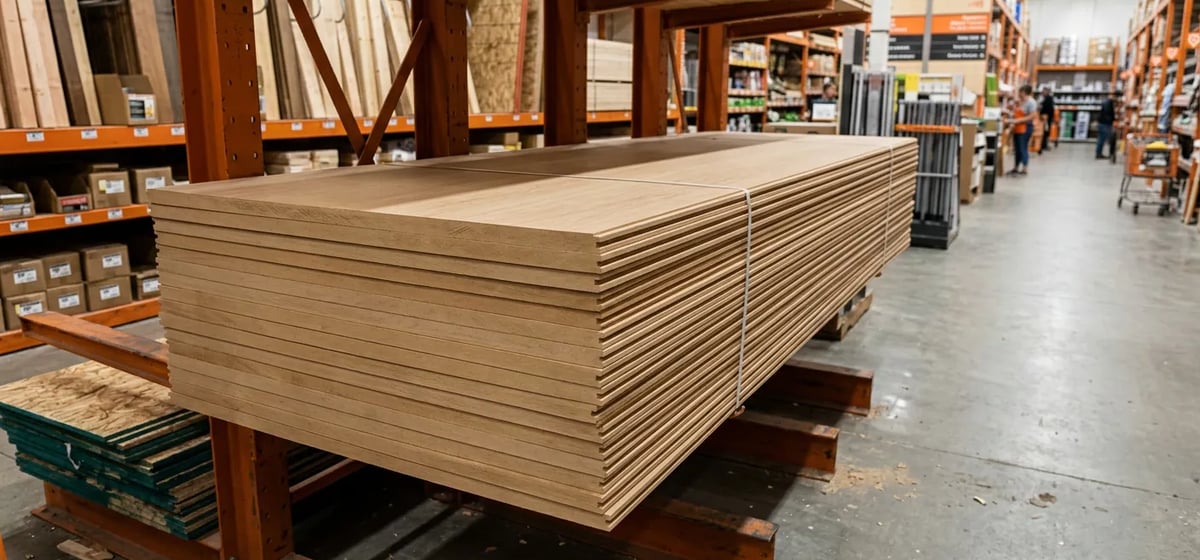
Medium density fiberboard is an engineered wood product. Most people just call it MDF. Manufacturers make it by breaking down hardwood and softwood scraps into tiny wood fibers. They mix these fibers with wax and resin, and then they press it all together under very high heat and pressure. The name is a literal description of how the material is made and its weight class compared to lighter particleboard.
The lumber industry introduced this term in the 1980s as the product gained popularity. Unlike solid wood, MDF does not have any knots, rings, or wood grain. The surface is completely smooth and uniform. This makes it a very predictable building material. It does not splinter easily, and it cuts very cleanly if you use a sharp saw blade.
Why It Matters To You
MDF matters because it saves you money and looks great when painted. Because it has no grain, paint goes on perfectly smooth. If you want crisp, modern white cabinets or trim, this is the best material for the job. It also will not warp or twist like solid wood does when the humidity changes in your house.
Cost is a huge factor. A standard sheet of MDF costs $30 to $50 at a big box hardware store. If you are buying trim, solid wood baseboards might cost $3 to $7 per linear foot. MDF versions usually cost $1 to $3 per linear foot. Keep in mind that prices vary depending on where you live and current lumber rates. Using MDF can save you hundreds or thousands of dollars on a big remodel.
Where You Will Find It
You will see this material all over the inside of your house. Builders love it for interior finishes because it is cheap and easy to work with. You can learn more about these finishes in our guide on Interior: Paint, Drywall & Trim. Here are the most common places you will find MDF in your home.
- Baseboards and trim: Most modern homes use MDF for baseboards, window casings, and crown molding.
- Interior doors: Many hollow core and solid core interior doors use molded MDF skins.
- Cabinet doors: Painted kitchen and bathroom cabinets often use MDF for the center panels so they do not crack.
- Wainscoting and shiplap: Decorative wall panels are frequently made from this smooth material.
- Furniture: Almost all flat pack furniture relies on MDF with a thin veneer glued to the outside.
What To Watch Out For
The biggest enemy of MDF is water. You must keep it dry. If it gets wet, it will swell up like a thick sponge and ruin completely. Once it swells, you cannot dry it out or shrink it back down. You just have to throw it away and replace it.
If you have a sudden leak, check out our Plumbing guide to fix the water source quickly before it destroys your baseboards and cabinets.
MDF is also very heavy. It weighs much more than regular plywood. If you are building long closet shelves out of it, they will sag in the middle unless you add extra support brackets. It also does not hold screws as well as real wood. If you take a screw out and put it back in a few times, the hole will strip out.
Finally, cutting this material creates a massive amount of fine, powdery dust. This dust gets everywhere and is bad for your lungs. If you decide to cut it yourself, always wear a good mask and work outside. You can read our DIY vs. Hiring a Pro guide to help decide if you want to tackle this messy job or pay a carpenter to do it.