What is PSI?
PSI stands for pounds per square inch. It's the standard measurement for water pressure or air pressure in your home. The term was created by engineers in the 1800s during the Industrial Revolution. They needed a standard way to measure steam pressure inside early engines and boilers. Today, it tells you exactly how hard a liquid or gas pushes against the inside of a pipe, hose, or tank.
Think of it like a crowd of people in a hallway. If only a few people are walking, the pressure is low. If you pack a hundred people into that same hallway, they bump into the walls. That's high pressure. In your home, water and air do the exact same thing.
Why it matters to your home
Keeping your home at the right pressure is very important. If your water pressure is too low, you get a weak trickle in your shower. Your dishwasher and washing machine might also take forever to fill up. If your water pressure is too high, it puts massive stress on your pipes. High pressure can cause leaks, blow out pipe joints, and ruin your Appliances.
Normal city water pressure entering a house sits between 40 to 80 PSI. Anything above 80 PSI is dangerous for your plumbing system. Constant high pressure wears down the rubber washers inside your faucets and toilets. This leads to annoying drips and running toilets that waste water.
Where you run into it
You will see this number on your water heater, tire inflator, and pressure washer. Here are the most common places you need to know about it.
- Your main water line: This is the pressure of the water coming from the city street or your private well.
- Water heater expansion tanks: These small tanks sit above your water heater. They have a rubber bladder inside filled with air. You usually need to pump them up to match your home water pressure.
- Pressure washers: Electric pressure washers usually put out 1500 to 2000 PSI. Gas models can reach 3000 to 4000 PSI. Higher numbers mean more cleaning power to blast dirt off your driveway.
- Car and bike tires: You use an air compressor to fill your tires. A standard car tire usually needs 32 to 35 PSI to roll safely down the road.
How to test your water pressure
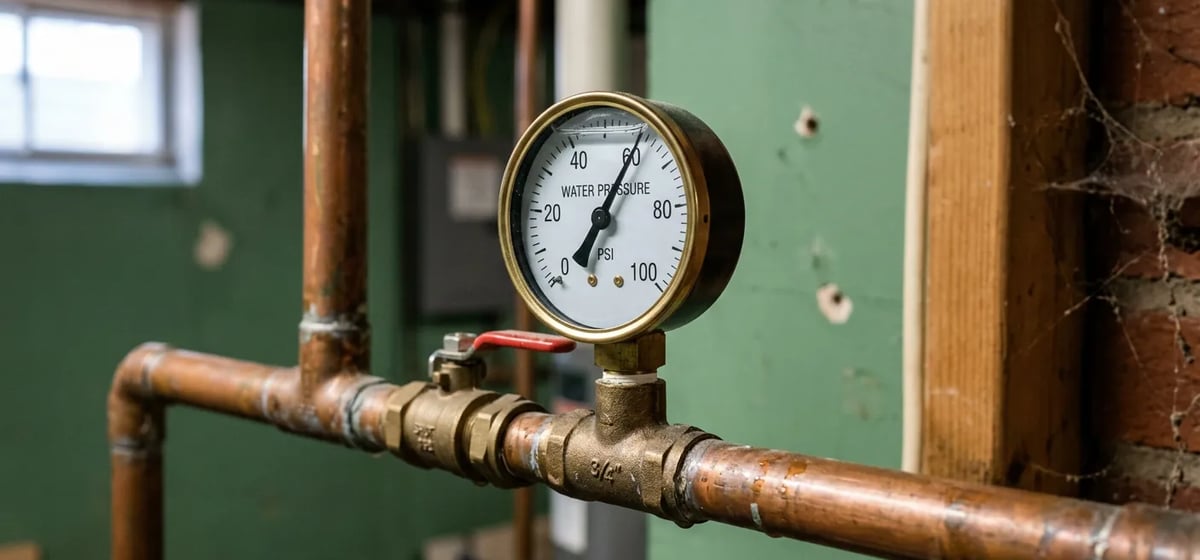
You don't have to guess if your water pressure is safe. You can test it yourself in about two minutes. Go to any hardware store and buy a water pressure gauge. They cost 10 to 20 dollars. The gauge looks like a little clock face with a threaded brass fitting on the bottom.
Screw the gauge directly onto your outside hose spigot. Make sure it's tight so it doesn't leak. Turn the water all the way on and look at the needle. If it points anywhere from 40 to 80 PSI, your Plumbing is in great shape. If the needle jumps up to 90 or 100 PSI, you have a problem. You will need to adjust your pressure reducing valve or have a new one installed.
If you're on a private well, you have a pressure switch near your big blue water tank. This switch tells the well pump when to turn on and off. Most well systems are set to turn the pump on when the pressure drops to 40 PSI and turn it off when it hits 60 PSI. If you notice your water pressure going up and down while you shower, you might need a pro to look at this switch. Check out our guide on DIY vs. Hiring a Pro if you are unsure about adjusting well pump settings yourself.