What Is A Pry Bar?
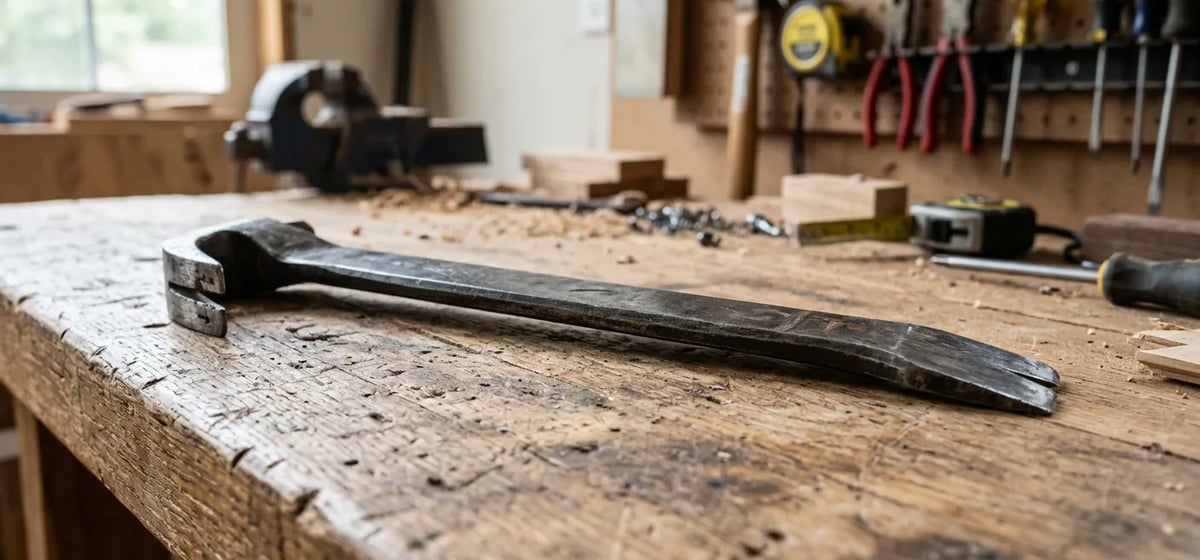
A pry bar is a heavy iron or steel hand tool with a flattened, angled end. You use it to pull out nails, tear down drywall, or separate stubborn pieces of wood. It gives you the leverage needed for tough demolition jobs around the house. The tool acts like a simple lever. When you push down on the long handle, the short angled end lifts up with incredible force. The word pry comes from the Old French word prier, meaning to extort or force. Toolmakers combined it with the word bar to describe a solid metal lever used for forcing things apart. Today, you will find one in almost every professional tool belt.
Why You Need One
If you plan to do any home updates, a pry bar is a must have tool. You will reach for it almost every time you need to take something apart. Instead of pulling with all your body weight, you let the metal tool do the heavy lifting. This saves your back from unnecessary strain.
Homeowners use pry bars for many common tasks. You might need to remove old baseboards before putting down new floors. You might use one to pull up old carpet tack strips. They are also perfect for taking off window trim. If you are doing a larger project like taking down a wall, you will use a larger pry bar to rip off the old material. You can learn more about these indoor projects in our guide to Interior: Paint, Drywall & Trim. They are also useful outside for removing old rotten boards. You can find more details on outside projects in our guide to Exterior: Siding, Garage & Decks.
Types And What They Cost
You will find a few different types of pry bars at the hardware store. They come in different sizes for different jobs. Prices for home tools usually range from 10 to 40 dollars. Keep in mind that ranges vary based on the brand, the metal quality, and the size of the tool.
- Flat bars: People often call these wonder bars. They are flat pieces of steel curved at both ends. They are great for scraping and removing trim without causing too much damage. You can slide the thin blade right behind a piece of wood.
- Molding bars: These are smaller and thinner than flat bars. You use them for delicate work like saving baseboards you want to reuse. They have a very sharp edge to cut through old paint lines.
- Crowbars: These are thick, heavy metal bars with a hook on one end. You use them for heavy demolition jobs like tearing apart a deck or breaking up a tile floor. They are very heavy and can do serious damage.
- Nail pullers: Many pry bars feature a small v shaped notch on the end. You slide this notch under a nail head and rock the bar back to pull the nail out of the wood. This is much faster than using a hammer claw.
What To Watch Out For
A pry bar is a powerful tool. If you are not careful, you can easily damage things you want to keep. The metal edge can dent your drywall or scratch your floors in an instant. It is very easy to crush soft wood trim if you apply too much pressure in one spot.
Safety is also a big deal when using this tool. Demolition work creates flying debris. You should always wear safety glasses and thick work gloves. Nails can pop out suddenly, and old wood can splinter. If you are dealing with a major demolition job that feels unsafe, you might want to read our guide on DIY vs. Hiring a Pro to decide if you need help. You should also watch out for hidden pipes and wires inside your walls before you start ripping things open blindly.