What is a push pier?
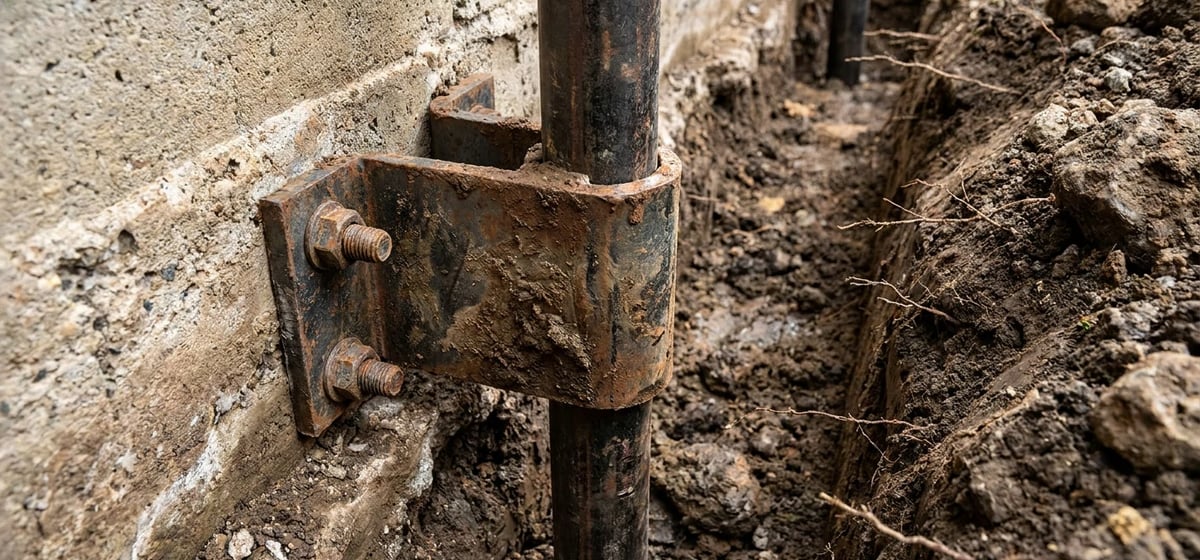
A push pier is a thick steel pipe that contractors drive deep into the ground to lift and support a sinking house. You will usually hear about them when the soil under your home shrinks, washes away, or cannot hold the weight of your house anymore. Instead of resting on loose dirt, your house sits on these strong steel columns.
Contractors use powerful hydraulic jacks to push these steel sections down into the earth. They keep adding sections and pushing them deeper until the bottom hits solid bedrock or very stable soil. Once the pipes are deep enough, the crew uses them to lift your house back to its original position.
Why it matters to your home
When your foundation sinks, it causes major problems throughout your house. You might notice diagonal cracks in your walls, doors that refuse to close, or sloping floors. If you ignore a sinking foundation, the damage will only get worse and more expensive to fix. If you want to learn more about how your home rests on the ground, check out our guide on Foundation & Structure.
Push piers permanently solve this sinking problem. They bypass the weak soil near the surface and transfer the weight of your home to the deep, solid earth below. This stops the sinking completely. It also helps close up those ugly wall cracks and makes your doors swing normally again.
The installation process
Installing push piers is a major construction project. You will definitely need to hire professionals for this job. Here is what you can expect when a crew comes to your house:
- The crew digs a hole around your foundation exactly where they need to place the pier.
- They clean off the concrete footing and attach a heavy steel bracket to it.
- They place the first steel pipe section into the bracket.
- A hydraulic jack pushes the pipe deep into the ground.
- They add more pipe sections until they hit bedrock.
- Finally, they use the jacks to lift the foundation and lock the bracket in place.
Push piers versus helical piers
When you get quotes for foundation repair, you might see contractors suggest either push piers or helical piers. It helps to know the difference between the two. A push pier is smooth and gets driven straight down using the weight of your house as resistance. This makes them perfect for heavy concrete foundations and large brick homes.
A helical pier has spiral blades on it. It looks like a giant screw. Contractors twist helical piers into the ground using special hydraulic motors. They usually use helical piers for lighter structures like porches, decks, or smaller wood frame houses. Your structural engineer will tell you which type is best for your specific soil and home weight. If you are also dealing with water issues around your home, you might want to look at our Landscaping, Drainage & Outdoor guide to keep water away from your newly repaired foundation.
Costs and what to watch for
Foundation repairs are a big investment. On average, you can expect to pay $1,500 to $3,000 per push pier. Most homes need multiple piers to fix a sinking corner or side. A typical repair job often requires 5 to 15 piers, which means your total bill could easily fall between $7,500 and $45,000. Keep in mind that these ranges vary based on where you live and how deep the bedrock is.
Before you sign a contract, you should always consult a structural engineer. An independent engineer will tell you exactly what is wrong and how many piers you actually need. You can read more about dealing with big projects in our guide on Hiring Contractors & What Things Cost.