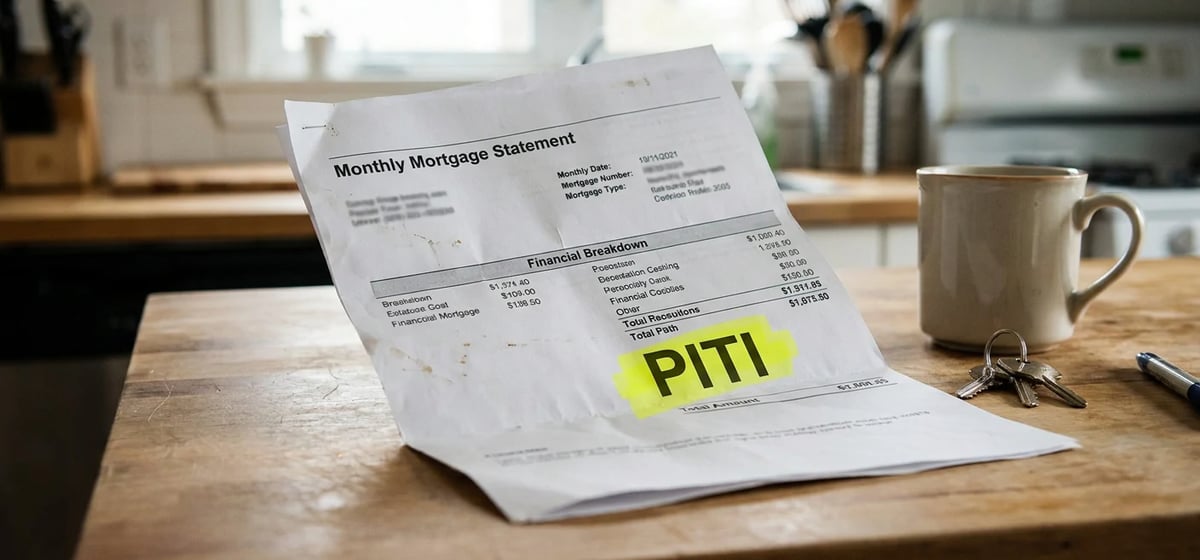
What makes up your PITI
When you buy a house, your monthly payment isn't just paying back the loan. It includes four distinct parts. Together, they make up your PITI. This stands for principal, interest, taxes, and insurance. Let's break down what each piece means.
- Principal: This is the actual amount of money you borrowed to buy the home. Each month, a portion of your payment goes toward paying down this balance.
- Interest: This is the fee the lender charges you for borrowing their money. In the early years of your loan, most of your monthly payment goes toward interest rather than the principal. If you want to understand how this changes over time, you can read more about Mortgages.
- Taxes: Local governments charge property taxes to fund schools, roads, and emergency services. Your lender usually divides your annual tax bill by 12 and adds it to your monthly payment.
- Insurance: Lenders require you to have Home Insurance to protect the property from fire, storms, and other damage. If you put down less than 20 percent when you bought the house, this part also includes private mortgage insurance.
Why your PITI matters
Lenders use your PITI to decide if you can afford a house. They compare this total monthly housing cost to your gross monthly income. This is called your debt to income ratio.
Most lenders want your PITI to be less than 28 percent of your gross income. If you make 6,000 dollars a month, they want your housing payment to stay under 1,680 dollars. If your total payment is too high, the bank might deny your loan. They want to make sure you have enough money left over to buy food, pay for a car, and handle emergencies.
How your payment changes over time
Many new buyers assume their monthly payment will never change if they get a fixed rate loan. This is a common mistake. Your principal and interest stay exactly the same for 30 years. However, your taxes and insurance will almost certainly go up.
Your lender puts your tax and insurance money into a special holding account called an escrow account. Once a year, the lender uses this account to pay your tax and insurance bills. If your local government raises your property taxes, your total PITI goes up. If your insurance company raises your premium, your PITI goes up again.
You might see your monthly payment increase by 50 to 200 dollars a year just from these changes. You can learn more about how local assessments affect your bills in our guide to Property Taxes & Home Finances.
Dealing with escrow shortages
Because property taxes and insurance premiums change, your escrow account can easily run low on funds. This is called an escrow shortage. Lenders review your account every year to make sure they are collecting enough money.
If they realize your taxes went up last year, they will send you a letter about a shortage. You will have two choices. You can write a single large check to cover the missing money right away. If you don't have the cash on hand, the lender will divide the shortage by 12 and add it to your monthly PITI for the next year.
This means your payment actually goes up for two reasons. First, you have to pay the new, higher tax rate going forward. Second, you have to pay back the money the lender fronted you for last year. This double hit catches many homeowners by surprise. It is a good idea to check your local tax assessments and insurance renewal letters when they arrive in the mail. This gives you time to save extra money before your lender adjusts your payment.
What to watch out for
Your PITI covers the basic costs to keep the bank happy, but it doesn't cover everything. When you figure out your monthly budget, you need to look past this acronym.
You also need to watch out for homeowners association fees. If you buy a house in a planned community, you have to pay HOA dues. Lenders look at these fees when they approve your loan, but the fees aren't part of your PITI. You pay your HOA separately. Utility bills are also entirely your responsibility. Your water, gas, electricity, and internet bills will add another 200 to 500 dollars to your monthly housing costs depending on where you live. Keep in mind that all these cost ranges vary based on your location and home size.