What is a pier?
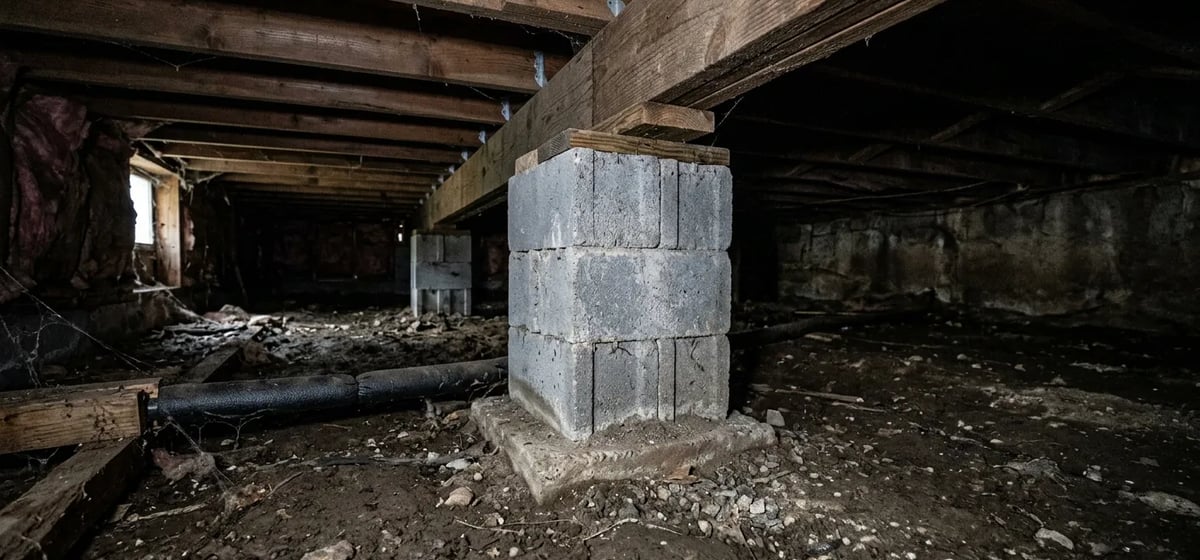
A pier is a sturdy vertical column that holds up your house. If you look under your home in a crawlspace, you will see these columns resting on the ground. They're usually made of stacked concrete blocks, poured concrete, or even heavy wood posts. These columns sit on a footing, which is a flat pad of concrete buried in the dirt. The pier rises from that footing to support the heavy wooden beams and floor joists above it. Together, your piers and beams make up a major part of your Foundation & Structure. They carry the weight of your walls, furniture, and family down into the solid earth.
Why piers matter to your home
Without solid piers, your floors would sag and your walls would crack. Your house is incredibly heavy. The outer walls rest on a continuous foundation, but the wide open space in the middle needs support. Piers act right in the center of your home to keep everything level. They distribute the massive weight of your house evenly across the soil below. If a pier shifts or sinks, the floor above it will drop. This can cause doors to stick and drywall to crack. Keeping your piers dry and stable is the best way to protect your home value.
Common signs of pier problems
Piers can fail for a few reasons. Water is the biggest enemy. If water pools under your house, the soil gets soft. This allows the heavy pier to sink into the mud. Sometimes the concrete blocks can crack from age or movement. Wood piers can suffer from rot or termite damage.
You might notice the signs inside your house before you ever look in the crawlspace. Watch out for these common clues:
- Floors that bounce or squeak when you walk on them.
- A visible slope or dip in the middle of a room.
- Doors that suddenly rub against their frames or refuse to latch.
- Diagonal cracks in your drywall, especially around door frames and windows.
- Gaps between your baseboards and the floor.
If you see these issues, you might need to hire a foundation expert. You can read more about deciding when to bring in an expert in our DIY vs. Hiring a Pro guide.
How to inspect your piers
You should check your crawlspace at least once a year. Grab a bright flashlight and put on some old clothes. Shine your light on every single pier you can see. Look for any concrete blocks that look loose or crooked. The blocks should sit perfectly straight on top of each other. If they lean to one side, they can no longer hold the weight of your house properly. Check the wooden shims at the very top of the pier. Builders use these thin slices of wood to make a tight fit between the concrete and the floor joists. Sometimes these shims rot or fall out. If you see a gap between the pier and the wood beam above it, the pier is doing absolutely nothing. You also want to look for white, powdery stains on the concrete. This is called efflorescence, and it means water is soaking into the blocks. If you find extensive moisture or termite tubes crawling up the concrete, you might need to look into Pest Control options right away. Catching these problems early will save you thousands of dollars in major repairs later on.
What it costs to fix or replace a pier
Fixing a damaged pier isn't a weekend project. You need special hydraulic jacks to lift the house while the repairs happen. Contractors usually charge between 1000 to 3000 dollars per pier. Costs depend on your location and how hard it is to reach the damaged spot. Keep in mind that ranges vary widely based on local labor rates. If the problem is just soft soil, a contractor might install a push pier. This is a steel tube driven deep into the earth to find solid bedrock. Steel push piers often cost 1500 to 2500 dollars each. If you have to replace rotten wood beams along with the piers, the price will go up. Always get at least three quotes before you start a major foundation repair.