What It Is and How It Works
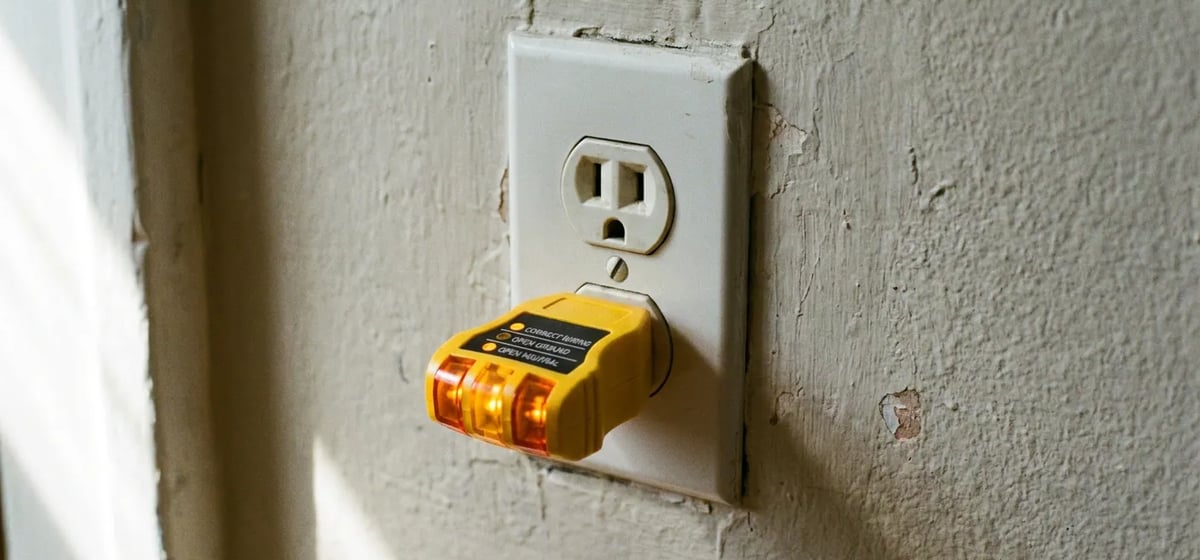
A receptacle tester is a small gadget that checks the health of your wall outlets. It looks like a chunky plug with three small lights on the end. You just plug it directly into an outlet. The lights will glow in a specific pattern. This pattern tells you if the wiring behind the wall is safe and correct.
It fits easily in the palm of your hand and needs no batteries. It pulls the tiny amount of power it needs right from the wall. You'll notice three metal prongs on the back. These fit into standard three prong outlets found in modern homes. If you have an older home with two prong outlets, this tool won't plug in directly. You'd need an adapter, but two prong outlets don't have a ground wire anyway. Electricians created these simple devices in the middle of the 20th century to speed up safety checks. The word receptacle comes from the Latin word receptaculum, meaning a place to receive or hold something.
Why You Need One
You need this tool because bad wiring can ruin your electronics or start a fire. Sometimes an outlet looks fine on the outside but has a hidden problem. The wires might be loose. The hot and neutral wires might be swapped. The outlet might not have a proper ground wire. A ground wire gives stray electricity a safe path to the earth. Without a ground, a short circuit could shock you.
If you plug a heavy appliance into a poorly wired outlet, the appliance motor could burn out. Even worse, a power surge could fry your expensive television or computer. The ground wire is your main defense against these issues. A receptacle tester is the fastest way to verify that defense is in place. It's a necessary tool for your Electrical toolkit.
When to Use It
You'll use this tool whenever you move into a new place or when something stops working. It's very helpful during Your First Week as a Homeowner. You can walk room to room and test every outlet in the house. Many home inspectors use these exact same tools during their official inspections. If you catch a bad outlet early, you can ask the seller to fix it before you close on the house.
You should also use it if a lamp or appliance suddenly quits. If the tester shows the outlet is dead, you know the problem is the house wiring and not your appliance. If the tester shows good power, your appliance is likely broken. You'll also use this tester after heavy storms. Lightning strikes can sometimes damage outlets on a specific circuit. Walking around with your tester takes just a few minutes and gives you peace of mind.
What the Lights Mean
Most basic testers have a sticker right on the tool that explains the light patterns. Usually, two yellow lights mean the outlet is wired perfectly. If you see a red light, or if no lights turn on at all, you have a problem.
| Light Pattern | What It Means | What You Should Do |
|---|---|---|
| Two yellow lights | Correct wiring | Nothing, the outlet is safe to use. |
| One yellow light | Open ground | The outlet lacks a ground wire. Call an electrician. |
| No lights | Open hot | The outlet has no power. Check your breaker box. |
| Red and yellow lights | Hot and ground reversed | Dangerous wiring mistake. Stop using the outlet immediately. |
Costs and Buying Tips
You can buy a basic receptacle tester at any hardware store. They're very cheap. A standard model costs 5 to 15 dollars. Prices and ranges vary based on the brand and features. Some models include a button to test GFCI outlets. These are the outlets with the reset buttons you find in kitchens and bathrooms. Pushing the button on the tester forces the outlet to trip. This proves the safety feature actually works.
More advanced models have digital screens. These screens show you the exact voltage coming out of the wall. A normal US outlet should read right around 120 volts. A digital tester might cost 20 to 40 dollars. For most people, the simple light version is completely fine. Keep one in your kitchen junk drawer or your main toolbox. It'll save you a lot of guessing the next time the vacuum cleaner refuses to turn on. If you find a bad outlet, read up on DIY vs. Hiring a Pro to see if you want to fix it yourself or call an expert.