What Is a Relief Valve?
A relief valve is a small mechanical safety device attached to water heaters and boilers. It opens automatically if the pressure or temperature inside the tank gets dangerously high. When it opens, it lets water or steam escape so the metal tank does not explode. The concept of a safety valve dates back to the 1600s for early steam digesters, which were the ancestors of modern pressure cookers. The name comes from the Latin word relevare, which means to raise up or lighten. Today, it lightens the load on your home plumbing system by giving excess pressure a safe way out.
Why It Matters to You
Water expands as it heats up. This expansion creates pressure inside a closed metal tank. If the thermostat breaks and the water keeps heating, the pressure builds rapidly. Without a working relief valve, the tank could rupture or even blast through your roof like a rocket. This simple brass part protects your home and your family from serious danger. It is one of the most critical safety features in your Plumbing system.
Where You Will Find It
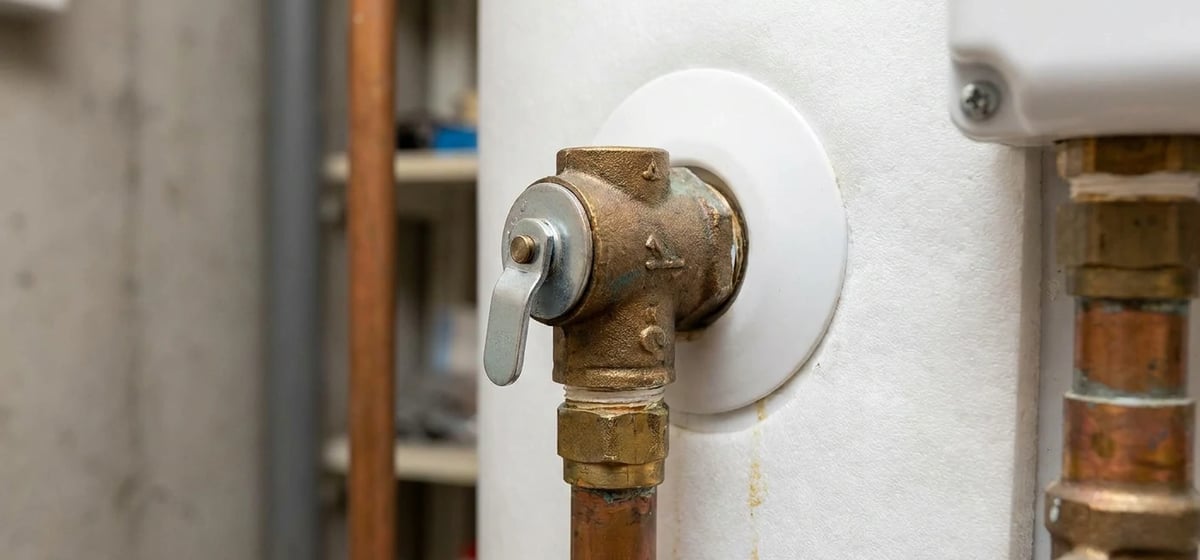
You will usually find this valve on the top or upper side of your water heater. It is a brass fitting with a small metal lever on top. A pipe connects to the valve and runs down the side of the heater. This is called the discharge pipe. It stops a few inches above the floor. If the valve opens, hot water shoots down this pipe instead of spraying outward. This pipe directs the scalding water safely toward the ground.
What to Watch For
You should inspect your relief valve at least once a year. Look for a puddle of water around the base of your water heater. A dripping discharge pipe usually means the valve is failing and needs to be replaced. You might also notice white, crusty mineral buildup around the valve itself. This hard mineral buildup can freeze the valve shut over time. If you see signs of a leak or heavy corrosion, you need to call a professional to fix it. This is a common maintenance issue you might discover during Your First Year as a Homeowner.
Boilers and Other Systems
While most people know about the valve on their water heater, you will also find them on home boilers. Boilers heat water to warm your house through radiators or baseboard heaters. These heating systems use a very similar safety valve to manage internal pressure. Because boilers run at different temperatures and pressures than standard water heaters, they use a specific type of valve calibrated for that system. If you own an older home with a boiler, your heating technician will inspect this part during your annual tune up. It is a vital check to keep your heating system running safely all winter long.
Testing and Replacement Costs
You can test the valve yourself in just a few minutes. Place a bucket under the discharge pipe. Lift the metal lever on the valve for a few seconds. Hot water should rush out the pipe into the bucket. When you let go, the lever should snap back and the water should stop completely. If no water comes out, or if it keeps dripping after you let go, the valve is bad.
Replacing a bad valve requires draining some water out of the tank first. You have to turn off the power or gas supply to the heater. Then, you connect a garden hose to the drain valve at the bottom of the tank and let a few gallons out. This drops the water level below the relief valve so you can unscrew it without making a mess. A plumber will usually charge 150 to 300 dollars to handle the whole process. The replacement part itself only costs 15 to 25 dollars at a local hardware store. Keep in mind that labor rates vary widely based on where you live. If you decide to tackle this project yourself, read our guide on DIY vs. Hiring a Pro to make sure you are comfortable working with plumbing connections.