What is a Schrader valve?
A Schrader valve is a small metal fitting on your outside air conditioning unit. It looks exactly like the air valve on a car or bicycle tire. August Schrader actually invented this design back in 1891 for bicycle tires. The heating and cooling industry later adopted it for sealed pressure systems. They needed a reliable way to keep gas trapped inside pipes without leaking. This simple design changed the world of pressurized gases. Today, this little valve serves as the main doorway into your entire home cooling system.
Where to find it
Walk outside and look at your main air conditioner box. You will see two copper pipes connecting the metal unit to your house. These pipes carry the refrigerant back and forth between your house and the yard. The thick pipe carries cold gas, and the thin pipe carries warm liquid. Look near the bottom of the unit where these pipes attach to the machine.
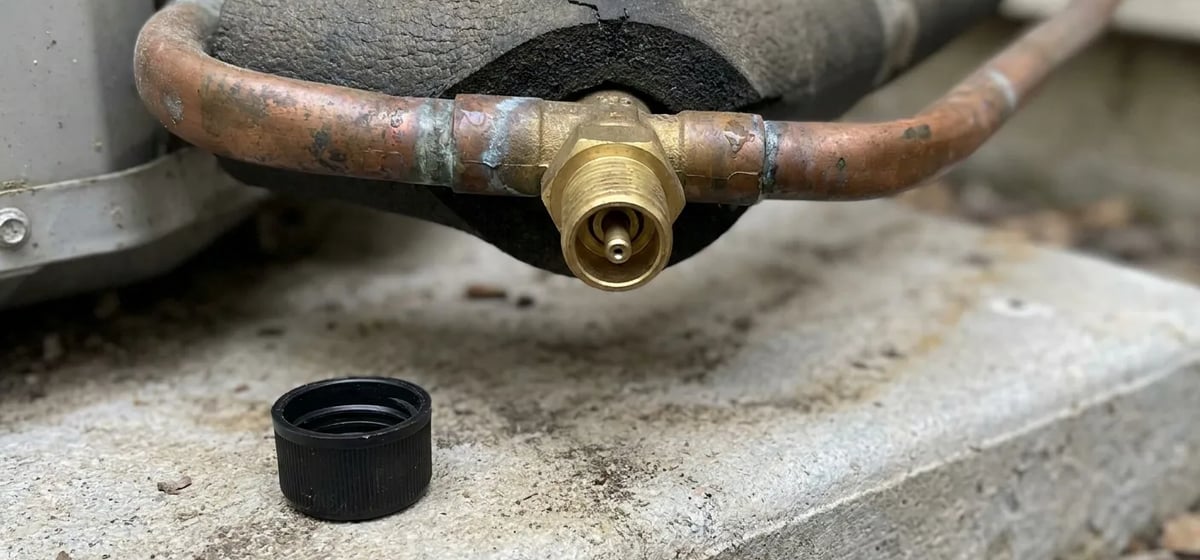
You will see a brass or copper fitting sticking out from the pipes. It usually has a small metal or plastic cap screwed onto the end. That is your Schrader valve. You will likely see two of them right next to each other. One valve sits on the high-pressure line and the other sits on the low-pressure line.
Why it matters to you
You will probably never touch this valve yourself. However, your service technician completely relies on it to keep your home comfortable. When a professional comes to tune up your HVAC & Climate Control system, they hook their special hoses up to these valves. This lets them read the exact refrigerant pressure inside the pipes.
If your air conditioner is low on cooling fluid, they will pump more refrigerant right through the Schrader valve. The valve has a tiny metal pin inside. When the technician pushes the pin down with their hose, the valve opens up. When they take their hose off, a tight spring pushes the pin back up to seal the system shut.
What to watch for
Over time, the tiny rubber seals inside a Schrader valve can dry out or crack. Sometimes the valve just gets old and worn out. Other times, a technician might accidentally overtighten the cap and damage the threads. When this happens, your system slowly leaks refrigerant into the outside air. Your air conditioner will have to run much longer to cool your house. This drives up your electricity bill and eventually leaves you with warm air blowing from your vents. If you hear a faint hissing sound coming from your outside unit, a bad valve is often the culprit.
A missing valve cap is another very common problem. The cap keeps dirt out of the valve and acts as a crucial backup seal. If you notice a missing cap, you should replace it right away. A simple brass replacement cap costs about 5 to 10 dollars at a local hardware store.
If the valve itself is leaking, you need to hire a professional. You can read more about what jobs are safe to tackle yourself in our DIY vs. Hiring a Pro guide. A technician will usually charge between 150 to 300 dollars to replace a leaky valve core and add a small amount of lost refrigerant. Keep in mind that repair prices vary based on where you live and the specific type of refrigerant your system requires.