What is a scupper?
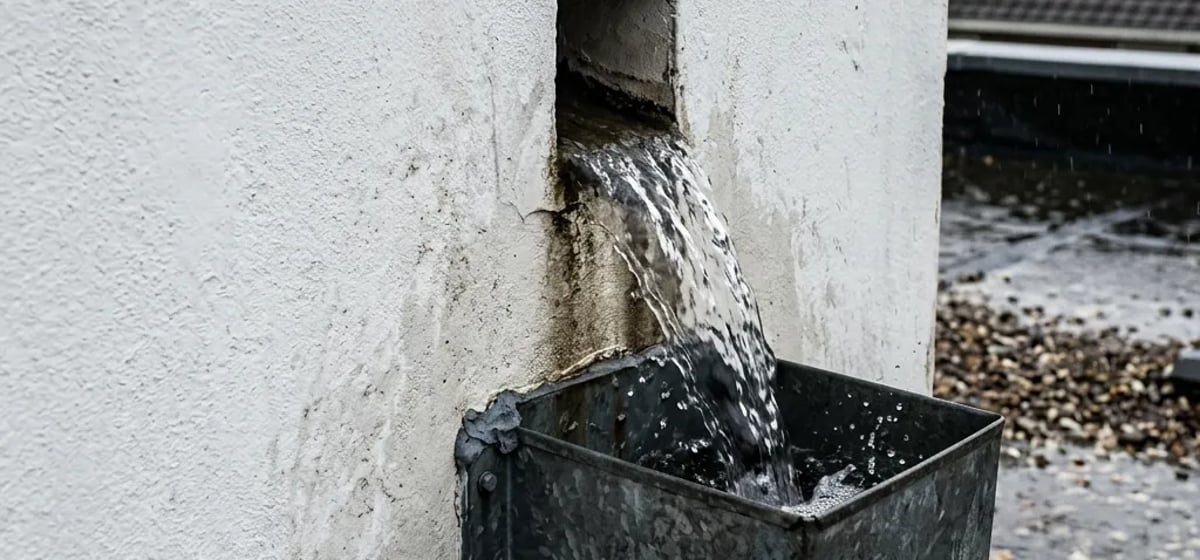
A scupper is a drainage hole built directly into the raised edge of a flat roof. It allows heavy rainwater to pour off the roof and into a downspout or away from the building. The word comes from the Old French word escopir which means to spit out. Sailors first used the term to describe drainage holes in a ship deck. Today, roofers use the same word for the drains on flat roofs.
Why it matters for your roof
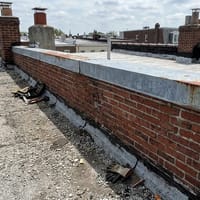
Flat roofs are not actually perfectly flat. They have a very slight slope to guide rainwater toward the edges. But if a flat roof has a raised border around it, the water gets trapped. That raised border is called a parapet wall. Without a way to escape, water pools up fast during a heavy storm.
Water is incredibly heavy. Just one inch of standing water over a 1000 square foot roof weighs over 5000 pounds. If leaves block your scupper opening, the standing water can eventually collapse your roof. This is why keeping these drains clear is a vital part of Roofing maintenance.
Where you will find them
You will mostly see these drains on modern homes with flat roofs. You might also find them on large balconies or upper deck areas that have solid half walls around the edge.
Sometimes they connect directly to a downspout that carries water down to the ground. Other times they just poke out of the wall and spit water onto the grass below. If they spit water directly onto the ground, you need to make sure the soil slopes away from your house. Good Landscaping, Drainage & Outdoor planning keeps that falling water from seeping into your basement or wearing away your foundation.
What to watch for
These drains need your attention a few times a year. Fall leaves and spring pollen easily clog the opening. When a clog happens, water backs up and finds the easiest way down. That usually means it leaks right into your ceiling.
Make it a habit to check for these common problems:
- Debris buildup: Pine needles, leaves, and twigs are the biggest culprits.
- Rust and corrosion: Older galvanized steel boxes will eventually rust through.
- Cracked seals: The tar or caulk around the edges dries out and cracks in the hot sun.
- Wall stains: Dark streaks on your stucco or siding mean water is leaking behind the metal.
Sometimes the drain empties into a metal box on the outside of your house. This is called a conductor head. It catches the water before sending it down the pipe. Birds love to build nests inside these boxes. You should check them every spring before the heavy rains start.
Repair and replacement costs
Fixing a damaged scupper is usually a job for a professional roofer. They need to make sure the new metal box seals perfectly with the rubber roof membrane. If the seal is loose, water will rot the wood inside your walls.
If you just need a roofer to clean and reseal an existing drain, expect to pay 150 to 300 dollars. If the metal is rusted out and needs full replacement, the cost usually runs 400 to 800 dollars per drain. Keep in mind that local labor rates and material prices mean these ranges vary. Most homes with flat roofs have at least two or three of these drains. If you hire someone just to fix one broken drain, you will pay a minimum service fee. You can save money by having the roofer inspect your whole roof while they are up there.